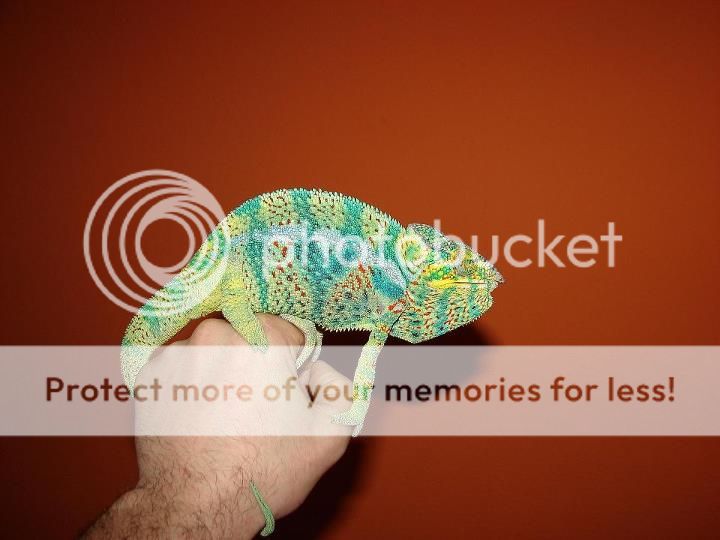
Man, that's all real interesting especially that picture. Thinking overnight about that, the report of moving males from other locales to Nosy Faly, and the satellite image has given me a very dim view for the future of the look we want Faly's to have. I'll be the first to admit I was wrong but if you look at the satellite image you'll see that the vegetation on that island is probably around 4 square miles total. Most of the east-northeast side of the main part of the island is sand with no plants. The southern projection of the island is approx. 1500 feet wide for quite some distance. There are no natural barriers. It would be easy for a couple people to survey most of it on foot in a day. (I look at maps and conduct pedestrian surveys for a living) So, I just find it hard to imagine at this point that variation as extreme as yellow backgrounds and red streaks rather than the accepted red dots, or that animals looking like "pure" Nosy Be's have been missed or ignored by everyone else in such a small area. Also, if the exporters are willing to send emaciated, dehydrated, one-eyed Nosy Faly's covered in a layer of dirt....why would they not send a yellow one if they were a natural part of the population before? It's the name that commands a higher price, not the quality.
So now, could that be the reason so few actual Faly females have come through in shipments to date? Collector's realization that the females keep the small population alive so they avoid them? I hadn't thought of that until realizing just how little vegetation is on that island.


 Nevermind all that though...You say not one single person...Your good buddy Olaf, the guy you have been friends with since the 90's never told you huh? The man that has probably seen more paradalis than anyone on this forum?


 Sorry x 2