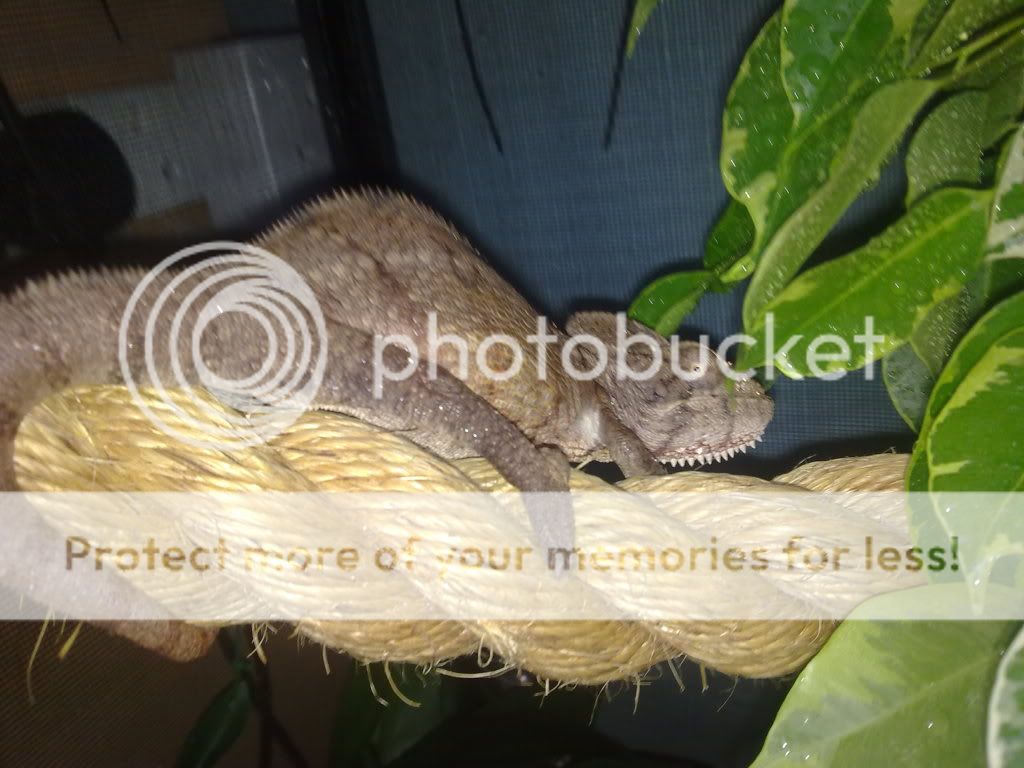
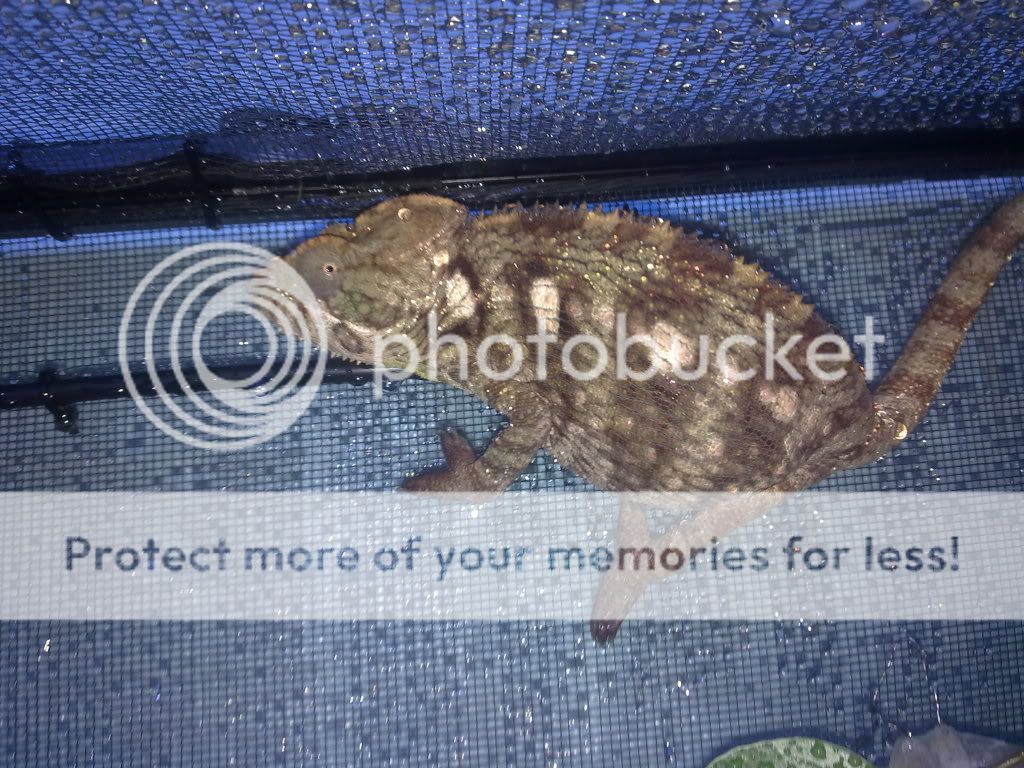
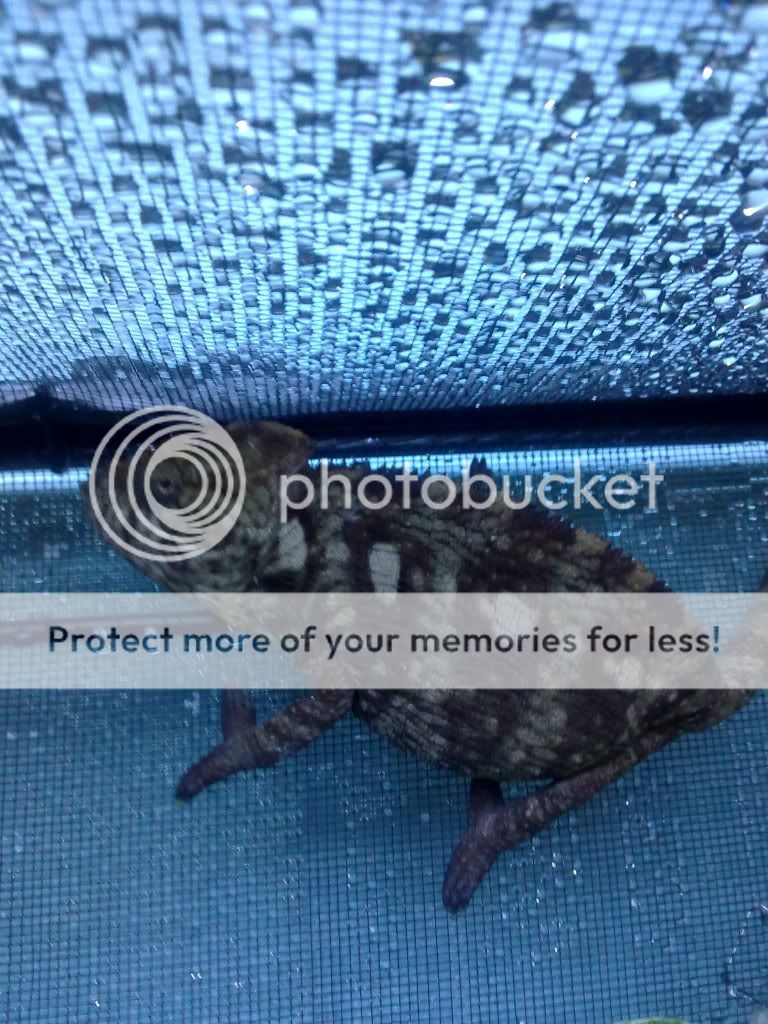
I just went and read most of your posts...and I realize that some of them you had no answers to and some of them could have given you clearer answers. I didn't realize that they were in separate cages because some of your threads showed only one cage and I assumed that you were keeping them both together.
Were the male and female together when you got them? How long have they been separated?
I have kept lots of chameleons over the last 20+ years...but not a lot of ousties....but here is what I did for the ones I did have (and its what I do for a lot of other chameleons, lizards too)...
I have kept one pair of oustlet's together and they seemed to do well...but if the female was gravid she would be moved to another cage.
They can basically be kept like panthers or veileds. I provide them with a repti-sun 5.0 long linear fluorescent UVB tube light. There should be no glass or plastic between it and the chameleon. If I need to add a basking light I use a regular incandescent household bulb that produces the proper temperture. I put it in a dome light. I place this light in one of the corners of the cage to produce a wider range of temperatures and because I use glass cages, to help provide a chimney affect for airflow.
I set up the cage inside like I would for a veiled...lots of branches and some foliage for the chameleon to hide in. I use no substrate because too many of them can cause impactions and I'd rather not risk that.
I dust the insects with a phos.-free calcium powder at most feedings to help make up for the often poor ratio of calcium to phos. found in the feeder insects.
I dust with a phos.-free calcium/D3 powder twice a month to ensure that the chameleon gets some D3 without overdoing it and leaving it to produce the rest of the D3 from its exposure to the UVB. D3 from supplements will build up in the system...D3 produced from the UVB exposure shouldn't as long as the chameleon can move in and out of it.
I dust twice a month with a vitamin powder that contains a beta carotene (prOformed) source of vitamin A so that it won't build up in the system. However there is controversy as to whether all/any chameleons can convert the beta carotene so some people give their chameleons a little prEformed once in a while. Excess prEformed may prevent the D3 from doing its job though....so be very careful with it.
I gutload/feed the crickets, roaches, locusts and superworms with a wide variety of greens (dandelions, kale, collards, endive, escarole, etc.) and veggies (carrots, squash, zucchini, sweet red pepper, sweet potato, etc.).
Calcium, D3, vitamin A and phos. are important players in bone health and other systems in the chameleons and need to be in balance. When trying to attain a balance look at your supplements, what you feed the chameleons and what you feed the insects.
You can use a dripper as well as misting the cage a couple of times a day to provide water for them. If they don't seem to be getting enough, you can try dripping the water on the end of their noses until they do drink.
Appropriate temps aid in digestion so they play an indirect part in nutrients absorbed too.
Regarding sexing them...look at the base of the tail...the male's tale is thicker "south" of the vent while the female's tail is thinner there...but with oustalet's the color is a giveaway in any I've seen too. Females usually have a greenish tint to them.
You also mentioned (night) heat in one thread...can't remember the answers...but unless the temps. at night drop below the low 60's F you shouldn't need heat.
Hope this helps!