
Navigation
Install the app
How to install the app on iOS
Follow along with the video below to see how to install our site as a web app on your home screen.
Note: This feature may not be available in some browsers.
More options
You are using an out of date browser. It may not display this or other websites correctly.
You should upgrade or use an alternative browser.
You should upgrade or use an alternative browser.
I feel so bad for the cham... pet store abuse!!
- Thread starter Dmcugy
- Start date


wackfester
New Member
true it is sad we all see it all the time try talking to them.


carol5208
Chameleon Enthusiast

Unfortunately no matter where you live, you are gonna see this. I was in this one reptilestore and was talking with the guy about chameleons and he told me they don't carry many and had one that was a female veiled and it had eggs. So I asked him if they put in a laying bin and what they did about it. Well, he proceeded to tell me they weren't sure what to do so they just let her be and figured she would lay them on her own. Well, she didnt, became egg bound and died. He told me his boss told him to tak the cham in the back, cut it open and get the eggs out incase they were fertile!!! I wish they could have had a camera do catch the look of disgust on my face. I explained to him what needed to be done in the future so they would have a proper place to lay. He did not have much of a response, other than "Oh really"?. Like I said you see it everyday.

FredChameleon
New Member
report them to the SPCA ! they WILL do something about it!


Spiky
New Member
This reminds me of when I went to PetCo last week. They had a shelve cage(like they have all the herps in) about a foot tall and it had a fake bonsai tree, a water bowl, coconut bark, and a hidey hut. The cham was laying dead on the bottom off to the side. I then remembered why I didn't really like that place.

Carlton
Chameleon Enthusiast

There is so much wrong with this picture i couldnt even know where to start. I wish i had the funds to buy him and put him in an awesome home!!
But, by buying him you just "rewarded" the store for keeping/neglecting an animal they had no business offering for sale. They'll make a profit and buy another to neglect. To truly rescue you should only offer to take the poor thing for free before it dies. First, get someone engaged in conversation about what care this animal requires. Be nice, be respectful, offer "neutral" sources of cham care they can verify and read for themselves. Help them with a better setup. If they listen and try to improve his condition, reward them by being a customer. If they blow you off walk away...boycott them and TELL them why. Report the poor conditions to your city animal control or Better Business Bureau (and send a copy of your report to the store). There are some pretty telling statistics out there about the percentage of pet shop animals sales: I think the majority are sold because of customer pity.
At least that poor cham won't be around too much longer judging from its condition. Man, not a single plant to hide in.

Kansascity
New Member
 !!! The horrible thing is the pet store can easily give a pamphlet on how to take care of a species, but they themselves do not reflect the pamphlet. As Already stated report the issue, and hope for the best. I can only use this comparison for this situation. I always tell friends or family that are looking into buying a pure bred dog, do not feel sorry for the animal and buy it because you will be in a world of trouble shortly down the road! I have made the same mistake, and trust me it isn’t worth it for you or the animal, please just report your finings to the appropriate authorities.
Iguanagirl8662
New Member
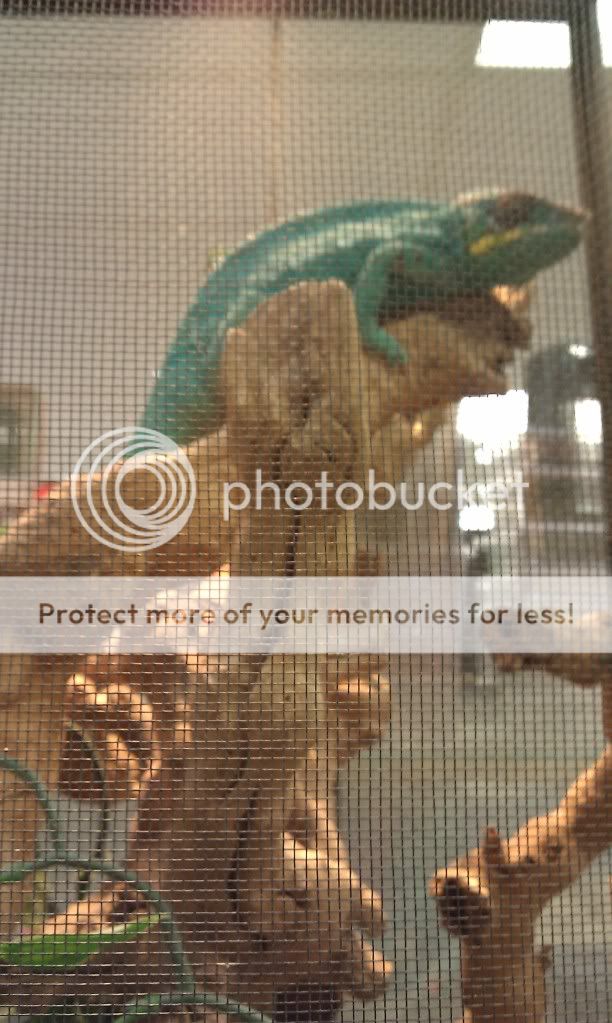
There is a petstore about 15 minutes from me and they have about 20 Sengal chameleons in a 10 gallon tank with no drip system and no UV light. It is horrible, you can see how stressed out they are and to top it off they have a sign on the door saying "We sell Johnny Depp Chameleons".

dlegare
Established Member
I get really angry when I see this type of abuse. Pet stores should set the example on how to properly care for an animal. If they don't know how or are unable to provide proper care then they shouldn't keep the animal.
Its really bad when you go to reptile shows and see similar or worse conditions.
I think it is our responsibility as prudent and informed owners to politely inform people who are improperly caring for an animal the correct husbandry techniques.
If that fails contact animal control or ASPCA
It really is a form of abuse/neglect.
Its really bad when you go to reptile shows and see similar or worse conditions.
I think it is our responsibility as prudent and informed owners to politely inform people who are improperly caring for an animal the correct husbandry techniques.
If that fails contact animal control or ASPCA
It really is a form of abuse/neglect.
Chris Jury
New Member
That animal is in very poor condition, no doubt about it, but the caging right now is not likely the source of the problem. Meller's and many chameleons often arrive in very poor condition when wild collected (especially relatively cheap ones). Chameleons in particular are usually severely dehyrated. Getting them back into a healthy state is not easy, and in some many cases impossible (e.g., if there is permanent kidney damage) and takes a degree of skill. This animal was likely in terrible condition when it arrived, and the caging conditions--which might be just fine for some chameleons in a healthy state--do not fit the bill to get this animal back into good health. Glass is fine in most cases, but more cover and surfaces to drink from (i.e., plants) would be a very good idea, along with intense attempts at hydration and feeding. A healthy, hardy animal might be ok in a setup like that. A fragile animal in poor condition (like the one pictured) is almost certainly doomed.
I might talk to them gingerly, to see if some improvements can be made. You don't want to be combative though--that will make them blow you off. You want to stress that you are a happy customer and want to continue to be a customer and want to help them improve the condition of this animal.
Buying the animal is about the worst possible thing one could do. Firstly, this animal, even with appropriate care, may well be too far gone. Buying it transfers the monetary loss from them to you. In fact, usually the situation is even worse than that: animals that sell are replaced. That means that not only is this animal likely to die, but it will soon be replaced by another which will also die. Buying this one animal is a great way to kill two. We've seen exactly this scenario play out here recently. "Rescuing" an animal by buying it (for more than maybe 10% of retail value, at least) is always a terrible idea--it doesn't actually rescue the animal, and results in additional animals suffering and dying needlessly.
cj
I might talk to them gingerly, to see if some improvements can be made. You don't want to be combative though--that will make them blow you off. You want to stress that you are a happy customer and want to continue to be a customer and want to help them improve the condition of this animal.
Buying the animal is about the worst possible thing one could do. Firstly, this animal, even with appropriate care, may well be too far gone. Buying it transfers the monetary loss from them to you. In fact, usually the situation is even worse than that: animals that sell are replaced. That means that not only is this animal likely to die, but it will soon be replaced by another which will also die. Buying this one animal is a great way to kill two. We've seen exactly this scenario play out here recently. "Rescuing" an animal by buying it (for more than maybe 10% of retail value, at least) is always a terrible idea--it doesn't actually rescue the animal, and results in additional animals suffering and dying needlessly.
cj

javsto
New Member
That is sad. If only they knew how to take care of them.
Johnny Depp chameleons?
RANGO, the Chameleon from the recent movie so the customers snot nosed kids will want their parents to buy them
carol5208
Chameleon Enthusiast
That is sad. If only they knew how to take care of them.
Johnny Depp chameleons?
from the movie Rango. He is the voice of the chameleon.


ChamChick
New Member
RANGO, the Chameleon from the recent movie so the customers snot nosed kids will want their parents to buy them
Don't blame the kids for wanting one...kids want everything they see...blame the parents for ignorantly buying one for their child.

Texas Panther Man
New Member
Don't blame the kids for wanting one...kids want everything they see...blame the parents for ignorantly buying one for their child.
Amen, sister. Its the parents responsiblity to say"NO". You cant always give in to the kids wants and whims. One of the big problems in todays society.
And Ive seen worse mellers come in than that one that made it. Not saying I'd want to try to rehab him/her though. With a few weeks of ntense hydration and proper temps & caging it would have a fair chance at survival. The thing is even with all that. You can do everything perfectly and some wc's just wont acclimate to a caged life.

fastgixxerlv
New Member
Pet stores are sad places to go sometimes. I get a vibe from the animals that they all want to go home with me. This poor guy was sleeping and no water in the cage or hides. No more pet stores for me. I'm gonna breed my own feeders or get them online from now on.

There is a petstore about 15 minutes from me and they have about 20 Sengal chameleons in a 10 gallon tank with no drip system and no UV light. It is horrible, you can see how stressed out they are and to top it off they have a sign on the door saying "We sell Johnny Depp Chameleons".
Go in with a Sharpie and change the sign: "We kill Johnny Depp Chameleons". Stupid parents buy anything their kids want.
Petstore employees hate me. If I overhear some parent wanting something inappropriate for their small child, I'll give the run down on why the animal is a very poor choice. I do it all the time, *especially* where parrots are concerned. Bunnies, chameleons, certain other reptiles ... I even do it while staff are trying to push the virtues of the animal. What are they going to do -- kick me out? I hope I've saved some poor creature with that technique.

Hisuikazedo
New Member
Went into Petsmart the other day .. had to get cricket cubes.
Everytime We go in there I walk past the reptile cages and check out the hatchling veiled Cham they often have (I know its awful but this is where we got our girl Dragon)
I missed it but my husband saw a little boy sleeping in the middle of the day all lethargic in the tiny cage. He asked the girl when the little boy would be going on sale (he had a reserved sign on the tank) and she said that if an animal was out it was for sale. She had NO IDEA there was a chameleon in there!!! The older more senior staff member pulled her aside as we we're leaving and demanded to know when the last time he was fed was!?!?!?!
Everytime We go in there I walk past the reptile cages and check out the hatchling veiled Cham they often have (I know its awful but this is where we got our girl Dragon)
I missed it but my husband saw a little boy sleeping in the middle of the day all lethargic in the tiny cage. He asked the girl when the little boy would be going on sale (he had a reserved sign on the tank) and she said that if an animal was out it was for sale. She had NO IDEA there was a chameleon in there!!! The older more senior staff member pulled her aside as we we're leaving and demanded to know when the last time he was fed was!?!?!?!
Similar threads

- Replies
- 17
- Views
- 2K

- Replies
- 13
- Views
- 737


