
Unresponsive

tom dunlap

New Member
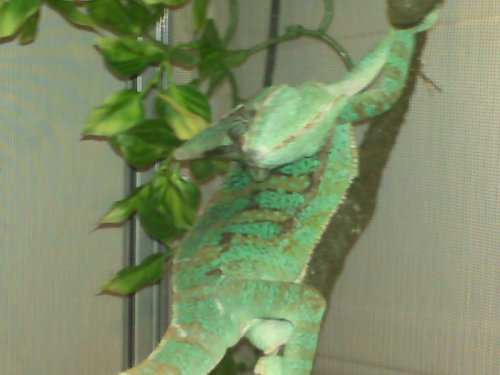
This morning I turned the lights on in the chameleon room and found one of my males unresponsive with his head cocked to one side. He has been feeding well on crickets and superworms and has shown no signs of problems untill today. Nothing seems out of the ordinary with the other animals. HE is 2yrs old, housed in an 18 x36 inclosure with uv and heat lamps on 12hrs per day. He is alive but has not moved since this morning. Any thoughts?
 

Attachments

  • ACHMED.jpg
    ACHMED.jpg
    117.6 KB · Views: 503
how long have you had him?? What type UVB and basking light are you using? What supplementation schedule are you using? What are the stools and urates like?
 
Iam using exo-terra 5.0 uv bulbs. 40 watt incandecent for heat. CRikets are dusted with calcium. I have had him almost 2 years. Stool is sausage shaped, half inch long.dark brown,
 
I am guessing he sadly may not be alive. Molly was still her regular relaxed colors when she died. Once they go into rigor it is hard to tell because they will stay firm. Are you absolutely sure you see breathing?
 
possible scenario?

Iam using exo-terra 5.0 uv bulbs. 40 watt incandecent for heat. CRikets are dusted with calcium. I have had him almost 2 years. Stool is sausage shaped, half inch long.dark brown,
since you didnt fill out the help form, all anyone can do is speculate. you dont say specifically what kind of bulbs you have, but exo-terra 5.0 implies cfl. cfls are generally not good, your statement sort of implies you have been using the same bulbs for the last 2 yrs? if so they should have been changed 3 or 4 times. crickets dusted with calcium, implies, main, long term staple of crickets, long term staple of mainly crickets not good. you dont specify what kind of calcium you are using, but if you are using repcal with d3 as your primary dusting supplement, then for two years you have been giving an excess of d3, and for a year and a half of that, he has been getting little or no uv. just a guess? ps my apologies before hand if i am wrong. also you didnt mention anything about gutload or multivites? without the help form, all anybody can do is guess. without a vet, its unlikely he will make it 24hrs jmo
 
Last edited:
yeah...I don't have a good feeling about this at all....

On what are you basing the idea he's still alive? If he's moving or breathing that would be good news.
 
Would the cham be holding on to the vine if it was dead? From all that I've read, usually people find their chams lying on the ground.
 
I dont think the neck can bend like that with him trying? I say broken neck still but, what throws me off is... if hes dead, he would fall and most of the time they change colors to dark.

and for that matter, wouldnt he change color if upset? he appears to be calm, weird!

I still say, gently take him down and take him to the vet asap!
 
Well....on the color change thing, I have to say no....from my sad experience, they tend to have very peaceful happy colors when they die...maybe that's good? Maybe it means that at that moment, they are happy and peaceful?
 
yeah he needs a vet... not sure what they will say...... but if he sits limp in your hand... he has some sort of spinal injury.... I have never seen a head turned like that... If he fell and broke his neck I don't think he'd have gotten back up in the cage to where he is.... unless the injury didn't set in right away? kinda freaky.
 
Well....on the color change thing, I have to say no....from my sad experience, they tend to have very peaceful happy colors when they die...maybe that's good? Maybe it means that at that moment, they are happy and peaceful?

It depends, Calyptratus (and other species) can also get a yellowish color when they are about to die. I suppose the cause of the death can explain at least partially the remaining coloration, but that's just a guess!

Nevertheless, guessing if he's dead or not should be easy since he has eyes open. If he's alive, his eyes should be moving like you guys already know! :) However, if he died in this position, it is possible that he remains in this position for a while. Muscles can stay in their same position for quite a while when death occurs. This is something seen on humans and animals sometimes.
 
Back
Top Bottom