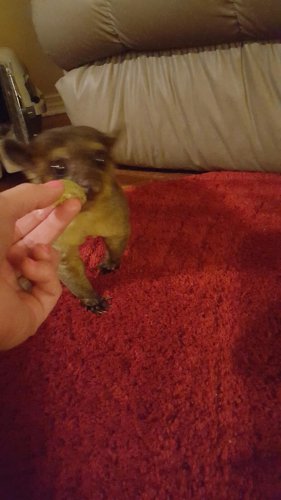
This may come across as a bit "Debbbie Downer", but...
If you can't afford the initial animal, I would be concerned about your ability to maintain a kinkajou properly. They are extremely expensive to keep: they require a huge amount of a variety of fresh fruit daily. A 7.5lb kinkajou can eat a pound of fruit a day (90% of their wild diet is ripe fruit), and it's not just apples and oranges: papaya, pomegranate, mango, berries, etc are preferred foods and those are not cheap. If you are spending $5-7 a day on fruit (or even more in the winter), that easily means $150-$200 a month in fruit alone, not including the Mazuri (or similar) chow and supplements (bee pollen, calcium, multivitamin, etc). They also require vaccinations, very regular fecals (see below for why) and other yearly veterinary care. Finding a kinkajou-experienced vet is also difficult; more difficult than a chameleon vet, even. Toys and perches are chewed and destroyed by their big canine teeth and will likely need to be replaced monthly or semi-monthly. They are hyper-active at night and require a gigantic average-livingroom-sized cage made of materials strong enough to resist those teeth. These are not inexpensive pets!
I've worked with them in a zoological setting, and I would not call them "good pets". They are almost always fairly aggressive once they reach sexual maturity. They are also hard-core nocturnal, and keeping them up during the day leads to an interrupted sleep cycle, increased stress, behaviour issues, etc. Their dietary needs are also very hard to meet. Most die prematurely in captivity due to nutrition issues like obesity, MBD, kidney/liver issues, etc, which is pretty sad since Kinkajous can reach over two decades in age. Baylisascaris infection is also an issue: this parasite is zoonotic and can cause serious neurological issues in humans. Baylisascaris can also infect other animals, like dogs. They should have very regular fecal checks, as this parasite is not shed constantly but irregularly: meaning one check in one year does not automatically clear the kinkajou of having the infection. Kinkajous also carry a unique bacterium, Kingella potus, which is passed to people usually via bites (and if you have a kinkajou, you are going to get bitten at some point) and can make you extremely ill: high fever, urinating blood, vomiting, etc, and could lead to death without proper treatment. Getting proper treatment can be difficult, since most emergency room doctors are not going to think "kinkajou bite" if you come in with those symptoms. Kinkajous have large canines and can inflict a very serious bite, similar to a medium sized dog, but even a small bite can lead to a serious infection. Regular fecals and personal protection equipment are critical (gloves, mask, hand washing), similar to when handling raccoons.
We used positive reinforcement training to train stationing, shifting, targeting etc to some parent-raised kinkajous, and that worked well, but we had to work late at night to accommodate their circadian rhythm. They have short attention spans and become bored very quickly. However they do not have great recall and it takes several sessions to get the point across: they are rather like if you crossed a small parrot with a cat and then tried to train the resultant creature. Not easy. They are also extremely active at night, almost hyperactive. We kept them in 12'x15'x15' enclosures, which I would consider the minimum size for keeping kinkajous in captivity.
Honestly, the human-raised ones I've worked with were basically the worst. Human-raising of any animal is ill-advised at best. Puppies raised in isolation of other dogs show an increased chance of behaviour issues, and I do not see that being significantly different with kinkajous. It's very likely that a human-raised mammal will improperly imprint on humans, leading to unwanted behaviours: possessiveness (mate guarding), aggression (territory or resource guarding), etc. The human-raised kinkajous were much harder to train as not only did we have to train the original goal behaviour but also deal with the problem behaviours as they cropped up- and crop up they did. Eventually we got them stationing and targeting and kenneling like their less human-habituated kin but it was much more difficult.
I liked working with them, and they are painfully adorable, but I am very convinced that they would make pretty awful pets between their endemic zoonotic diseases, border-line ridiculous housing needs, difficult diet, long lifespan (baring nutritional issues), the likelihood of getting bitten, difficulty of getting quality veterinary care, difficulty in rehoming if you should happen to have a major life change in the next few decades (which absolutely happens), etc.