I just read you are blunt and direct, not rude! But I could totally see people who are on here looking just to be validated for what they are doing rather than looking for legit advice. Thank you so much for your research, I genuinely appreciate it! I am learning through your learning! Can I ask where your passion for this comes from? Are you looking to use your knowledge for something specific (career, hobby, breeding, etc)?
You are welcome.
There are several reasons I am passionate about helping people with their chameleons.
I am heart broken when I read so many sad stories of doomed chameleons. I suspect the majority of chameleons produced in the US are dead before they are six months old. It reminds me of when I was a little girl and you could buy all those little baby red-eared slider turtles and they would all be dead in a few months. The wastage of life is very disturbing to me.
I feel awful for the heartbreak their owners go through when they spend a lot of money, sometimes when money is tight, and have their dreams shattered. They have this expectation of a pet chameleon and then their pet dies. I especially feel awful when they buy an expensive tiny baby that is doomed right from the beginning and they never saw it coming. It angers me that a breeder or store would offer those babies for sale knowing they won't live.
I find chameleons to be a hardy animal*
when they are set up right, but most people end up killing them. The funny thing is that for most species, setting them up "right" is not all that rigid or exact. It really isn't rocket science. Much of the advice given over the internet, although given with the best intentions, is often just regurgitated axioms and old wives tales that are not based on experience or scientific fact. Sometimes it is given by people who have no experience other than a single animal that is very young or given by people who cannot keep a chameleon healthy or alive for very long. (*Note, healthy captive-born animals are very hardy, wild caughts are a whole other can of worms and usually very challenging.)
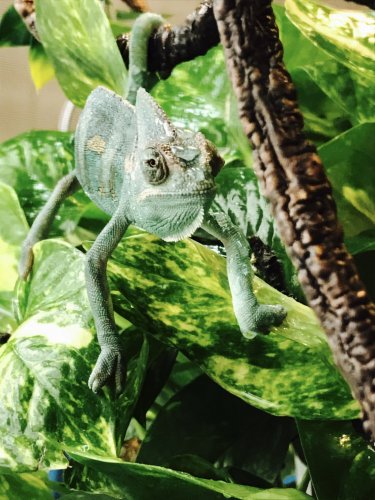
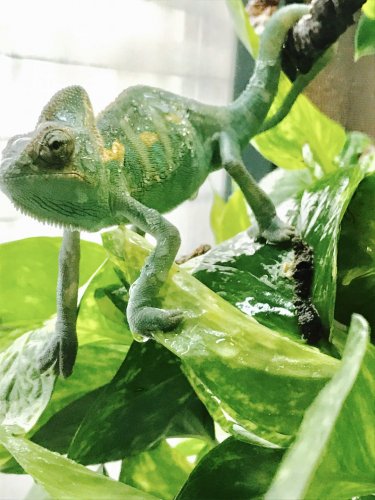
I breed a couple of species of chameleons that are very rare in captivity, even in Europe. They are only rare because they haven't been imported for many years and likely will not be legally imported for many years to come, if ever again. They are a really neat species to look at--they have horns, sail fins on their tails and backs, red claws, horns and dragon spikes on their throats. They are actually quite easy to care for and very tough and forgiving. I had only owned my first chameleon for less than two months before I bought my first wild-caughts (and they are still alive). I would like people to support breeders, to look beyond panthers and veileds and buy other species. If someone can't keep a veiled healthy and alive they won't be able to keep a montane like my graciliors alive. (Montane means originating from the mountains.) I can't for the life of me figure out how people can kill a veiled, but people do all the time (partly because veileds
hatch with so many nutritional issues that they never had a chance but that's another story). So if I can help people keep their chameleons well, maybe they will buy a less common species from a breeder.
The corollary of buying from a breeder is that the buyer won't be supporting the wild-caught trade. The wild-caught trade is full of wastage, death and outright cruelty. A wild caught, unlike a healthy captive-born animal, is not so easy to keep alive. The wild-caught trade is really horrible. I've picked through a LOT of imports within 24 hours of arriving at the importer's and it is pretty heartbreaking. If I can help stop that, I'll have done a good thing.
Last but not least, I often help people to avoid doing chores!