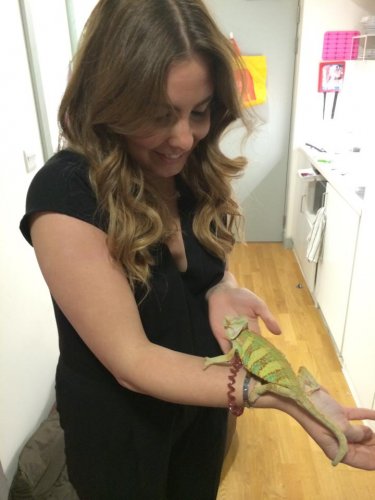
Not sure if you had specific questions as you prepare for the arrival of your first cham, but here are several things that you should keep in mind to maintain a healthy chameleon:
Sufficient UVB lighting to prevent the degenerative metabolic bone disease. T5HO tube bulbs are best, followed by T8 tubes, followed by coiled bulbs.
Sufficient heating lamp to achieve desirable basking and ambient temps. Make sure you provide plenty of branches so that your cham has access to a bunch of different temperature ranges.
Make sure the heat isn't hot enough to cause burns to your cham.
Make sure these lights are on for 12hrs/day.
Make sure you gutload properly. Feeders are useless and empty in terms of nutritional value on their own. The jelly and powder commercialized cricket food is useless.
Make sure you're varying your diet. The same thing all the time will bore them, and they'll go into a feeding strike and stop eating for a while. Crickets and dubia should be the staple. Others should only be fed on occasion, as treats, as they're not the healthiest feeders for them to be getting on a regular basis.
Make sure you supplement correctly. Plain calcium with no D3 or phosphorus every day. D3 should be reserved for twice a month, since too much of it can cause more harm than good.
Make sure your humidity levels are good. Make sure the enclosure dries out completely and you let the humidity drop to about 30-40% before misting again. That rise and fall of humidity is very important for them.
Make sure you don't mist at least an hour before lights go out, and that cage is completely dry before they go to sleep. No mistings while they're sleeping.
Make sure it's completely dark when she's sleeping - it's important for them to be able to achieve a deep sleep cycle.
Nighttime temps should drop about ten degrees. They need the temp to drop at night.
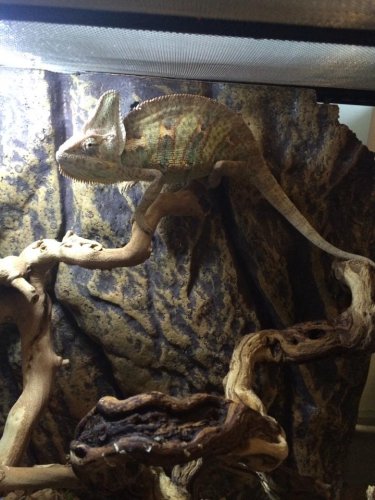
Make sure they have enough branches and vines to be able to get to every spot in the cage. They shouldn't have to be using the screen of the cage to get anywhere. If your cham tends to hang upside down on the top of your cage, raise the top branch up to the point where there's only room for her body to fit between the branch and top of the cage. If she can't get much higher, they don't have as much an urge to get up there.
Make sure you're not using any substrate in the cage. The continuous moisture of the substrate will become a breeding ground for bacteria, fungus, and mold, which can make them very ill, which includes respiratory and skin infections. They can also accidentally ingest the substrate if they see a feeder on it and shoot their tongue at it, and this can cause impactions. If you need something to wick up the moisture at the bottom, you can use paper towels. Again, these need to be replaced frequently to prevent bacterial growth. A draining system can be helpful.
Make sure you don't have a waterfall or water source. They don't recognize it as a drinking source, and they do drown. Instead, make sure that there are water droplets running down the leaves, plants, cage, etc for them to lap up for a drink
Make sure you have a reliable thermometer and hydrometer.
Make sure you have a camera to take plenty of pictures of her
I think I covered all the basics...

 They are from the UK, so you won't have any trouble getting them to ship to you
  I can only recommend them!