Based on personal observations, and simple logic I suppose, I would imagine that in nature morio larvae would often transition from beneath the cover of natural substrate to consume any nutrient dense vegetable, fruit, fungi, or carrion. This would occur even during daylight hours and in full exposure to the sun as they are opportunistic feeders. Not the mention that they prey on other insects species, especially eggs and small, vulnerable larvae. Morio beetles are also terrestrial and would obviously be exposed to direct UV from time to time. The only period of time they would completely avoid exposure to sunlight would be during pupation.
I've done a lot of experimentation with my morio colony and found them to eat an interesting variety of food items, some more readily than others. My primary colonies favorite food items are butternut squash(absolute favorite at every life stage), cucumber, sweet potato, banana, mango, carrot, beet, and white mushroom. But some of the cultures I experimented with had interesting responses to other food items. For instance, if ground finely enough, they absolutely loved freshly spent coffee grounds, as well as a different variety of raw meat, and they annihilated BSFL. But I would not recommend feeding morio animal protein, any colony which I fed animal protein to tended to become somewhat aggressive toward each other over time, specifically predating or picking on individuals undergoing molt as they transitioned to the next instar. Cannibalism is obviously not optimal when they are dwelling communally.
It would be excellent if testing was conducted on zophobas morio to determine whether their vitamin D content could be heavily increased as a result of either UV exposure or diet. I know that commercially raised morio are objectively inferior when compared to my cultures based on their average mortality rate and comparative size at the 4-5 month mark. I tend to keep my larvae a little longer than commercial breeders do before selling and I have little doubt that I provide them with a far more variable and nutrient rich diet. (Somewhat unrelated) My easter egger hens greatly appreciate this, as do many other bird species that reside on the property. I tested the feeding responses of both reptile and avian species to my culture vs commercial cultures. My culture has out performed every time, even with more indiscriminate eaters. As a result my hens are behave like velociraptors when they see me coming with a bowl of supers. And the normally shy duck species dwelling around the pond become very friendly once a super pops out.
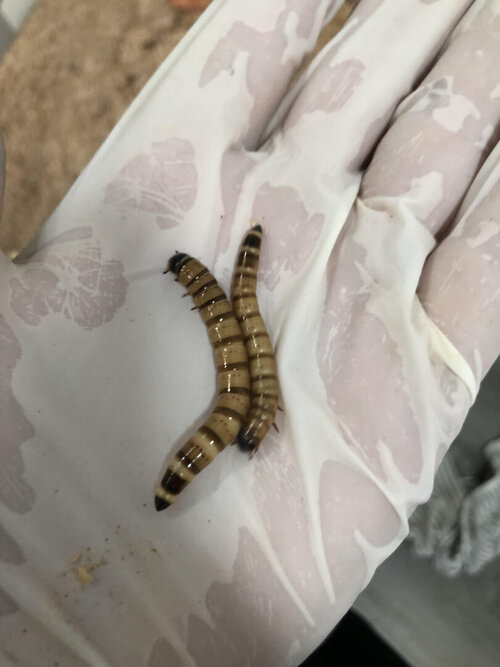
I've attached a photo for comparison between my culture and commercially produced morio of approximately the same age. I pulled a super from my culture at random but selected one of the larger larvae from the commercial culture. For size reference I wear XL/XXL dispoable gloves. The commercial culture was listed as size large when I purchased it. So they likely had significantly less access to quality nutrition during development.
(Unrelated) I also leave a tray of earthworms, slugs, snails, grubs and other insects removed from the gardens outside the home once a month for the resident robins, stellar jays, kestrels and mated pair of ravens to consume, beside this I place a bowl of supers. The supers tend to disappear first. As a result the robins have begun nesting very close to the house; one nesting robin will take a morio or two right from my hands without leaving the nest.