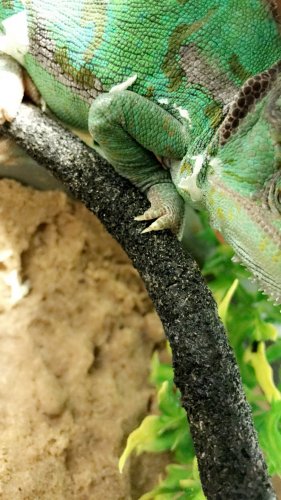
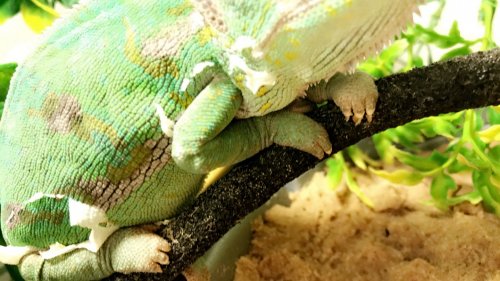
MBD can have an effect on egglaying...calcium is important in muscles and muscle contractions needed to lay the eggs. Its important to the shelling of the eggs too....and they need shells of course! It'sortant in other functions too.
To correct MBD it's important to provide extra calcium to bring things back into balance then it's important to provide proper supplements, well fed/gutloaded insects, appropriate temperatures, good hydration. Liquid calcium sandoz or gluconate are absorbed better than powdered supplements.
It's recommended that you dust the insects at almost all feedings with a phosphorus-free calcium powder to make up for the usually pooor ratio of calcium to phosphorus found in most feeder insects. It's important to dust twice a month with a phosphorus-free calcium/D3 powder to ensure the chameleon gets some D3 without overdoing it and leaving it to produce the rest from it's exposure to the UVB light. D3 from supplements can build up in the system and cause health issues but D3 produced from exposure to the UVB light won't as long as the chameleon can move in and out if it at will. It's recommended that you dust the insects twice a month lightly with a vitamin powder that contains a beta carotene prOformed source of vitamin A (and no D3). PrOformed sources won't build up like prEformed sources will but this leaves it up to you to decide how often or if your chameleon needs a prEformed source or not.
Appropriate basking temperatures (low 80's F for female veileds) allow for proper digestion and thus play a part in nutrient absorption.
Crickets, locusts, superworms, roaches can be fed a wide assortment of greens (dandelion greens, kale, collards, escarole, endive, etc), veggies (carrots, squash, zucchini, sweet red pepper, sweet potato, etc) the and a bit of fruit (berries, apples, pears, melon, etc).
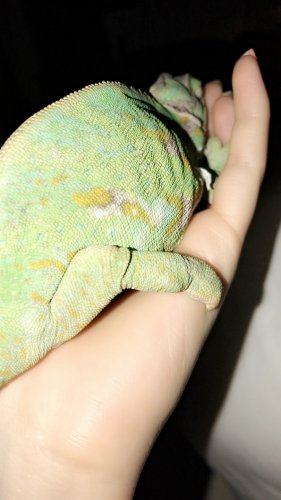
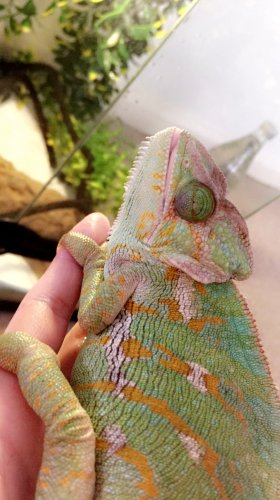
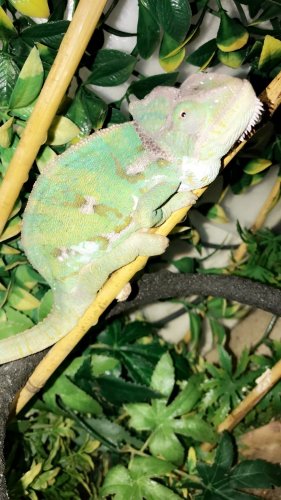
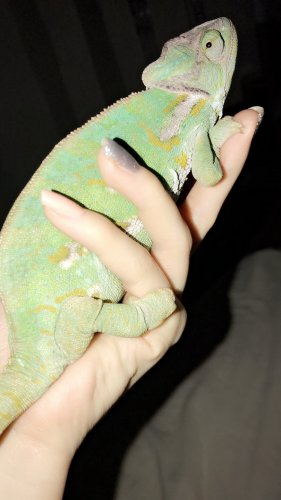
She's likely producing eggs judging from her size, shape and colors. Between the MBD and her size it won't be as easy as it should be.