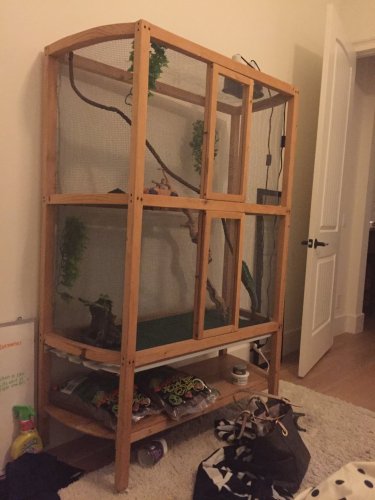
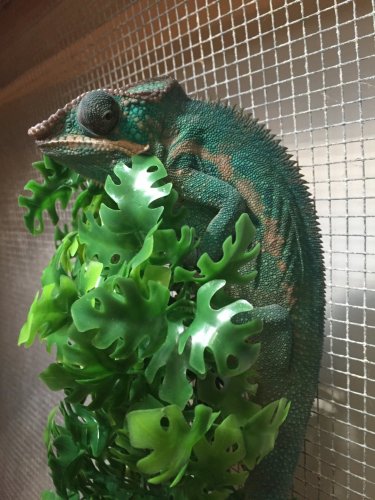
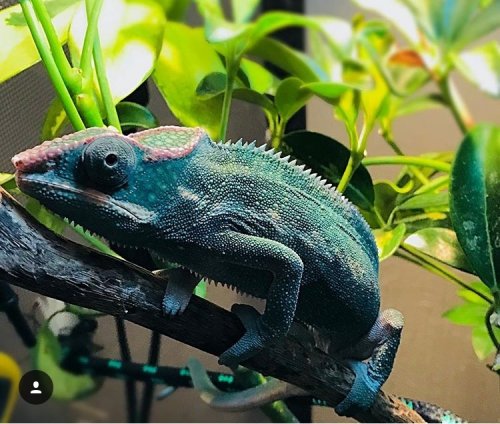
Hey again! I saw the duplicate post in General and figured that's what happened. I'm glad we have not scared you off yet. I know it's a lot of info tossed at you, but glad you realize we are just trying to help
To answer you main concern. Every cham will have preferences, although variety is very good. In the post in General discussion I think I recommended cricket feeder cups that reduce escape. If I didn't let me know, and I will get you a link to some examples. The two biggest places to get good variety insects are any reptile specialty stores in your area, or online. I personally use crickets as a "base feeder" and rotate through dubia roches, hornworms, silk worms, superworms, and wax worms. I'm hoping to get some butterworms and black soldier fly larvae soon. Mealworms are okay occasionally, however they do not make a good base feeder and some keepers swear off using them at all. Some other feeders I've heard of that I personally haven't used are stick bugs, preying mantis, locust, house flies, blue bottle flies... and I'm sure there are even more.
Now to address some husbandry things. It's easy to be confused because honestly, there are often different ways to do things. As new keepers, it's best to stick to basics like the info in the care sheets here:
https://www.chameleonforums.com/care/caresheets/panther/. This is the best info ever! I refer back to it often to save my typing, lol. Some of the more experienced keepers have hit on some things in the other post, so these may be repeat. I'll try to keep answers simple and short, and you can research from there or ask questions to clarify. Questions are always good! That's how we learn to be better cham owners!
Feeding - What are you feeding your cham? small crickets, mealworms(recently liked), and hornworms-still trying to expand his tasteWhat amount? 3-4 crickets or mealworms What is the schedule? I feed him once during the day How are you gut-loading your feeders? Fluker's Cricket Quencher and zoo med cricket block
He should be eating more, check the
caresheet on that one. The cricket blocks are pretty poor nutrition, the better cricket nutrition, the better cham nutrition! Type "gut loading" into the forum's search bar and you will find so many options. Gut loading is what you feed your insects can pre buy tried and true brands like Cricket Crack or you can use approved fresh veggies and fruits or both! Good info
here
Supplements - What brand and type of calcium and vitamin products are you dusting your feeders with Zoo Med ReptiCalcium "with D3" and what is the schedule? when I feed my cham
Okay, you will want to stop using the D3 at every feeding asap. Calcium without D3 should be every feeding. For a panther, caresheet recommends only twice a month. They can overdose on D3. Also adding a vitamin supplement twice a month, also in caresheet. Vitamins and minerals can be done so many ways, but this is a good base start.
Do you see your chameleon drinking? In the beginning no, But now I have to sit there with his tongue for 5 min on the squirter nozzle.
If your cham is drinking for long periods of time or rushing over to drink, he is dehydrated and not getting enough through the day. The dripper will help with this. Make sure the drips are falling onto the leaves when you set it up. Not all chams will know to drink from the dripper itself.
Fecal Description - Briefly note colors and consistency from recent droppings. Looks like a slug when fresh Has this chameleon ever been tested for parasites? no
What color is the poop? Should be dark fecal with white urate. If the urate is yellow or orange, big sign of dehydration. Great info thread with pics
here. Fecals are recommended, but unless your guy is sick, you should be able to postpone that. Check with an exotics vet if an exam is required before fecal. Be sure to mention it's a cham. My vet doesn't require a visit and it's only $30 for me.
- Temperature - What temp range have you created (cage floor to basking spot)? Lowest overnight temp? How do you measure these temps?I dont know what you are asking here
Temperature will have a gradient, where the bottom of the cage is cooler (aka ambient) and the spot right under the heat lamp is highest (aka basking spot). These temps are very important as well as humidity. Check the caresheets for what they should be. It is different depending on species of cham, age and even gender sometimes. Humidity is the moisture in the air in the cage. This is increased with mistings, drippers, and live plants. In Florida, this should be fairly easy. You can get humidity and temp combo devices on amazon super cheap, or a hardware store probably. Temp and Humidity are VERY important.
Plants - Are you using live plants? If so, what kind? No
Not 100% necessary, but you will be glad you did. Live plants are awesome. Stick with shade loving, water loving plants, and put it under a dripper or mister, almost no maintenance! They keep humidity in the cage and chams seem to love em! Just make sure they are not toxic.
Placement - Where is your cage located? Side of my room. Is it near any fans, air vents, or high traffic areas? fans, yes
Not sure how often the fan is on, but if it blows onto the cage, it can dry it out quickly, decrease humidity. So just keep an eye on temp and humidity levels when fan is running.
Did I keep that short? Doesn't feel like it, ha! Hopefully this makes sense, if I can clarify anything, just ask. Be sure to read the caresheets, those are such a blessing


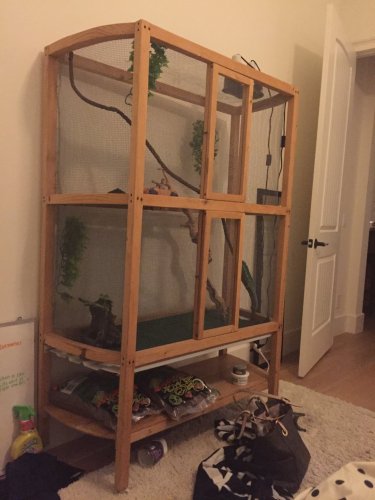


 Don't take any of our advise as attacks, we are here to help and are glad you are seeking info. Unfortunately chain petstores are not as knowledgeable as they should be. For different types of feeders, lots of people order online, or you can see if there is a reptile specialty store in your area.
 But he will definitely need a branch to chill under his light. Not sure your temps, but burning can be a concern. Make sure at the very least, that you can hold your own hand where his basking spot is, and it's not uncomfortable. If he has a pension for climbing the wire sides, make sure the wire closest to the lamp isn't too hot either.