Im going to give you advice on keeping a chameleon at the moment. I think once this is mastered we can then give you advice to go on to breeding. If you cant take care of a 3 month on to adult. NO WAY would you be able to rear young.
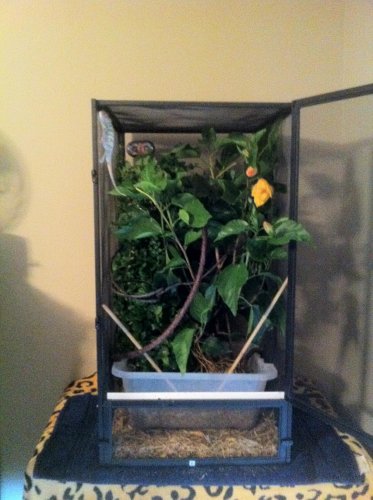
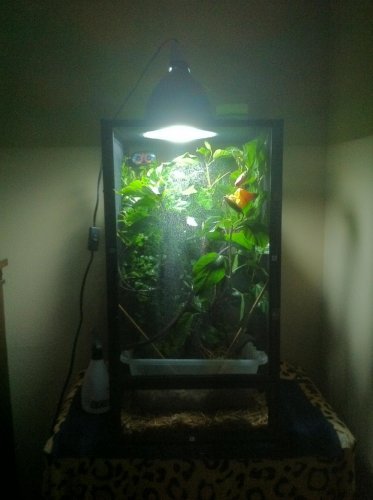
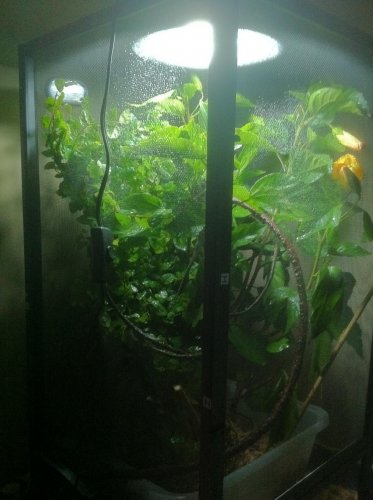
Cage: You have many options here. You can fabricate your own, free range or buy a pre-fab screen cage. I personally like to graduate cage sizes as a chameleon grows. A chameleon 1-4 months a 16x15x20 screen is perfect. Allows them to hunt efficiently. From 4-8 months i will keep them in a 18x18x36 and then a minimum cage size of an adult should be 24x24x48' SCREEN. Put in as much rope, vines and live plants as you can. Live plants will help with the humidity among other things. Be sure to use non toxic plants. Basic chameleon safe plants schefflera, ficus benjimina, hibiscus and pathos. Replant all pots with plain top soil. If you dont want any bugs microwave or bake the soil. Put the cage as high up in the room as you can. Not near any vents, exterior doors, fans or windows.
Lighting 10-12 hours: You have many option here also. UVB is crucial, your chameleon will not live without it! A 5.0 reptisun, reptiglo, zilla tropical linear tube (length depends on cage size) and a regular house hold bulb for basking. The house bulb watt will depend on how far your nearest branch is from the light and your ambient room temps. If you have live plants in the cage. You will want to put a 6800K plant light over the cage as well.
**Weather permitting take your chameleon outside as much as possible.
***Change UVB bulbs every 6 months.
Temps: Basking temp 90* ambient temps 72* measure by digital gauges. A 10-15* degree night time drop in temps is great. I dont recommend going below 50*. If temps get to low at night use a ceramic heat emitter. Absolutely no light at night.
Hydration: Couple of options here as well. Automated systems like a mist king, aquazamp, monsoon are great. You can get the manually pump sprayers, battery operated sprayers and typical bottle sprayers. Misting sessions should consist of 2-5 minutes/2-3 times a day. Another great addition to add to complement your misting schedule is a dripper. It is very important that your cage dries out between watering sessions. Drainage is key for some set ups.
Humidity: Fluctuating humidity is best. 50-80% is ideal.
Food (Feed appropriate sized food. The size should be no larger than the distance between the animals eyes.): Gutload feeders (24 hours before feeding). Gut load ingredients listed below. Fruits and veggies are a simple solution hydration and extra nutrient for most feeder like crickets, dubai, discoides, turkish red runner roaches. All of these should be considered your chameleons main staple diets. Silk worms and horn worms are great snacks. You can also wild collect feeder but be careful where you collect make sure it is free of pesticides. Katydids, cicadas, moths, locust and bees to list a few.
**I do not recommend super worms or meal worms. Chameleons absolutely love them. Abused (using them as a staple) the only problem is if they are fed off without properly gut loading. It is guaranteed your chameleon will refuse any other food. Then it is a matter of time before the refuse these insects. They are poorly nutritional balance in the bran food/bedding they are kept in. You can use the same gut load ingredients listed below ot make these insect more balanced. i still strongly recommend if you do choose to feed these off to only feed at the end of a feeding as a snack only. Limit to only 2-3. This recommendation is from my personal school of hard knocks.
***Wax worms should only be used as snacks also. I dont recommend using them. In excessive amounts. These have caused impaction in chameleons.
Supplements: Plain phosphorus free calcium every feeding and Reptivite twice a month. Panthers in general are sensitive to VitA sources we are able to provide in captivity. Providing a product with preformed VitA will solve this issue. You have to be cautious when using this. Any instance of a preformed vitamin, a animal can overdose leading to some serious health issues.
Gutload: Ingredients compliments of sandrachameleon.
alfalfa (protein, vitamins including K)
kelp (iodine, calcium, magnesium)
Dried, shredded dandelion leaves (calcium, vitamins)
sunflower seeds (B vitamins, folate, potasium, etc)
Sesame seed (calcium, iron, copper, magnesium, maganese, selenium)
Raw pumpkin and squash seeds (Protein, Vitamin K, Iron, Copper, Magnesium)
dried mixed cranberries and blueberries (sweetness, antioxidants)
ground (dead and dry) garry oak and maple tree leaves (tanins, fibre)
roasted seaweed (as used for maki sushi)
hemp seed (Essential Fatty Acids, essential amino acids, protein, fibre)
bee pollen
spirulina
brewers yeast (B vitmains including folic acid, chromium, selenium)
slivered raw almonds (potasium, b vitamins, vitamin E)
organic dried coconut (yummy)
millet (fiber, niacin, thiamin, riboflavin, lecithin, iron, magnesium)
poppy seeds (calcium)
ginger powder (Vitamin E, B6, Iron, Magnesium, Potassium, Selenium, and Manganese)
Milk thistle (live kidney de tox)
Wolfs berry (Super foods)
Wet gut load (same ingredients as above):
Add Fresh vegetables and fruits. Blend with some water in a blender. Freeze in ice cube trays. Once frozen remove from trays and put in gallon zip lock baggies and freeze.
Good luck!