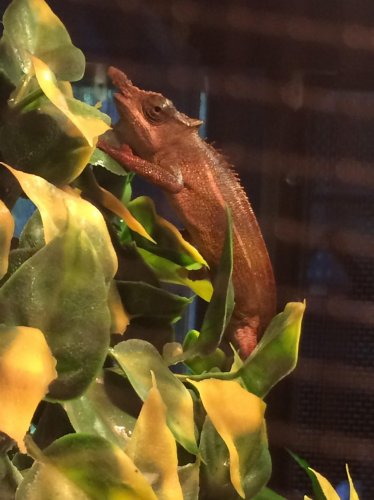
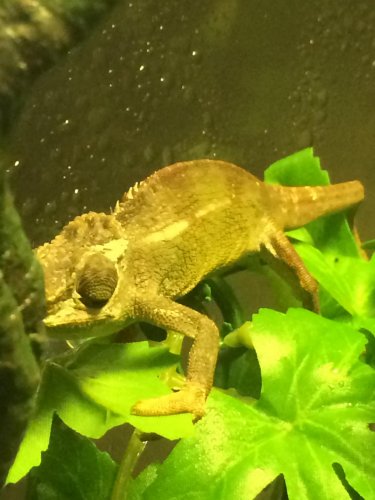
This is an interesting development, this years imports of Kinyongia uluguruensis. They are listed as only having a 2014 CITES quota of 10 F1 specimens. However it is interesting though as it appears Tanzania WC chameleon collectors seem to be expanding their collecting range to the Uluguru Mountains a bit more. As normally only the seldom seen Kinyongia oxyrhina, Trioceros deremensis (Usambara Mountain as well), and Trioceros werneri are seen from that region. This year is proving the myth that "The USA does not ever get any of the rare chameleons in" is not an accurate statement.
Best Regards
Jeremy A. Rich
Just to play devil's advocate, given the wide range of
K. oxyrhina, T. deremensis and
T. werneri, I don't think that we can really definitively say that these were previously being collected in the Uluguru Mountains at all. All three are also found in the Udzungwa and Nguru Mountains, and there are other mountain ranges that each of these species are found in too (
K. oxyrhina: Rubeho Mountains;
T. deremensis: Usambara Mountains;
T. werneri: Rubeho and Ukaguru Mountains), so its likely that they were collected from different locations independently of each other. That said, given the restricted range of
K. uluguruensis, obviously the collectors are starting to collect there.
It also goes to show you that collectors have to travel to more obscure area's for collection and are easily able to cheat the system that is in place to protect these species.
Carl
Agreed. Based on the recommendations from CITES following the Review of Significant Trade, however, I don't think we will see these other species being exported as
K. fischeri for much longer. In addition to a number of specific requirements relating to providing information on the distribution and management of
K. fischeri, the Tanzanian Management Authority is being required to "Provide details of how
Kinyongia spp. in trade are distinguished, taking into account the taxonomic changes adopted at CoP15" (
http://www.cites.org/sites/default/files/eng/com/ac/27/wg/E-AC27-WG-01.pdf). Thus, to satisfy these recommendations, they will have to document that they know and understand the updated taxonomy as accepted by CITES, know how to differentiate the species, and are aware that these other taxa do not overlap with
K. fischeri. So, I suspect we will start seeing a lot of changes to the quotas for this group, and how these shipments are labeled and permitted.
Chirs