Getting back to your original question and talking bearded dragons now rather than chameleons-
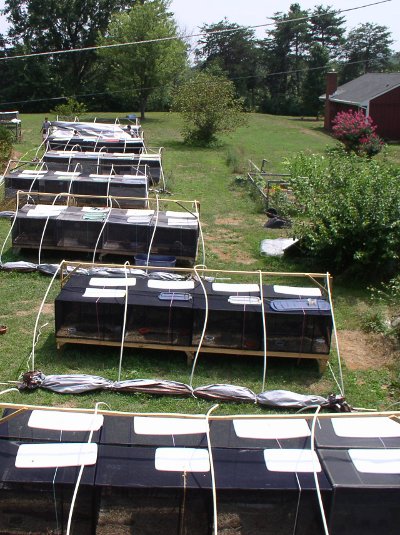
I have a colony of bearded dragons that gos back to 1994. I've produced thousands over the years and in that time, I have experimented a lot with feeding (and pretty much all other aspects of husbandry) and have held back large numbers of dragons various years to learn what I know with some certainty about them.
I only give you that background so you have some idea that what I'm about to say isn't just speculation- I've walked the walk and put in a lot of time trying different things to be able to make the following statement with some confidence. I'm saying this because what I'm about to tell you some hobbyists with a few dragons might find challenging to their beliefs.
For bearded dragons (not chameleons) it isn't so important what you use as your feeder insect. I've raised some to adulthood on mealworms alone (along with plenty of fresh leafy greens and rep-cal bearded dragon food- and for that matter I've raised groups on 100% vegetarian and 100% rep-cal bearded dragon food as well- which really only works if you are keeping them in isolation and 100% vegetarian dragons don't get quite as large, take longer to grow, and produce smaller and fewer (but very nice looking) clutches of eggs- 100% rep-cal pelleted babies and juveniles grow more slowly at first but after a while they speed up and catch up again in size as adults).
Keeping all that in mind, I'd make the following suggestions to you-
1) Offer the bearded dragon plenty of fresh leafy greens daily and keep a small bowl of rep-cal bearded dragon pellets in the enclosure at all times. If this is a baby dragon and he doesn't take to the greens and/or the pellets at first, offer them constantly anyway so they are there in the cage with him every day. It may take time, but after a while of walking on these food items/flicking them with the tongue and nibbling occasionally, every bearded dragon I've ever raised (thousands) develops a taste for these food items and begins to eat more and more of them. Cutting back on insects and switching to mostly pellets for my animals once they are adult size and getting them to eat plenty of fresh greens has *never* been a problem for me because I start offering these items when they are babies and continue offering them daily consistently.
2) Offer the dragon your choice of fresh insects alongside the greens and pellets. Dust the insects with calcium and d3 daily (or just calcium if your dragon is outdoors). While he is young and growing rapidly it is best to offer as much insects as he wants every day- this will help him grow properly and reach his size potential. Because insects are only one part of the diet, and especially if you want to cut back to more veggies and/or pellets for your dragon as an adult then I'd say choice of insect isn't very critical. Mostly they are there because they move which dragons find very appetizing and because they are protein and fat (both very important for proper development of muscle and brains, etc- for more info on importance of fat content in lizard diet before chameleon keepers who tend to believe low fat is always the way to go in insect diet, see comment by nutritionist in bearded dragon handbook by AVS on the importance of enough fat in the diet, also keep in mind that lots of insects are for baby rapidly growing dragons only, ).(More veggies surely more healthy for adult dragons than more insects, some studies of wild bearded dragons show adults eating up to 90% plant matter and only 10% insect matter, and for that matter I kept numbers of dragons long term on 100% vegetarian diet and they did great- just didn't grow quite as large and clutches were smaller in number).
Although I have used mealworms alone to grow a couple groups into breeding adults and they worked just fine, there are better choices nutritionally that are also convenient- superworms for example or if you want to grow your own insects, you can use tropical roaches or soldier fly larvae. But again, because you should be aiming for a long-run diet of mostly greens and/or pellets, insects eventually make up only a small part of the diet overall, and just about anything you choose will be fine.
So if you skip all the above and skim to the point at the bottom- you can use any insect, you don't have to deal with crickets unless you want to. Dragons love crickets though, so you might still pick some up from time to time in smaller quantities.



 God I hate Night shifts....