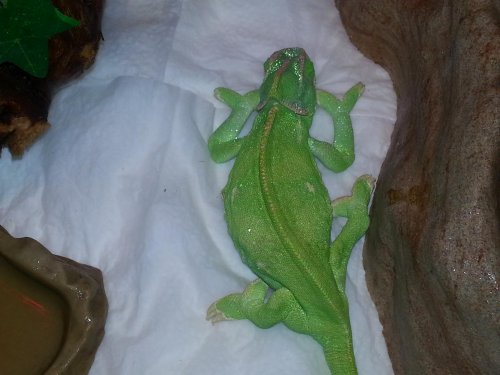
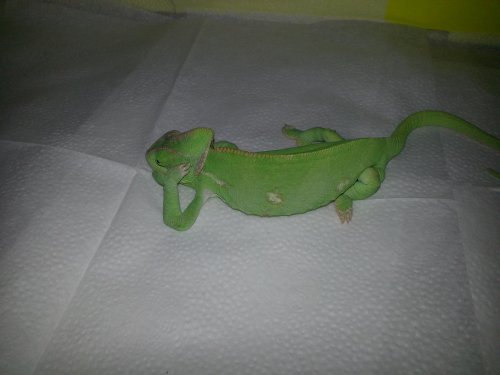
Definitely has MBD...poor girl.
Fastest way to correct it is to have a vet give the chameleon injections of calcium until her blood calcium levels are high enough to give her an injection of calcitonin which rapidly draws the calcium back into the bones.
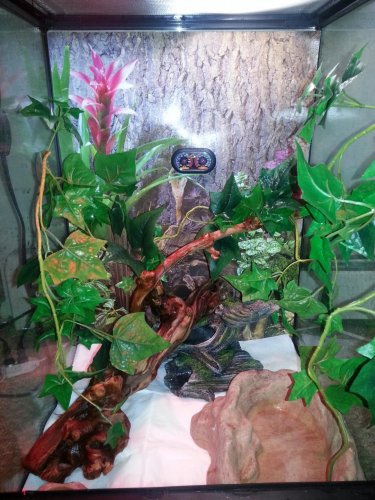
To keep the levels from going off again you need to get her husbandry right.
Appropriate temperatures allow for proper digestion so they play a role in the absorption of nutrients from the diet.
Exposure UVB light allowance the chameleon to produce the D3 needed to use the calcium in its system.
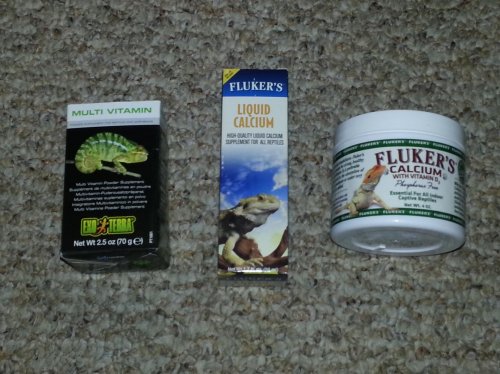
Since most insects we use as feeders have a poor ratio of calcium to phos its important to dust them with a phos - free calcium powder before feeding them to the chameleon to help make up for it.
It's also recommended that you dust twice a month with a phos - free calcium/D3 powder. This ensures that the chameleon gets some D3 without overdosing it and leaving it to produce the rest from its exposure to the UVB light. D3 from supplements can build up in the system and lead to health issues but D3 produced from exposure to the UVB light shouldn't as long as the chameleon can move in and out of it.
It is also recommended that you dust twice a month with a vitamin powder that contains a beta carotene (prOformed) source of vitamin A. PrOformed sources won't build up in the system like prEformed sources do so it leaves it up to the owner as to how much prEformed vitamin A is needed and provide it.
Feeding/gutloading the insects well is also important. You can feed crickets, locusts, roaches, superworms a wide assortment of greens such as dandelions, collards, endive, escarole, mustard greens, kale, etc and veggies such as carrots, sweet potato, sweet red pepper, squash, zucchini, etc. Veiled chameleons can be fed the same veggies and greens as the gutload contains along with a small amount of fruit (apple, berries, melon, pear, etc). They will also eat some plant material so be sure your plants are non-toxic and well washed both sides of the leaves.
Calcium not only plays a role in bone health but in other things such as muscles and it's important to keep it in balance with the phos, D3 and vitamin A. To do this you need to look at what you feed the insects, what you feed the chameleon and what you supplements with as well as providing the right temperatures and lights.
It's important too not to overfeed a female veiled. It can lead to bone issues, constipation, prolapse and large clutches. A female veiled can produce eggs without having been mated so it's important that she has a proper place (opaque container at least 12 " deep by 12 " by 8 " filled with moist washed playsand) in her cage to dig to show you that she needs to lay them.
Hope this helps and that she will soon recover.