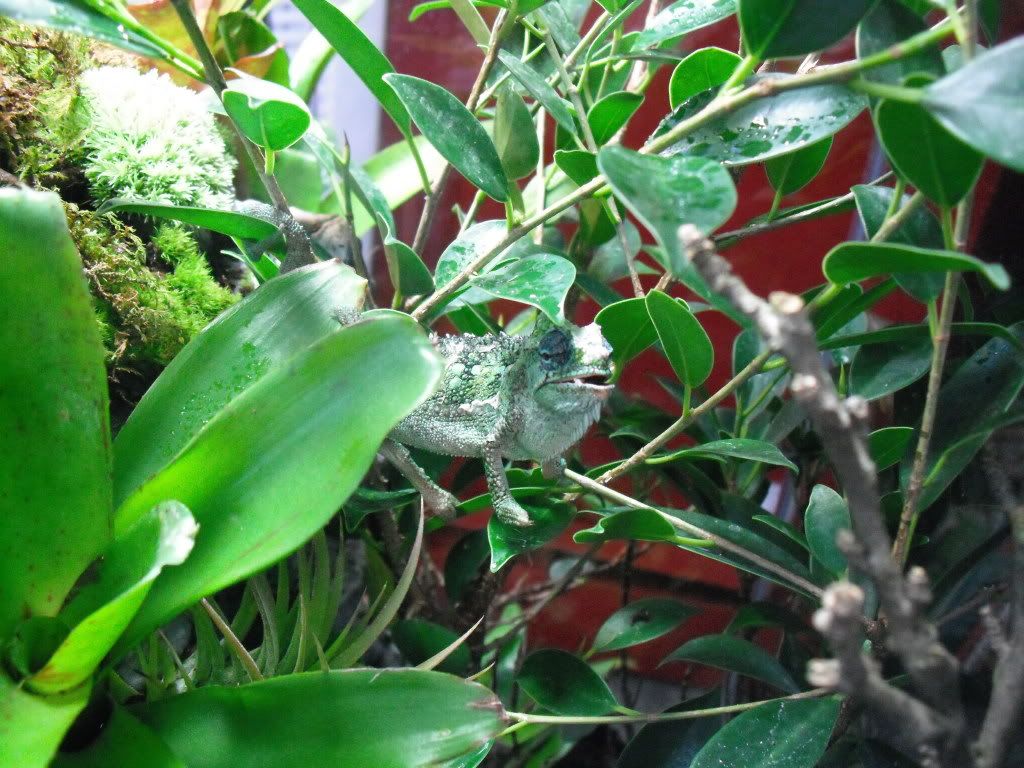
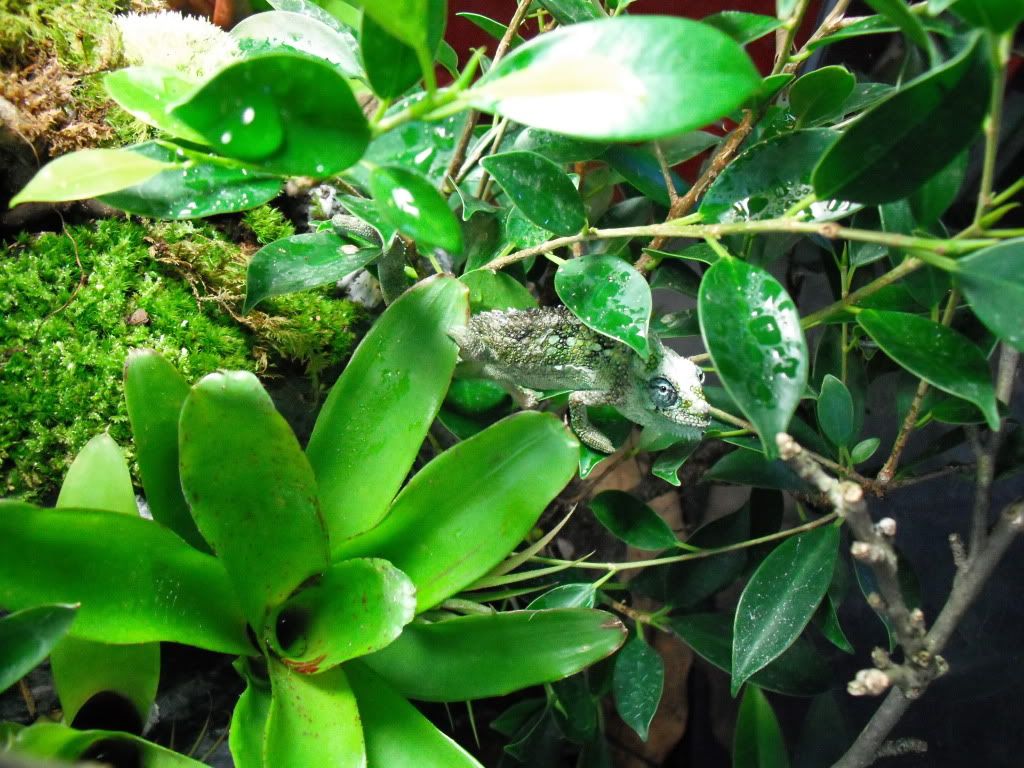
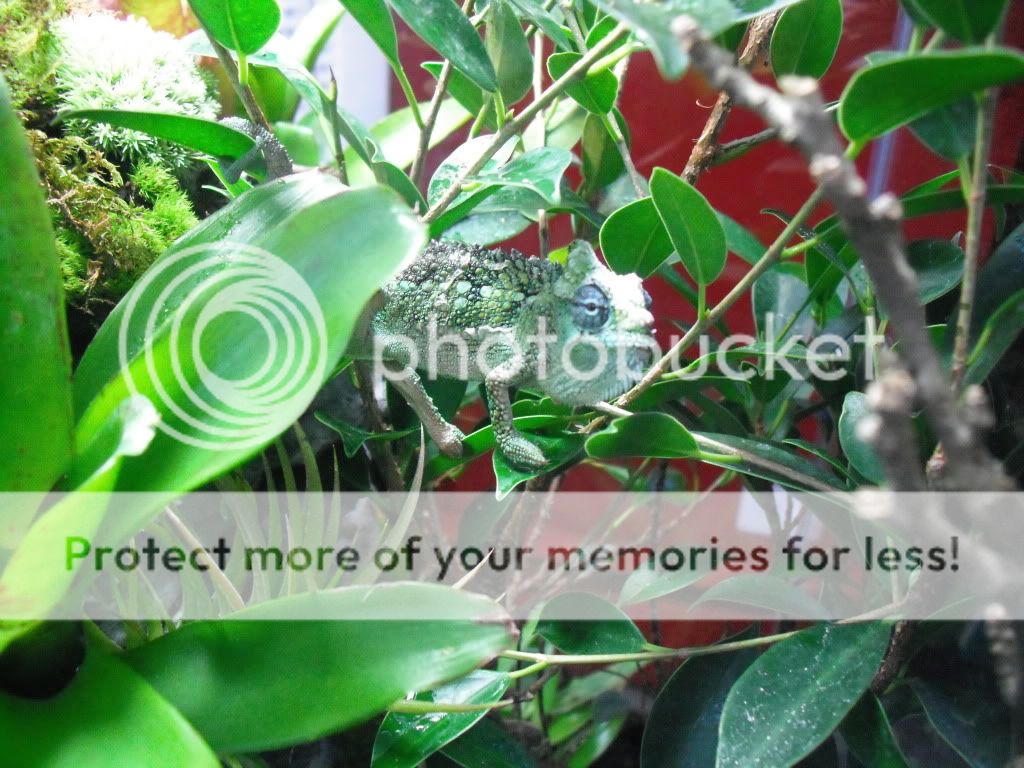
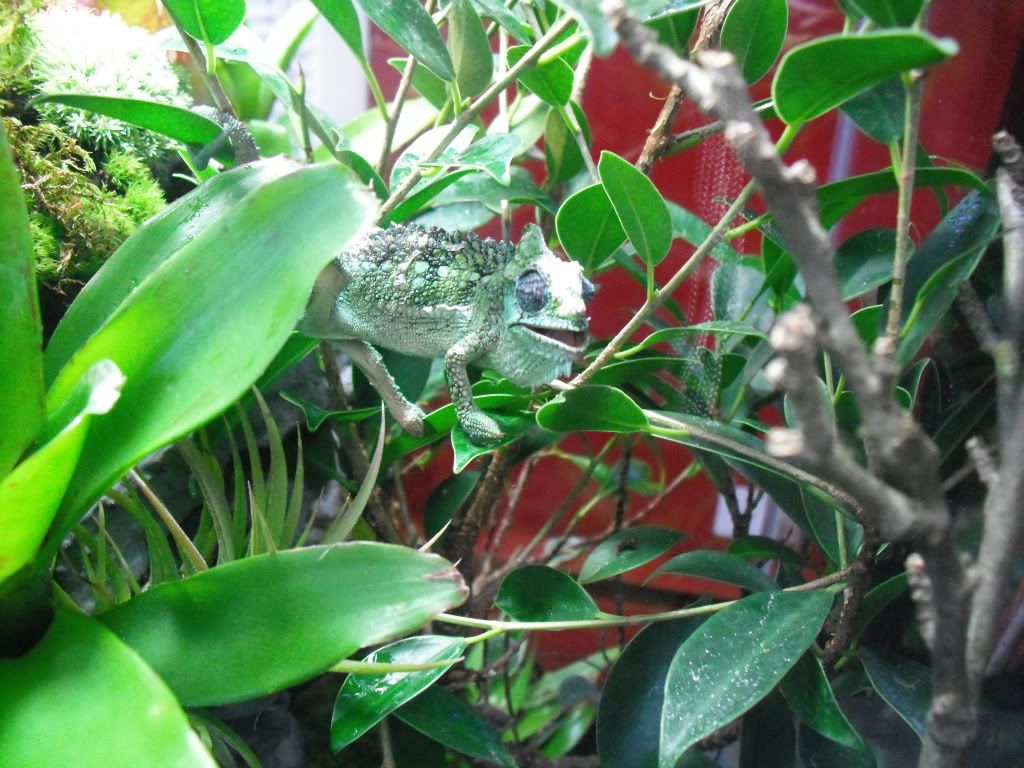
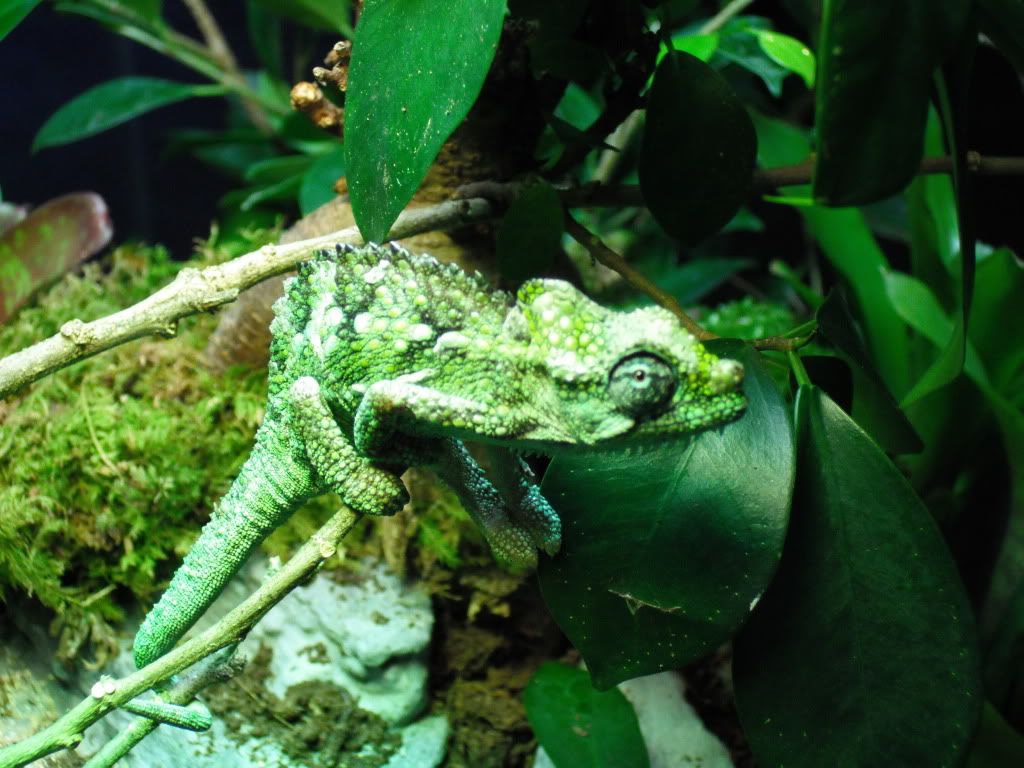
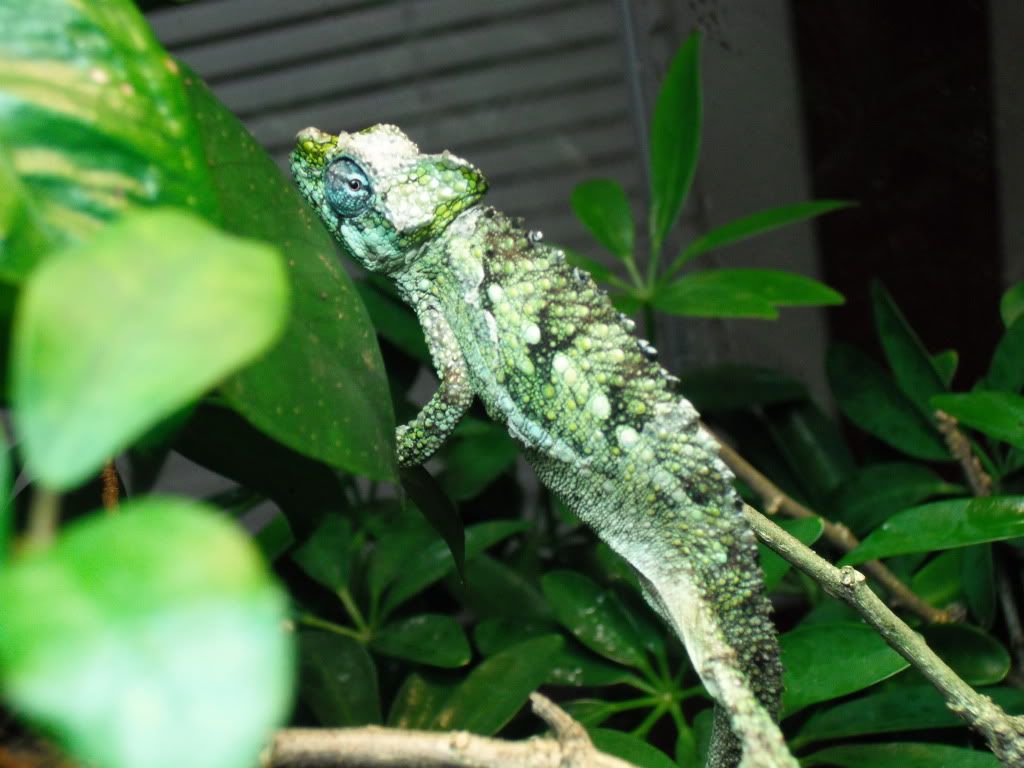
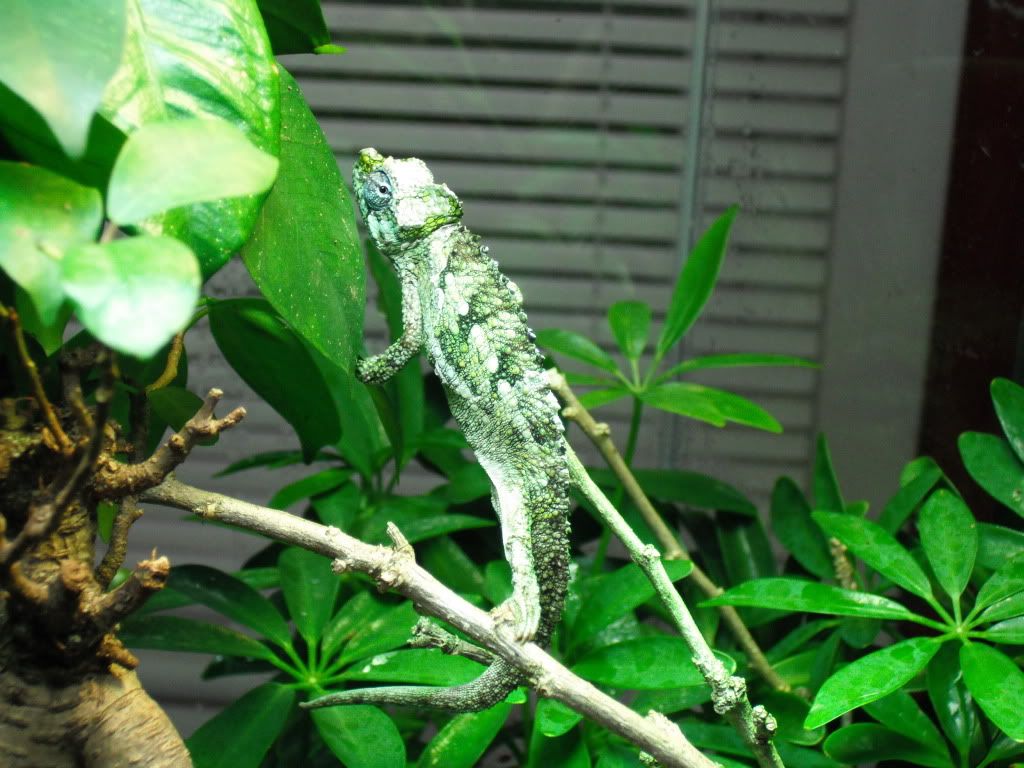
Great to see that he's looking happy!

As for the question of using screen vs. glass aquaria/solid sided cages, I'll echo Frank's experience. I bred Ch. calyptratus for several years in the late 90's and early 00's while living in Michigan. Over several years I used a combination of fully screen indoor, fully screen outdoor (June-August), and aquaria with partial or full screen tops for caging. Initially I always used fully screen cages for babies through adults. Adults were resilient and never had problems, though keeping them well-hydrated in winter was more challening. Babies that hatched during or just prior to the warm season (~May-Sept) always thrived regardless of what sort of caging I used (from fully screen to mostly glass).
However, it took a good bit of failure and the death of more baby Veileds than I care to admit or remember to realize that fully screen caging during the winted where I lived was practically a death sentence for many of the babies. Now, this might not be the case for someone that lives at a high latitude with a dedicated room where temperature and humidity can be maintained in a range appropriate for the neonates throughout the room (and therefore throughout the screen cages). In my case, at room temperatures and humdities many of the babies simply became dehydrated and died, or simply failed to thrive the way they did when born during the warm season. This was in spite of using a room humidifier along with misting them several times daily. They just didn't do well in screen cages.
Eventually I got to the point of housing them in glass aquaria or rubbermaid tubs with screen tops that were partially to mostly covered in plastic (leaving spac for a basking lamp and UV producing fluorescent). In these conditions they thrived, just as they did during the summer.
This is perhaps for another discussion, but I really feel that the dogma of using exclusively screen cages for chameleons has probably been seriously detrimental to their care in many situations, and downright deadly to a lot of chamelons (many in winter at higher latitudes; probably some due to air conditioning drying things out at lower latitudes). Screen cages are great when the ambient temp and humidity are appropriate for the species you're keeping. However, IME it is simpler and often works better to use substantially enclosed enclousures (including aquaria) for many chams in many situations. They've been doing this sort of thing in Europe for decades. Simply put, I think the screen cage dogma is wrong, and has sometimes held back progress.
Getting back to the Ch. hoehnellii here: my feeling is that at least part of reason for the dark coloration and unhappiness may have been due to the animal simply being unable to get warm enough. Adding the mercury vapor bulb, I think, may have fixed that. Ch. hoehnellii along with many other mid and high elevation chameleon species, interestingingly enough, prefer to maintain body temperatures similar to lowland species. For example, see here:
http://compphys.bio.uci.edu/bennett/pubs/155.pdf
All sorts of species from all sorts of environments choose to maintain their body temps in the mid to upper 80's F, which is warmer than ambient for species from higher elevations (achieved by basking/selective sun exposure). While they are active and behave fairly normally at lower temp, it seems like they operate at these lower body temps only when the environment doesn't allow them to warm up to their preferred body temps. It seems like providing sufficient access to warm basking temps is critical for all species, including those from normally very cool or montane habitats.
Chris