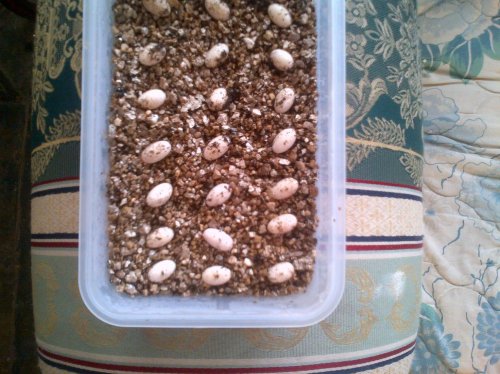
constant temperatures like that can cause long delays before development begins sometimes. I've incubated at all sorts of temperature routines. A couple of times constant temps in your range resulted in hatch times of 13 months for me!
It is better to let them get a bit cooler at night if possible, so you have a temperature swing. 5 degrees C cooler at night and you will have a better incubation time. Even better is if you do a cool period for several weeks near the beginning of incubation, then a day/night temp swing for the remainder.
Quite possibly your eggs are still good. You can start temp swings day/night any time during incubation.
The other thing I would point out since you say many in SA are having problems with pardalis- When herptivite came on the market I stopped using reptivite and switched to herptivite. The next year out of many clutches of eggs from multiple females, I had zero hatch- all failed. I switched back to reptivite and never had a problem like that again. I believe strongly it was a lack of vitamin a in the herptivite. I don't know what supplements you have available there, but if herptivite is popular there, I'd say you might want to try reptivite or another multivit that has vit a and not merely beta carotene.
As for humidity- if the eggs are holding their shape and not collapsing from lack of water or not weeping from too much, I wouldn't even worry about humidity. If the eggs look good, your humidity is fine and will not be a problem.