The hip bones do naturally stick out. They love vertical space and lots of it. They are an extremely active lizard
Wow- I'm surprised but I'm going to disagree on a lot of this based on contradictory experience.
Hip bones do not naturally stick out like the adult in the photo unless the animal is thin. They get fat deposits there just like iguanas and other lizards, as well as on top of their head like other lizards. My chinese water dragons did not have visible pelvic girdles (or very visible anyway- it's been a few years so I'm going on memory) and they weren't fat- they were built very similar to iguanas as far as fat deposits go but the tail was more tall and compressed and less round near the base.
I agree about vertical space, but keep in mind they also need plenty of horizontal space. They are a largish lizard with a need for space.
Mine were never "very active" though. They had short bursts of activity and long periods of sitting looking really awesome. A good bit less active than iguanas actually.
Sorry for all the iguana comparisons but most are somewhat familiar with iguanas.
The adult pictured is a skinny lizard, not small for his age though- that is an adult size male. He's probably not going to do much more growing.
A 55 gallon tank will work for a while, but is not large enough for an adult. Too narrow too short. If you could build something at least 30" wide and at least 4-6' long and 3-5' high that would provide a good quality of life. Plenty of thick branches and a water container large enough to for the lizard climb in and soak that is not too large to change 1-2x per day.
Diet- all sorts of insects, if you start a baby when it is young like yours you can put chopped greens (coleslaw sized) and bearded dragon pellets into a bowl and then offer insects (especially worms- superworms, mealworms, soldier fly larvae, silkmoth caterpillars- they also like earthworms) in the bowl where they will crawl into the salad/pellet mix and move it around then some of the salad mix will be accidentally eaten and over time there is a good chance your water dragon as an adult will eat the salad as well. Wild ones are omnivores, captives rarely are, although mine did eat occasional pellets and greens.
Bert Langerwerf wrote a good book on water dragons published by TFH (I think) just before he died. It is worth owning or borrowing if you have an interest in these lizards.



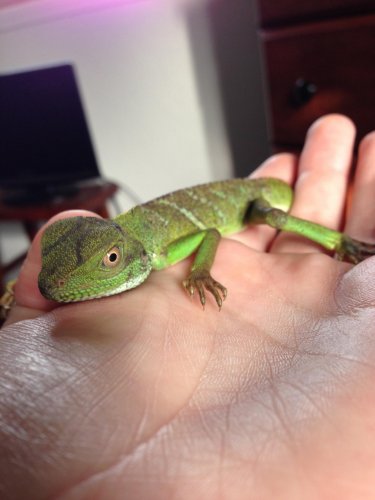
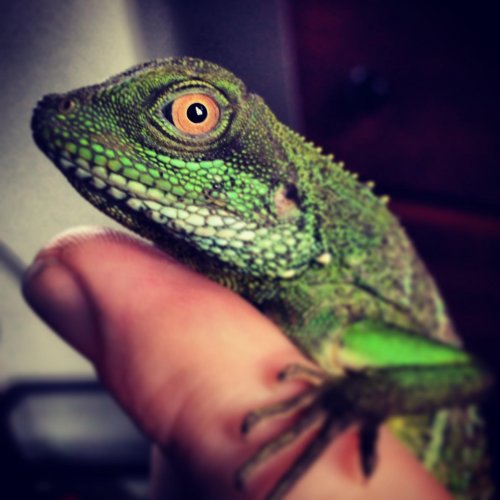
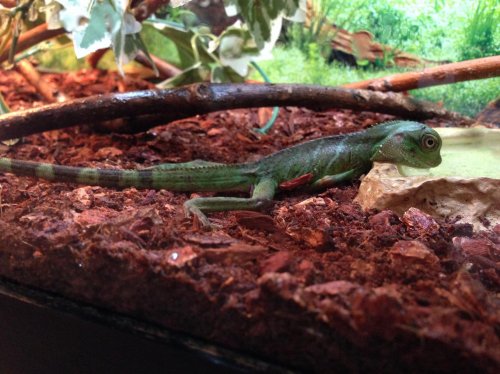


 . I do miss him but I couldn't afford to feed 4 lizards in the house. My two chams and bearded dragon go through 2000 crickets + treat feeders easily a month or two


