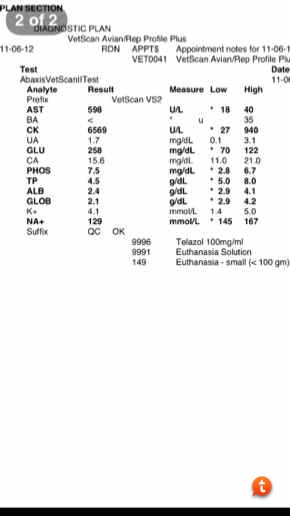
Unfortunately reptile bloodwork can be difficult to interpret because even though many of the same values between reptiles and mammals are measured with reptiles it can often mean significantly different things. You have to look at the whole picture, not just the individual numbers. And depending on where the bloodwork was done the reference ranges may be for that specific species or for a more generic reptile profile. There are not established reference ranges for veiled chameleons for example, so often panther ranges are used since they're most likely similar, but there can be minor differences. Or it may just be "lizard" reference ranges, which takes averages of the most studied species.
Shmeenakoz would be correct if this was a mammal, but reptiles don't play by the rules.
While AST often correlates to liver in mammals, in reptiles it has little reliable correlation to liver function - it's considered too non-specific to use to diagnose problems in reptiles because it can also be indicative of muscle damage, which can happen for a variety of microscopic reasons (MBD, gout, kidney disease, anorexia, etc). Bile acids are the preferred method of diagnosing liver function, but it often isn't part of the standard blood tests. It looks like it was part of this one (BA) but read too low to read, which is not clinically useful. Liver failure causes elevated bile acids.
Albumin is also poorly correlated in reptiles to the true albumin level. Total protein is more accurate. In this case it's low, but not tremendously low, so doesn't really point to anything in particular.
High glucose often causes concern for diabetes in mammalian species, but not so in reptiles. There is an intestinal adenocarcinoma in bearded dragons that can cause extremely elevated blood glucose levels (like in the 600+ range). But otherwise sometimes stress can cause it to elevate at the time of the blood draw and we don't really worry about it much.
The sodium (Na) levels are significantly low, which may be lab error but since the other electrolytes are normal I'm more inclined to think it's real.
CK is creatine kinase, which often an indicator of damage to tissues like muscle, which again can happen for many reasons.
The way to look at calcium and phosphorus is in ratio with each other: calcium should be at least twice as high as the phosphorus levels. If this ratio is inverted then it is suggestive of MBD or kidney failure. If the uric acid(UA) levels are also high this is extremely suggestive of advanced kidney failure. However it is not always so straightforward - my 6 year old male that just passed had a 1:1 ratio of calcium to phosphorus, which isn't good but isn't terrible, and his uric acid levels as normal. But on necropsy his kidneys were in advanced stages of failure microscopically. Females with egg activity will often have significantly elevated calcium levels. Maybe here the calcium was elevated due to reproductive activity but under normal circumstances would have matched the phosphorus and thus making me worry about kidney disease/failure. This can be a result of improper care (low hydration levels, incorrect supplementation and diet, etc). Not a judgement on your care - you just mentioned that you got a lot of misinformation so this may have been a major contributing factor. It sounds like you've learned a lot since then.
A CBC was not done, which looks at the red blood cell and white blood cell counts to look for infection or anemia.
The first page of this document (for one of the blood machines for reptiles) has a good basic explanation of many of the values:
http://www.abaxis.com/pdf/Avian-Reptilian Profile Plus.pdf
You have to correlate the bloodwork with the clinical symptoms, and there are many problems that either do not appear on bloodwork or are only minor changes and not indicative of one specific problem. Unfortunately the only way to know for sure what happened is to do a necropsy with histopathology of the major organs, which does cost a bit. Without that it is often just speculation.