lizal.fos
New Member
So... this is kind of a long story, please bear with me.
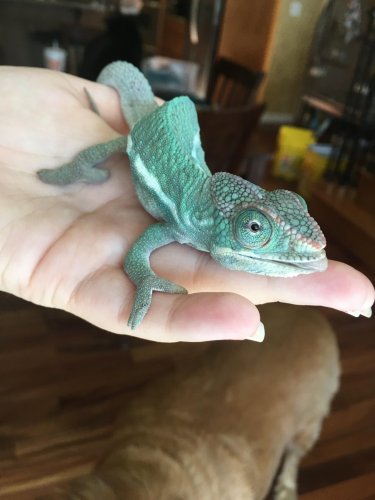
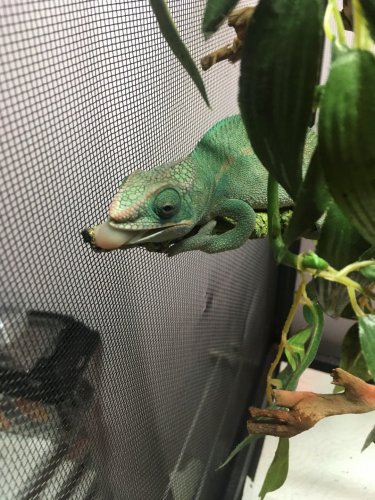
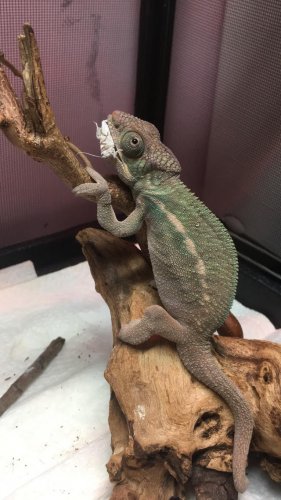
I used to work at a pet store, and some guy had bred all these panther chameleons which he had sold to the store and my fellow co workers. Three of my co workers got a chameleon from this guy and one of them gave me his because he's completely at a loss about what to do. All of them have MBD pretty bad, we suspect they may have not had any UVB at all in their first three months of living (We also think they may be a product of inbreeding). Mine in particular has a bit of a crooked back, a loose jaw (her tongue is always out), and very weak arms. (I think they may be fractured). These chameleons were purchased four months ago and are all now seven months old. Mine eats fine, she drinks fine, and is always alert. Her mobility is another story though... she always has a weak grip. I just received her on Monday and had no idea she was like this. Hopefully I'm portraying what happened accurately, but to get to the point.... I do not have the money to take her to the vet and I am giving her vitamins and calcium as directed, she also has a very nice UVB light on her. I was wondering if there were any tips on maybe giving her a split or wrapping her arms myself?
Her name is Eleven and she is seven months old and 35 grams as of today.
Thank you!
***I have lowered all the branches in her cage since these pictures were taken to avoid her falling***
I used to work at a pet store, and some guy had bred all these panther chameleons which he had sold to the store and my fellow co workers. Three of my co workers got a chameleon from this guy and one of them gave me his because he's completely at a loss about what to do. All of them have MBD pretty bad, we suspect they may have not had any UVB at all in their first three months of living (We also think they may be a product of inbreeding). Mine in particular has a bit of a crooked back, a loose jaw (her tongue is always out), and very weak arms. (I think they may be fractured). These chameleons were purchased four months ago and are all now seven months old. Mine eats fine, she drinks fine, and is always alert. Her mobility is another story though... she always has a weak grip. I just received her on Monday and had no idea she was like this. Hopefully I'm portraying what happened accurately, but to get to the point.... I do not have the money to take her to the vet and I am giving her vitamins and calcium as directed, she also has a very nice UVB light on her. I was wondering if there were any tips on maybe giving her a split or wrapping her arms myself?
Her name is Eleven and she is seven months old and 35 grams as of today.
Thank you!
***I have lowered all the branches in her cage since these pictures were taken to avoid her falling***