Hi, I’m looking into getting a panther chameleon in the future.. I have not long got a created gecko in a bio active enclosure nd now want to try my hand at chameleons. However, I am not starting until I have a good idea on everything chameleon related.
I plan to have a male panther in a minimum of 120x60x120. I’m looking at a hybrid set up so not entirely mesh but mostly as I’d like to do a diy background like I have for my gecko. I also want to do bioactive.
My problem is, there’s so much conflicting information online about everything. I’ve had a look through chameleon academy online also and found that useful but I’ve gone down such a rabbit hole now I can’t see the light no more .. please anyone with experience with what I’m thinking of doing able to help with adv of do’s/donts.
I must note im in the uk as I appreciate care needs differ around the world etc any help appreciated
Hi and welcome! Chameleon Academy is a fantastic place for current and correct husbandry and info. Are you finding it a bit overwhelming and just want it simplified? Do you have specific questions or concerns or just want a summary or quick run down of husbandry requirements? Do you need help with setting up bioactively for a chameleon? If you can narrow down or clarify where/what you need some guidance, we are a helpful community here and have a range of experiences.
Hi and welcome! Chameleon Academy is a fantastic place for current and correct husbandry and info. Are you finding it a bit overwhelming and just want it simplified? Do you have specific questions or concerns or just want a summary or quick run down of husbandry requirements? Do you need help with setting up bioactively for a chameleon? If you can narrow down or clarify where/what you need some guidance, we are a helpful community here and have a range of experiences.
Just a bit overwhelmed with the amount of information now I don’t even know where to start to research and figure what I need to do.
I think husbandry is my main worry with the set up inside the tank and the lights ? I got my geckos lights on the luminize so they dim on and off at dawn/dusk I wondered if I could do that for chameleon to regarding uvb and the plant light ? Obv won’t be able to with the heat lamp I guess?
Also some conflicting info about whah heat bulb I use ? Has to have a light ? Can’t be a deep heat projector?
I seen a betta terra enclosure yesturday which was 120x60x120 which I thought looked okay? Altho I see lots of conflicting info online about the type of tank used? I don’t think my house gets too humid thankfully so I think would be ok controlling it in a pvc or glass enclosure?
With bioactive is they safe for chameleons I’ve seen lots advice against it due to ingestion.. but wouldn’t have thought a chameleon would be on the ground? And I’d look to tong feed ?
Ok, well we can certainly help you out.
First, what kind of chameleon are you thinking about getting? Each has their own needs in certain areas. Humidity is one of those areas. I would suggest buying a hygrometer to check what your humidity is in your home and space where you would be putting your cham. This will help guide you as to what type of enclosure would work best for you. In many instances, all screen or hybrid usually work best, but I’m aware that in the UK, more enclosed glass or pvc is common. If you are getting a veiled/Yemen then you want there to be more air flow and lower humidity of ideally 30-50%. Panthers like it a bit more humid at 50-70%. It’s very easy to increase humidity, but not as easy to lower it. Whichever enclosure you are looking at, there needs to be good ventilation and air flow. With the glass enclosures, you need some vent holes at or near the bottom which will draw in air and the an open screened top for the air to flow out from. This is the chimney effect. Size needs to be at least 4’/120 cm tall and 2’/60 cm deep and wide. If you can go bigger, do it.
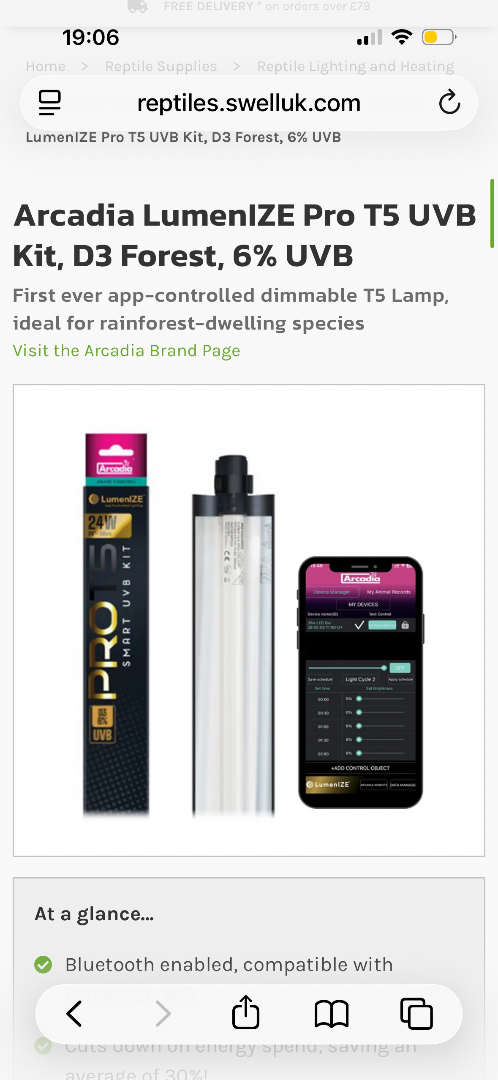
For lighting, I don’t see why you can’t use the Arcadia LumenIze for both your T5 UVB and a Jungle Dawn. For UVB, you do want to use T5 and Arcadia 6% or ReptiSun 5.0. Avoid any other brand UVB as they just aren’t reliable in their output. You want a distance of 8-9” (20-22 cm) between your highest branch or basking area and your uvb light. Then you figure out what strength basking bulb works best. For all baby chameleons under about 3 months old, and adult ladies, we want to keep them a bit cooler with basking temp no higher than 80F (27c). Adult males can have higher temps up to around 85F (29-30 c). It’s important to know, if getting a baby or younger chameleon, they enjoy walking upside down along the screen top which places them at risk for getting burned. Until they are too big to do this, it’s best to raise the lights around 3” (7 cm). I would also suggest avoiding halogen spot lights as they are more concentrated heat. Yes, it’s best to use a light bulb for basking rather than deep heat projector. No colored lights. They can harm sensitive googly eyes.
Now you want to fill in your enclosure with lots of safe live plants which have been cleaned of any potential chemicals. I use Dawn dish soap in a big bucket to wash the leaves (sometimes just dunk the plant upside down and agitate) and then rinse very well with clean water and then rinse again and one more time. I take my plants down to the bare root to avoid pests and then repot. Pothos is one of the best plants for all species. Yes, bioactive is great. I have all of mine bioactive and they have been doing very well. They all enjoy hunting their isopods at times, which I see as natural enrichment for them. I make sure to have a thick layer of leaf litter and some good sized cork pieces for the isopods to hide under and eat. Just make sure to have a very good drainage layer and system in case of excess water. I use fabric root pouches and only when I had a hole in the misting tubing did I have a drainage problem.
I like to use natural branches of varied diameters which help exercise little mitten feet. Again, wash with soapy water and rinse well before using. No need to sterilize or bake branches. Most of us prefer the Fluker’s type foam fake vines, like these. https://www.amazon.com/Flukers-Bran...76785014&sprefix=fluker's+vine,aps,179&sr=8-4 Some, like the black Exo Terra vine shed tiny particles which can and usually do end up in little googly eyes.
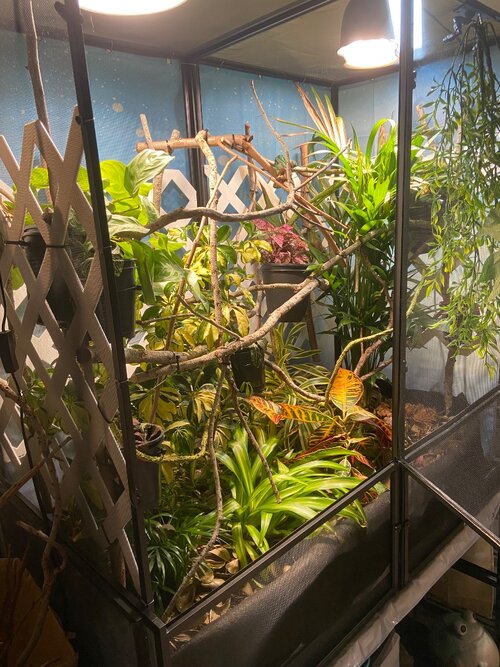
To attach your branches and even plants, I like using garden trellis or lattice. I cut to fit (sanding any sharp edges dull) and attach to the frame with thin wire. I will also add extra screws to the frame to attach some wires to for extra support. It’s easy, inexpensive and works well.
Putting a pic below of one of my enclosures when it was all newly set up.
Now you have a beautiful and appropriate enclosure. Ta da!
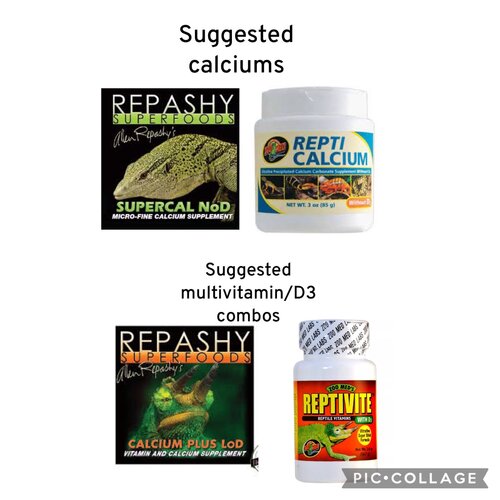
Supplements are next and very important to get right. There’s several different ways and many many different products out there. What many of us use and I always suggest is a phosphorus-free calcium without D3, which you’ll lightly dust your feeders in at every feeding. Then for one feeding every other week (some do twice a month - to-may-toe/to-mah- toe) you’ll use Repashy Calcium Plus LoD or ReptiVite with D3. These two are combination multivitamins and D3 and are preferred because of the type of vitamin A that they contain.
Feeders - see the attachments below. Keep your buggies well fed a healthy diet of fresh greens and veg, with a little fruit. Avoid the colored cubes and jelly pots - those have poor nutrition. For lazy days and as a supplement I use Repashy Bug Burger. Feeding amounts will vary depending on the age and gender of your chameleon.
Ok, have I overwhelmed you yet? This is it in a nutshell. I probably could have been more succinct, but that’s not how I do. Undoubtably you may have more questions, but hopefully all of my prattling on will help you figure out what specifically they are.
@MissSkittles
I’m looking to get a panther chameleon specifically so looking to specify care and set up towards their needs.
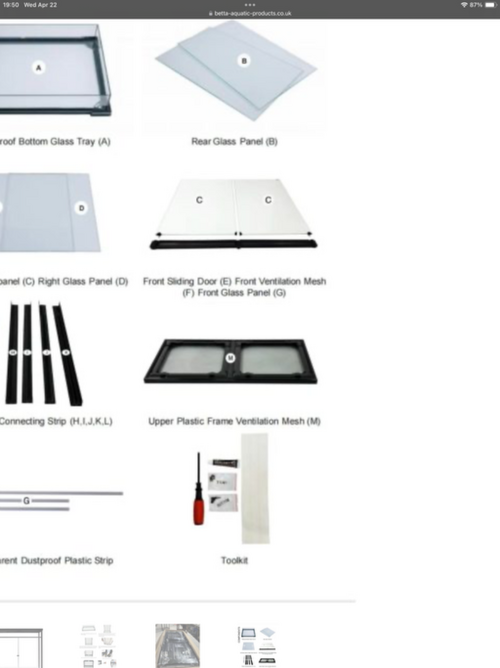
The one I’ve found that 120x50x120 is glass with a mesh top but the doors are removeable so was thinking replacing them with a mesh panel/mesh doors.
50-70% is manageable as my house normally sits 50-65 moat the time. Theand the enclosure im looking at does have an air vent just new low the doors too so that should help with ventilation Iin the way you described?
So uvb I would want Arcadia t5 6%? Or are those two different lights sorry?
Arcadia is what I use so far so definitely want to stick with them as I know they work well. When you say strength .. what do you mean? Would I have the heat source on a dimmer? I plan to get a baby so want to make sure it’s correct for them and I can adjust as they grow where necessary.
The temps should be manageable my house never gets cold… do we turn off heat completely at night? Do they get pissed if too hot like my gecko would? Is there anything you advise for keeping them cool in the summer? If not halogen what would you recommend specifically?
I cleaned and repotted all the plants I have in geckos tank and plan to do that for the chameleon too are any particilarly good plant options for chameleons besides the Pothos for variety?
I use leaf litter currently too so as long as there’s that it should minimize the chances of chameleon ingesting substrate along with the isopods?
Supplements blew my mind. That seems more in depth than geckos requirements.
Feeder bugs are no issue im pretty much on top form with gut loading and providing variety to my gecko already.
I’ve also seen since I did this thread about misters, droppers and diggers… I manually mist gecko tank but chameleon seems more in-depth here too.. which do I go for? Is hand misting enough? Pros/cons of these methods?
Is there any common mistakes you’ve seem that are big no no or anything you recommend avoiding? I feel this is the start of a very big and long project but really appreciate your help so far!
NOTE cham lights need to sit on top of the cage screen top. You do not want to put them inside the cage. Arcadia T5HO 6% UVB bulb. This needs to run the entire width of the enclosure. Then get a jungle dawn LED light for the plants Running the width is best as well. Then a simple dome fixture 5.5 inch wide deep dome version is what I prefer. It pulls your bulb up into the fixture so it is not sitting right on the screen. Start with a 60 watt regular incandescent white bulb for heat.
NOTE cham lights need to sit on top of the cage screen top. You do not want to put them inside the cage. Arcadia T5HO 6% UVB bulb. This needs to run the entire width of the enclosure. Then get a jungle dawn LED light for the plants Running the width is best as well. Then a simple dome fixture 5.5 inch wide deep dome version is what I prefer. It pulls your bulb up into the fixture so it is not sitting right on the screen. Start with a 60 watt regular incandescent white bulb for heat.
NOTE cham lights need to sit on top of the cage screen top. You do not want to put them inside the cage. Arcadia T5HO 6% UVB bulb. This needs to run the entire width of the enclosure. Then get a jungle dawn LED light for the plants Running the width is best as well. Then a simple dome fixture 5.5 inch wide deep dome version is what I prefer. It pulls your bulb up into the fixture so it is not sitting right on the screen. Start with a 60 watt regular incandescent white bulb for heat.
Yes, it is the lumenize option so you just want to pay attention to the set up for the app and make sure the output is at full strength of the bulb for most of the day. Most people do a gradual lights on/off over an hour period with this specific one. They have a lumenize jungle dawn (led for plants) too I believe.
You want the 48 inch fixtures if your cage is 120cm wide.
Yes, it is the lumenize option so you just want to pay attention to the set up for the app and make sure the output is at full strength of the bulb for most of the day. Most people do a gradual lights on/off over an hour period with this specific one. They have a lumenize jungle dawn (led for plants) too I believe.
Amazing thank you had a quick peeke at the sizing perfect. Looking at the top of the tank I want it’s not got full mesh there seems to be a panel down the middle would this be an issue could I put the bulb either side ?
Having the option to change out the doors to screen, that is what I would opt to do.
T5 is the type of light fixture. It’s linear and you want it to be able to span the entire width of your enclosure. The strength of the uvb is what levels of uvb it puts out. 6% is what is ideal for chameleons. Arcadia makes quality lights and as an added bonus, they daisy chain to each other. They do come in a variety of lengths. The uvb bulb will need to be changed every year. The light you showed is perfect.
Strength in terms of basking lights is what wattage of bulb you use. For a baby, I would start with a 40w and see what kind of temps that gives at the basking area and with the fixture raised those needed few inches/cm. There are dimming dome fixtures, but without something like a herpstat, you would need to manually dim it. A herpstat is something that once set, will maintain your desired temps. It’s useful but not necessary and atm, let’s not over-complicate things.
Chameleons like and do best when given cool nights and can tolerate temps in the 60’s easily. No lights at all at night and no heat unless temps drop below 60F.
I actually don’t worry about my chams ingesting substrate as they hunt their isopods. I’m sure it is something that occurs in the wild, and being small or minute amounts of organic material, they should be able to pass it thru their systems. It’s when they ingest large amounts of soil or sand and that dreaded calcium sand that they get can get a bowel obstruction.
If it’s available there and in your budget, a Mist King misting system is awesome. Hand misting is perfectly fine. However done, you want to mist the plants for about 2 minutes twice daily - right before lights go on and then off. If urates are looking a bit dark, you can add an afternoon misting or use a dripper in the afternoon for about 15 minutes. I hate to complicate things more, but…. Many use a fogger at night to raise humidity as high as they can, which simulates the hydration obtained via fog in the wild. One can/should only fog provided night temps are below at least 70F.
Common mistakes which I’ve seen often - enclosures too small, not enough plants or branches, wrong supplements, not planning ahead and locating a vet and over/underfeeding.
Having the option to change out the doors to screen, that is what I would opt to do.
T5 is the type of light fixture. It’s linear and you want it to be able to span the entire width of your enclosure. The strength of the uvb is what levels of uvb it puts out. 6% is what is ideal for chameleons. Arcadia makes quality lights and as an added bonus, they daisy chain to each other. They do come in a variety of lengths. The uvb bulb will need to be changed every year. The light you showed is perfect.
Strength in terms of basking lights is what wattage of bulb you use. For a baby, I would start with a 40w and see what kind of temps that gives at the basking area and with the fixture raised those needed few inches/cm. There are dimming dome fixtures, but without something like a herpstat, you would need to manually dim it. A herpstat is something that once set, will maintain your desired temps. It’s useful but not necessary and atm, let’s not over-complicate things.
Chameleons like and do best when given cool nights and can tolerate temps in the 60’s easily. No lights at all at night and no heat unless temps drop below 60F.
I actually don’t worry about my chams ingesting substrate as they hunt their isopods. I’m sure it is something that occurs in the wild, and being small or minute amounts of organic material, they should be able to pass it thru their systems. It’s when they ingest large amounts of soil or sand and that dreaded calcium sand that they get can get a bowel obstruction.
If it’s available there and in your budget, a Mist King misting system is awesome. Hand misting is perfectly fine. However done, you want to mist the plants for about 2 minutes twice daily - right before lights go on and then off. If urates are looking a bit dark, you can add an afternoon misting or use a dripper in the afternoon for about 15 minutes. I hate to complicate things more, but…. Many use a fogger at night to raise humidity as high as they can, which simulates the hydration obtained via fog in the wild. One can/should only fog provided night temps are below at least 70F.
Common mistakes which I’ve seen often - enclosures too small, not enough plants or branches, wrong supplements, not planning ahead and locating a vet and over/underfeeding.
If I can’t place one really long tube across the length of the top due to the plastic in the middle could I just do two bulbs but obviously smaller? Would that be suitable?
I’ll have to do some more looking into the heat source as I know no dep heat projector and no halogen?
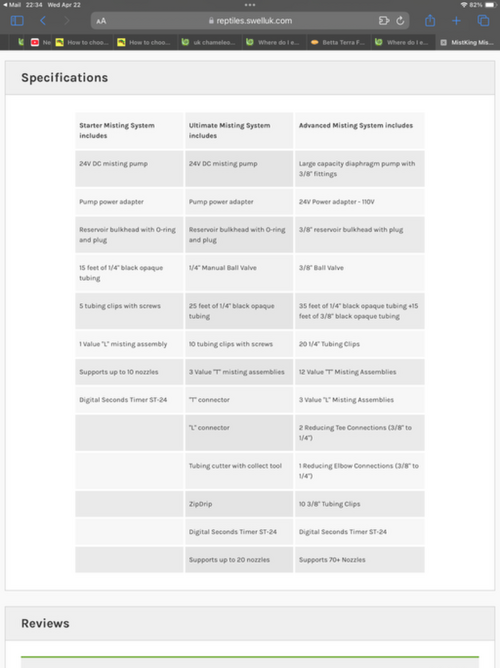
I’ve had a look at the most king system and there seems to be three different options? I’ve attached image of the specs
Regarding the fogger - temp will defo drop new low 70F which here in uk is 21c .. my house gets no lower than 17/18 thankfully. - 2 questions - is that too cold for chameleon at night or will they need heat on ? What’s the lower temp ranges suitable for panthers? As it gets below what u mentioned a fogger would be advised ? If so have that AND the mister? Do I need a dripper too?
Budget isn’t really a issue I just want to ,make sure I have everything as right as I possibly can so they can have a happy and healthy life and hopefully not have any issues arise that could of been avoidable..
Thankfully I have a great exotic vet who has experiences with chameleons! The plants im stuck on besides pothos. Regarding branches.. is there any unsafe wood? And I’ve seen online to use a variety of thickness/textures is this right? The supplements really puzzle me but I’ll figure that out separately.
It’s all very overwhelming and so much to think about so apologized for the thousands of questions
If I can’t place one really long tube across the length of the top due to the plastic in the middle could I just do two bulbs but obviously smaller? Would that be suitable? Yes, that would work fine.
I’ve had a look at the most king system and there seems to be three different options? I’ve attached image of the specs If you know that you will be getting many more chameleons or other animals which need misting on the same schedule, you would opt for the ultimate or advanced misting systems. For most, the starter system is more than enough. I believe it can handle up to ten mist heads, and the standard size enclosure you’d use only 2 mist heads.
Regarding the fogger - temp will defo drop new low 70F which here in uk is 21c .. my house gets no lower than 17/18 thankfully. - 2 questions - is that too cold for chameleon at night or will they need heat on ? Those temps would be fine. Here in Florida, there are wild populations of veileds and some panthers. Our temps in the winter can get into the 30/40’s (-1 to 4 c) and they somehow manage to survive in that. While we definitely wouldn’t subject them to these low low temps intentionally, they can tolerate the cold better than we think. What’s the lower temp ranges suitable for panthers? Think I just answered it. Certainly any house temps below 60F/15c would be uncomfortable for you and you wouldn’t stay any colder. As it gets below what u mentioned a fogger would be advised ? Yes, if your night temps are consistently cool, you can add a fogger/humidifier at night. It does help with hydration, but is not 100% essential. Some of us aren’t able to fog because our night temps are too warm. If so have that AND the mister? Yes, if you want. If you get a Mist King, you could always set it to do some brief mistings during the night instead, which would also boost humidity. Do I need a dripper too? No, only if you want one. I’m not a fan of using a dripper unless my chameleons need the extra hydration…like if they’ve been sick or on meds. When I do need to use one, I just poke a pin hole in the bottom of a plastic party cup and sit it on top of the screen with water in it.
Budget isn’t really a issue I just want to ,make sure I have everything as right as I possibly can so they can have a happy and healthy life and hopefully not have any issues arise that could of been avoidable..
Thankfully I have a great exotic vet who has experiences with chameleons! You might be ahead in this then. lol. It’s always best to get a fecal check for parasites, which usually involves a wellness visit with a vet. Even the very best bred animal can get parasites. The plants im stuck on besides pothos. I have no idea what plants are available in the UK. If you can find a weeping fig tree (ficus benjamina) at a decent price and size (60-90 cm), those are fantastic! Spider plants are safe to use. Tradescantia zebrina (wandering Jew) are very nice and easy. Prayer plant (maranta) are very pretty. Pothos comes in several varieties and some are very striking. Polka dot begonia (begonia maculata) is also very striking. Some have placed orchids in their enclosures. Air plants are also an option which is not on the list. I believe all in the dracanae family are safe, and there are many different types of dracanae. I’ve no idea where you buy your plants from there. Over here, the chain home improvement stores (Home Depot, Lowe’s) and of course, Walmart have lots of plants. Florist shops will be an option, but may be over-priced and the leaves treated with something to keep them shiny. Most plants can be started from clippings, if you’ve the time and friends or family willing to give you some. Regarding branches.. is there any unsafe wood? Yes! Avoid conifers (pine and the like) which have a strong odor and thick sap. Eucalyptus is also no good. My favorite is oak and I once lucked out and found a fallen sycamore. When my neighbors trim their trees, I scavenge their branch piles. There’s not any decent wild lands here with trees that I can scavenge for branches. And I’ve seen online to use a variety of thickness/textures is this right? Yes. I use every thing from not quite as thick as my wrist to just thick enough to hold their weight. The supplements really puzzle me but I’ll figure that out separately. They are really not that bad. See below.
It’s all very overwhelming and so much to think about so apologized for the thousands of questions Yes, it can be and poor you has been stuck with me (I talk way too much). You are going to take it one step at a time though. It’s like a journey and those all start with the first step.
Pick one of each. Repashy for both is what I like and use. Calcium used every feeding except one, every other week when you use the combination D3/multivitamin.
Would the 24w x2 be suitable if having to break it up for two bulbs or would you say higher wattage? I assume I’d do the same with the plant bulb too … I’ll go for the starter mister set think that’s more than planty
Those plants are great I’ll see what of those we can get here too
Would the 24w x2 be suitable if having to break it up for two bulbs or would you say higher wattage? I assume I’d do the same with the plant bulb too … I’ll go for the starter mister set think that’s more than planty
Those plants are great I’ll see what of those we can get here too
Yes, it’s perfectly fine to have 2 separate UVBs - 1 on each side. Each side you still want to be the same type and strength though - Arcadia Pro T5 with their 6% (Forest dwellers) uvb bulb. Depending on what plants you get, you may not need more than the one jungle dawn. Plants that are generally kept as ‘house plants’, like the pothos, spider plant, philodendron don’t technically need any special lighting. Of course they do better with it, but it’s primarily the plants that are commonly used outside that need strong plant lighting, like the schefflera, hibiscus, etc.
For basking light, you only need one on one side. This provides your chameleon to have a gradient and variety of different temps, depending on what he/she desires at any particular time. They bask for only a few hours of the day, although I have some that I’m always seeing basking and some which never seem to bask. They have options though, and that’s the ideal.
Just a bit overwhelmed with the amount of information now I don’t even know where to start to research and figure what I need to do.
I think husbandry is my main worry with the set up inside the tank and the lights ? I got my geckos lights on the luminize so they dim on and off at dawn/dusk I wondered if I could do that for chameleon to regarding uvb and the plant light ? Obv won’t be able to with the heat lamp I guess?
Also some conflicting info about whah heat bulb I use ? Has to have a light ? Can’t be a deep heat projector?
I seen a betta terra enclosure yesturday which was 120x60x120 which I thought looked okay? Altho I see lots of conflicting info online about the type of tank used? I don’t think my house gets too humid thankfully so I think would be ok controlling it in a pvc or glass enclosure?
With bioactive is they safe for chameleons I’ve seen lots advice against it due to ingestion.. but wouldn’t have thought a chameleon would be on the ground? And I’d look to tong feed ?



 Chameleon Academy is a fantastic place for current and correct husbandry and info. Are you finding it a bit overwhelming and just want it simplified? Do you have specific questions or concerns or just want a summary or quick run down of husbandry requirements? Do you need help with setting up bioactively for a chameleon? If you can narrow down or clarify where/what you need some guidance, we are a helpful community here and have a range of experiences.

 This is it in a nutshell. I probably could have been more succinct, but that’s not how I do.
  Undoubtably you may have more questions, but hopefully all of my prattling on will help you figure out what specifically they are.