Hi, have you posted a pic of your cham somewhere or her enclosure?
I'm trying to look for it. Hope I didn't scare you. I didn't mean to.
Did he advise you to use liquid calcium? I don't know where you're located but you can get those a lllreptile.com, petco, petsmart, cricketfood.com (takes a while to ship at this place though).
Did he do any tests at all or did he just look at the cham and said he has MBD?
You might want to read this too:
TREATMENT AND DIAGNOSIS
Treatment for MBD in chameleons must address several issues. The first is to correct proper nutrition. A varied diet of gut-loaded insects that are dusted regularly with calcium, especially for hatchlings and juveniles, is extremely important. Avoid biasing the diet with insects with a poor Ca

ratio. Additionally, add appropriate UV lighting, and correct husbandry practices.
Treatment (under a veterinarian's supervision) generally involves administering medications which may include oral or injectable calcium, injectable vitamin D3, and/or calcitonin. Symptoms and specific medical problems will need to be addressed on a case-by-case basis, and may include procedures such as tube-feeding, correction of dehydration, or fracture stabilization. Be very careful handling patients with MBD as their bones are very fragile and subject to further injury if mishandled. Radiographs (X-rays) are useful to assess bone density and confirm suspicion of MBD, and measuring blood calcium and phosphorus levels can also aid diagnosis and help guide therapy. Those chameleons that recover from MBD and regain strong solid bones will probably still retain some hint of bumps or bends in the legs, which represent healed fractures. These animals can however go on to lead good quality lives. Sometimes other skeletal abnormalities may persist including general stunting, shortening of the mandible or maxilla, and spinal deviations. In general, MBD is a treatable disease if diagnosed and treated early.
http://adcham.com/html/veterinary/mbd-fractures-kramer.html


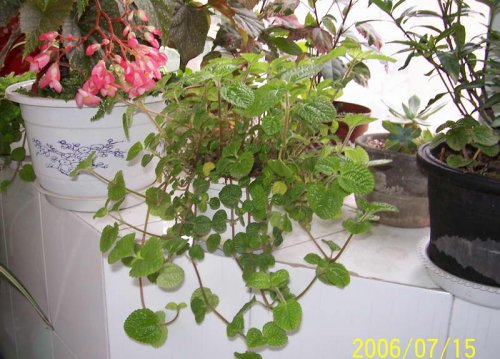
 Here is a pic of the creeping charlie also called swedish ivy. The proper name is pilea nummulariifolia, its a common house plant and should be easy to find.