
Navigation
Install the app
How to install the app on iOS
Follow along with the video below to see how to install our site as a web app on your home screen.
Note: This feature may not be available in some browsers.
More options
You are using an out of date browser. It may not display this or other websites correctly.
You should upgrade or use an alternative browser.
You should upgrade or use an alternative browser.
Wants to come out often.
- Thread starter Caryss
- Start date


Welcome to the forum. Post a picture of his entire enclosure including the lighting on top. And one of the chameleon. This type of behavior is almost always because something within the environment is off for them. So we can take a look and help guide you if that is the reason. If it is not then we can dig in further to find the cause.

BleuSaphir
Chameleon Enthusiast

If you bought him recently, he’s possibly feeling vulnerable. Not being used to his new environment.

Rango_TheManEater
Established Member
When I first got my veiled, he would “paw” at the sides of his enclosure and lay around while puffed up.
This behavior isn’t unusual for a new chameleon, as they may be stressed while adjusting to their new environment. I believe your chameleon is expressing dislike of his/her new environment, but I’m sure this behavior will fade away as time goes on.
If you have had this chameleon for a while, then I would be concerned. As Beman notes, this behavior could signal that something is off in your chameleon’s environment.
This behavior isn’t unusual for a new chameleon, as they may be stressed while adjusting to their new environment. I believe your chameleon is expressing dislike of his/her new environment, but I’m sure this behavior will fade away as time goes on.
If you have had this chameleon for a while, then I would be concerned. As Beman notes, this behavior could signal that something is off in your chameleon’s environment.

Caryss
Member
Welcome to the forum. Post a picture of his entire enclosure including the lighting on top. And one of the chameleon. This type of behavior is almost always because something within the environment is off for them. So we can take a look and help guide you if that is the reason. If it is not then we can dig in further to find the cause.
Attachments
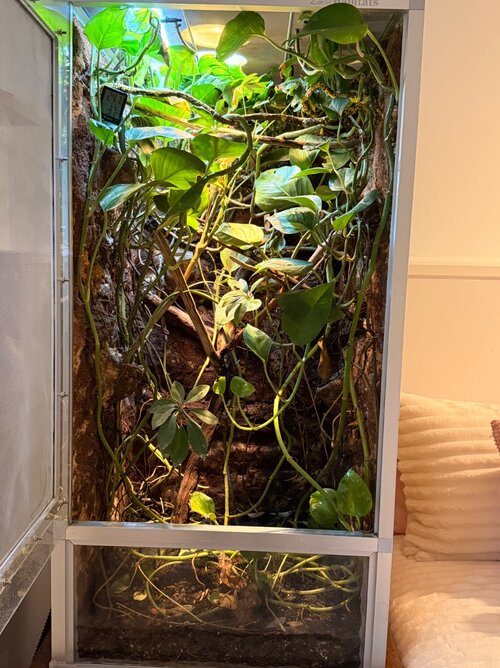
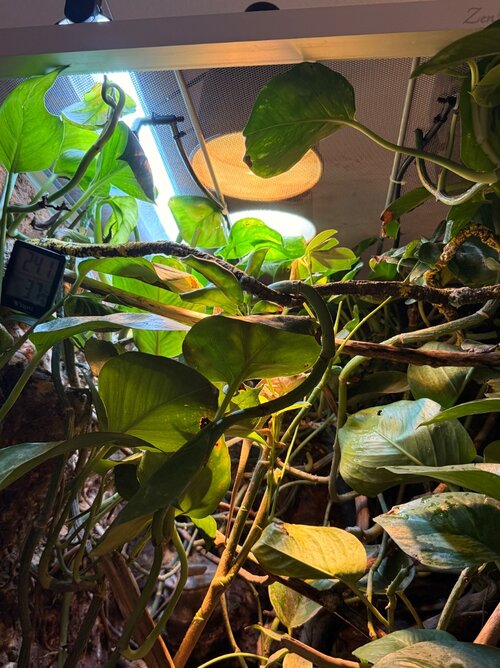
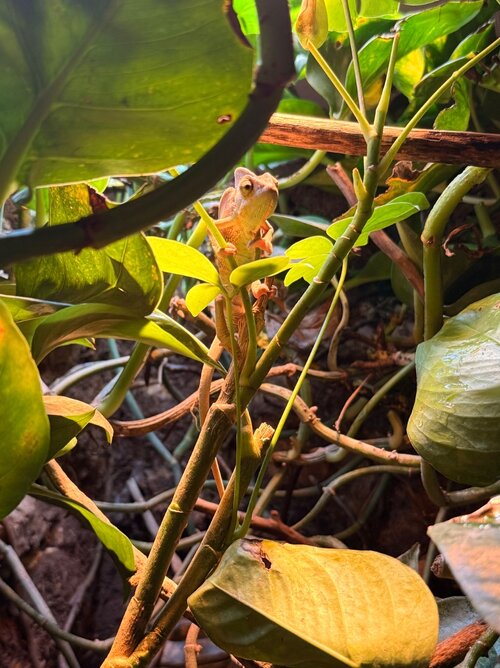
Caryss
Member
i got him march 8th so like a little over 2 weeks agoIf you bought him recently, he’s possibly feeling vulnerable. Not being used to his new environment.

MissSkittles
Chameleon Enthusiast
Hi. You’ve got a large amount of pothos all over, which is wonderful. However, I am wondering if it’s blocking his access to heat and uvb? What have your day time temps been?
Also have to ask about your soil - have you set up a true bioactive with drainage layer and clean up crew?
Also have to ask about your soil - have you set up a true bioactive with drainage layer and clean up crew?
Yeah so exactly what @MissSkittles said... The UVB and heat lamps on top of the cage should not have plants between where the highest branches are at the top. This blocks and reduces the accessible uvb and heat. So the cham is not getting what it needs so it is not content in the cage. So you need to cut back all the pothos on the top that sit above the highest basking branches and vines that you used. If you are using T5 lighting with a 5.0 or 6% bulb strength you need 8-9 inches of unobstructed space to the branches below it to put the cham in the right UVI level so it gets what it needs to thrive and not have health issues. Basking temps should be sitting at 80 at the branch as well. If they are hotter baby will stress and can dehydrate.
Note not sure if you have the cage up against a couch or a bed but I highly recommend moving it away from that. You do not want damage to cloth surfaces. Cham cages produce moisture and humidity which can cause mold growth and bacteria.
Note not sure if you have the cage up against a couch or a bed but I highly recommend moving it away from that. You do not want damage to cloth surfaces. Cham cages produce moisture and humidity which can cause mold growth and bacteria.
Caryss
Member
yes, it’s bioactive and has a drainage layer. daytime temps are around 21-25 up top and 16-18 on the bottom. he has a basking branch under the heat bulb and it’s not obstructed.Hi. You’ve got a large amount of pothos all over, which is wonderful. However, I am wondering if it’s blocking his access to heat and uvb? What have your day time temps been?
Also have to ask about your soil - have you set up a true bioactive with drainage layer and clean up crew?
Caryss
Member
ok thank you. i’ll try cutting some of the leaves under the uvb. i think his heats ok though, his basking branch is not obstructedYeah so exactly what @MissSkittles said... The UVB and heat lamps on top of the cage should not have plants between where the highest branches are at the top. This blocks and reduces the accessible uvb and heat. So the cham is not getting what it needs so it is not content in the cage. So you need to cut back all the pothos on the top that sit above the highest basking branches and vines that you used. If you are using T5 lighting with a 5.0 or 6% bulb strength you need 8-9 inches of unobstructed space to the branches below it to put the cham in the right UVI level so it gets what it needs to thrive and not have health issues. Basking temps should be sitting at 80 at the branch as well. If they are hotter baby will stress and can dehydrate.
Note not sure if you have the cage up against a couch or a bed but I highly recommend moving it away from that. You do not want damage to cloth surfaces. Cham cages produce moisture and humidity which can cause mold growth and bacteria.
Caryss
Member
also an edit, i just looked and his branch under the uvb isn’t obstructed either. i think i just took a bad photoYeah so exactly what @MissSkittles said... The UVB and heat lamps on top of the cage should not have plants between where the highest branches are at the top. This blocks and reduces the accessible uvb and heat. So the cham is not getting what it needs so it is not content in the cage. So you need to cut back all the pothos on the top that sit above the highest basking branches and vines that you used. If you are using T5 lighting with a 5.0 or 6% bulb strength you need 8-9 inches of unobstructed space to the branches below it to put the cham in the right UVI level so it gets what it needs to thrive and not have health issues. Basking temps should be sitting at 80 at the branch as well. If they are hotter baby will stress and can dehydrate.
Note not sure if you have the cage up against a couch or a bed but I highly recommend moving it away from that. You do not want damage to cloth surfaces. Cham cages produce moisture and humidity which can cause mold growth and bacteria.
That is up to you if you do not want to cut stuff back. We are just giving you clear info so you can be successful and have as little health issues as possible. You want uvb running across the middle of the cage either at an angle or straight middle of it.also an edit, i just looked and his branch under the uvb isn’t obstructed either. i think i just took a bad photo
If there is not an unobstructed branch that runs at the correct distance from the fixture parallel to the branch below it then the cham is going to struggle. And will be high risk for MBD, stress ailments like being more prone to infection, and failure to thrive issues due to appetite being impacted. UVB lighting not only helps them with strong bones but also is responsible for their diurnal responses that influence things as basic as eating. Looking at your pics as an experienced keeper I can tell you the top level is too dense, but again this is your cage and your cham so do what you feel is best.
Anyways seems as though you have everything handled. Best of luck, this is a hard but fun hobby to be in. A lot to learn for husbandry as they have such specific needs but it pays off in the end.
Caryss
Member
i’ll cut some, thank youThat is up to you if you do not want to cut stuff back. We are just giving you clear info so you can be successful and have as little health issues as possible. You want uvb running across the middle of the cage either at an angle or straight middle of it.
If there is not an unobstructed branch that runs at the correct distance from the fixture parallel to the branch below it then the cham is going to struggle. And will be high risk for MBD, stress ailments like being more prone to infection, and failure to thrive issues due to appetite being impacted. UVB lighting not only helps them with strong bones but also is responsible for their diurnal responses that influence things as basic as eating. Looking at your pics as an experienced keeper I can tell you the top level is too dense, but again this is your cage and your cham so do what you feel is best.
Anyways seems as though you have everything handled. Best of luck, this is a hard but fun hobby to be in. A lot to learn for husbandry as they have such specific needs but it pays off in the end.
Caryss
Member
is there anything else i should change? i’ll cut the leaves around the uvb and heat, but is there anything else wrong?That is up to you if you do not want to cut stuff back. We are just giving you clear info so you can be successful and have as little health issues as possible. You want uvb running across the middle of the cage either at an angle or straight middle of it.
If there is not an unobstructed branch that runs at the correct distance from the fixture parallel to the branch below it then the cham is going to struggle. And will be high risk for MBD, stress ailments like being more prone to infection, and failure to thrive issues due to appetite being impacted. UVB lighting not only helps them with strong bones but also is responsible for their diurnal responses that influence things as basic as eating. Looking at your pics as an experienced keeper I can tell you the top level is too dense, but again this is your cage and your cham so do what you feel is best.
Anyways seems as though you have everything handled. Best of luck, this is a hard but fun hobby to be in. A lot to learn for husbandry as they have such specific needs but it pays off in the end.
Nothing additional from what I can see in the images and what I have mentioned. If you want to do a full husbandry review we can post the info for you to fill out and then one of us will go through it can ensure you were given all the correct info for baby.is there anything else i should change? i’ll cut the leaves around the uvb and heat, but is there anything else wrong?
Caryss
Member
that would be great thank youNothing additional from what I can see in the images and what I have mentioned. If you want to do a full husbandry review we can post the info for you to fill out and then one of us will go through it can ensure you were given all the correct info for baby.
MissSkittles
Chameleon Enthusiast
Chameleon Info:
Cage Info:
Current Problem - The current problem you are concerned about.
--------------
Please Note:
- Your Chameleon - The species, sex, and age of your chameleon. How long has it been in your care?
- Handling - How often do you handle your chameleon?
- Feeding - What are you feeding your cham? What amount? What is the schedule? How are you gut-loading your feeders?
- Supplements - What brand and type of calcium and vitamin products are you dusting your feeders with and what is the schedule?
- Watering - What kind of watering technique do you use? How often and how long to you mist? Do you see your chameleon drinking?
- Fecal Description - Briefly note colors and consistency from recent droppings. Has this chameleon ever been tested for parasites?
- History - Any previous information about your cham that might be useful to others when trying to help you.
Cage Info:
- Cage Type - Describe your cage (Glass, Screen, Combo?) What are the dimensions?
- Lighting - What brand, model, and types of lighting are you using? What is your daily lighting schedule?
- Temperature - What temp range have you created (cage floor to basking spot)? Lowest overnight temp? How do you measure these temps?
- Humidity - What are your humidity levels? How are you creating and maintaining these levels? What do you use to measure humidity?
- Plants - Are you using live plants? If so, what kind?
- Placement - Where is your cage located? Is it near any fans, air vents, or high traffic areas? At what height is the top of the cage relative to your room floor?
- Location - Where are you geographically located?
Current Problem - The current problem you are concerned about.
--------------
Please Note:
- The more details you provide the better and more accurate help you will receive.
- Photos can be very helpful.
MissSkittles
Chameleon Enthusiast
If you post some clear pics of the backs of the back feet, we can confirm gender too, which is always important. 
Caryss
Member
-Veiled chameleon, male, around 6 months, had for around 2 weeksChameleon Info:
- Your Chameleon - The species, sex, and age of your chameleon. How long has it been in your care?
- Handling - How often do you handle your chameleon?
- Feeding - What are you feeding your cham? What amount? What is the schedule? How are you gut-loading your feeders?
- Supplements - What brand and type of calcium and vitamin products are you dusting your feeders with and what is the schedule?
- Watering - What kind of watering technique do you use? How often and how long to you mist? Do you see your chameleon drinking?
- Fecal Description - Briefly note colors and consistency from recent droppings. Has this chameleon ever been tested for parasites?
- History - Any previous information about your cham that might be useful to others when trying to help you.
Cage Info:
- Cage Type - Describe your cage (Glass, Screen, Combo?) What are the dimensions?
- Lighting - What brand, model, and types of lighting are you using? What is your daily lighting schedule?
- Temperature - What temp range have you created (cage floor to basking spot)? Lowest overnight temp? How do you measure these temps?
- Humidity - What are your humidity levels? How are you creating and maintaining these levels? What do you use to measure humidity?
- Plants - Are you using live plants? If so, what kind?
- Placement - Where is your cage located? Is it near any fans, air vents, or high traffic areas? At what height is the top of the cage relative to your room floor?
- Location - Where are you geographically located?
Current Problem - The current problem you are concerned about.
--------------
Please Note:
- The more details you provide the better and more accurate help you will receive.
- Photos can be very helpful.
-handling every couple days for maybe 5-10 mins
-feeding 12-16 black soldier fly larvae dusted in calcium and once every 2 weeks dusted in multivitamin. i’m switching to crickets next week and will be gut loading with fresh veggies
-supplement brand is repcal
-water through misting system twice a day, fogger at night, and dripper during day
-feces look ms normal, not too runny
-cage is a combo, with solid sides and mesh front, 2x2x4
-arcadia t5 5.0 uvb, arcadia 100w halogen heat bulb, 7am-7pm
-top temps 22-25 celsius, bottom temps 15-17 celsius
-humidity 40-50 upper part during day, 70 plus at night, misting system and fogger
-live plants, mostly pothos and one umbrella plant
-cage is in my room away from vents and is 2 ft off the ground.
-located in alberta canada
-problem, almost always wants to come out, have seen glass surfing, pale colour sometimes
MissSkittles
Chameleon Enthusiast
Give me a few and I’ll give you some feedback.
Similar threads


- Replies
- 2
- Views
- 1K

