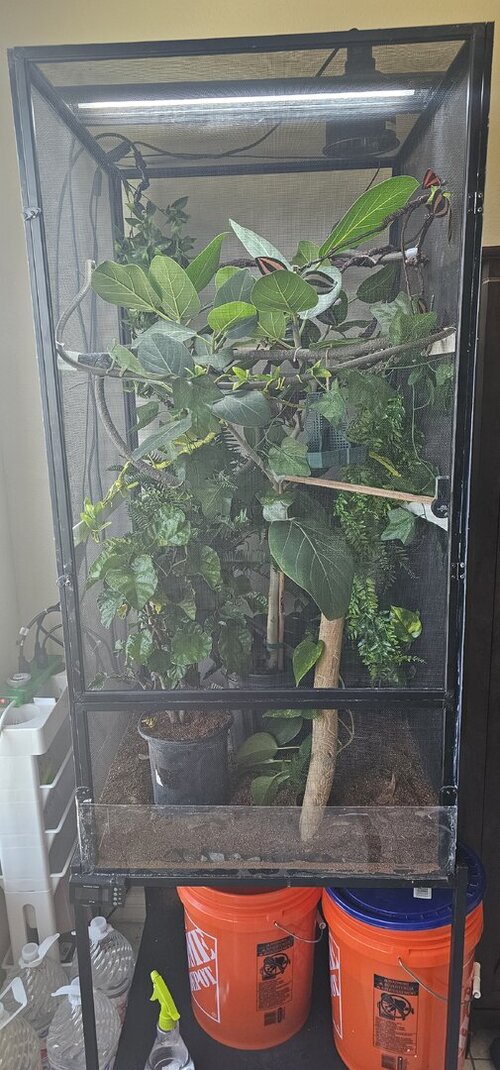
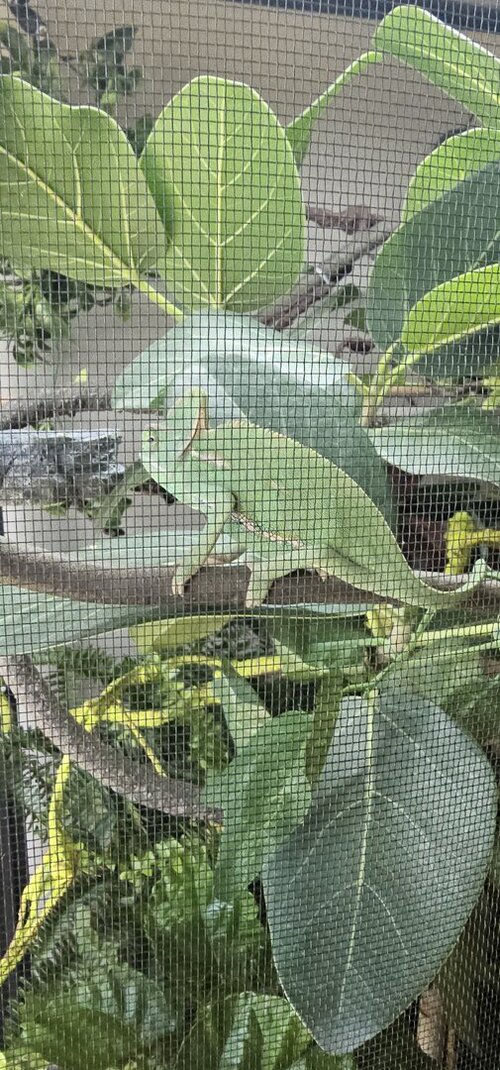
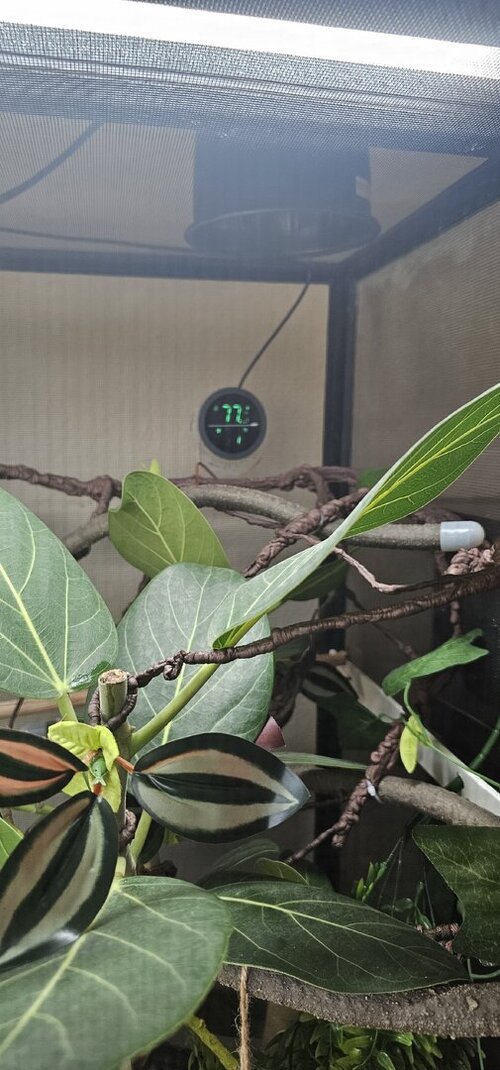
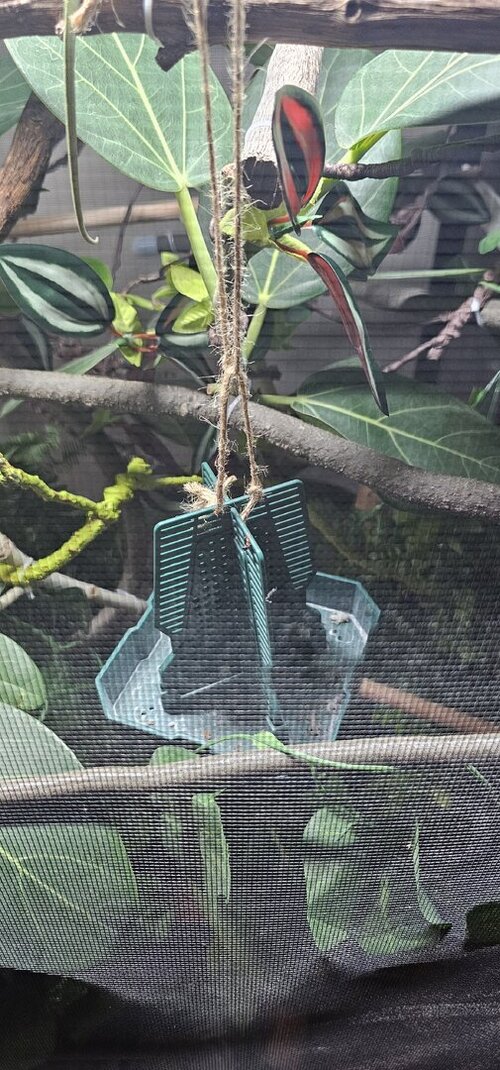
@MissSkittles is in FL and runs bioactive set ups for her chams. I have tagged her here so she can help with info specific to your area and how you can achieve what you will need.
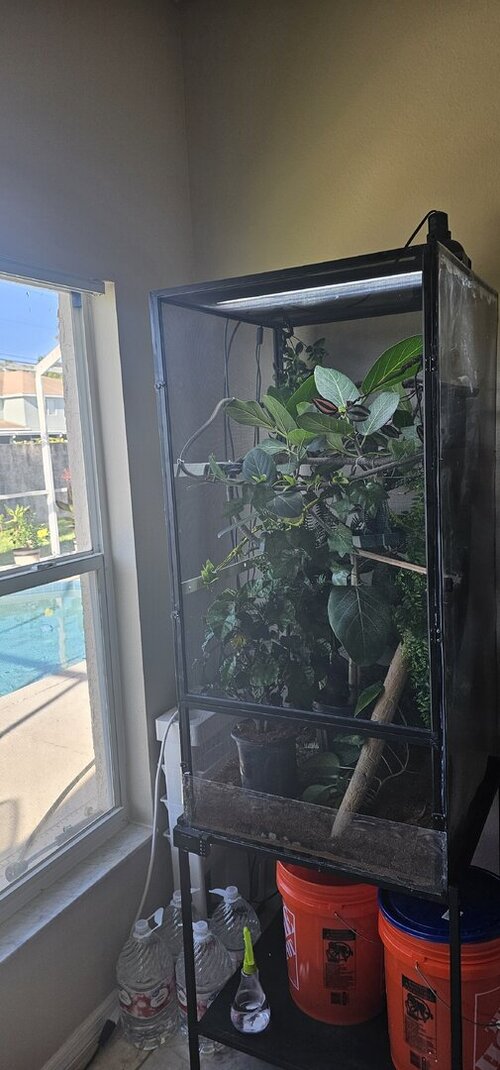
Op had private messaged me and we did talk a bit about temps, humidity and the substrate/going true bioactive. I didn’t know the enclosure was in front of a window though.
@ryandrumm2020 you definitely need to either move the enclosure away from the window (best option) or take measures so the heat won’t be coming in and cooking your little cutie. I have my bearded dragons tanks directly in front of windows (they enjoy the view), but I have tinted my windows to help keep the heat out.
I have struggled at times with the heat and even though I have central ac, I had to add a room ac to where I had all of my reptiles. Even then it was a struggle to keep it cool enough. I keep the house around 74 and it would be crazy expensive and probably burn out my ac unit if I tried to keep the temps below 70. Even though it’s ideal to boost humidity all the way at night to simulate natural hydration cycles of the wild, I just can’t since it’s too warm. I use Mist King and do have a brief 15 second misting during the night for a slight humidity boost. However, this might not work for you. We’re on opposite sides/coasts of the state.
In our conversation, I gave you the bioactive link. It’s not at all difficult to set up. Honestly, the worst is buying everything needed. This is a fantastic way to contain all of the substrate in an all screen enclosure.
https://www.homedepot.com/p/Root-Po...ge_rr-_-n/a-_-0-_-n/a-_-n/a-_-n/a-_-n/a-_-n/a It’s like a heavy duty felt fabric and it holds up amazingly well. I like that it ‘breathes’ which helps prevent the soil from growing molds and helps dry the excess drainage too. I have my enclosures on heavy duty garage shelving, which unfortunately has wood composite shelves. Besides covering the shelves with plastic tarp, I have substrate trays in each enclosure as added insurance against leakage.
https://www.lllreptile.com/products/32456-zoo-med-reptibreeze-substrate-tray-xlarge This is the best price for these that I’ve found. Lava rock is a good alternative if you can’t find the clay balls for the drainage layer. I use a thicker landscape fabric on top of the drainage layer to keep it separate. It’s usually wider which is perfect to keep as much substrate out of the drainage layer. Then I start tossing in stuff - organic garden soil (check that it doesn’t have roaches living in it - yes, that happened to me), a bit of play sand, some coco coir, chopped up sphagnum moss, orchid bark, and if you by chance have any insect frass (frass is poop) or worm castings, mix some in. Some will add a layer of charcoal between the soil and drainage layer. I just mix it in with the soils. You can use horticultural charcoal or get lump hardwood charcoal (not briquettes). Put your cleaned plants in where you want them and cover with a thick layer of leaf litter. We can use chopped up palm fronds too. I add some cork rounds of a decent size for the isopods to hide beneath. There are some gorgeous isopods available, but really just get some basic and hardy ones, like giant canyon. You’ll rarely see them and your chameleon will eventually realize he has snacks in his house. Add some springtails and then finish setting up your enclosure with lots of natural branches and safe live plants. If you aren’t yet ready to do the full set up, move your clean up crew to a big bin (add ventilation to the lid) with some leaf litter and toss them some veggie scraps and mist the soil every so often and they’ll multiply. Keep the floor bare until you’re ready. I waited until I was confident in my basic husbandry and felt I had a decent understanding of bioactive before taking the plunge.
I hope this has helped. I do tend to talk a lot…sorry.