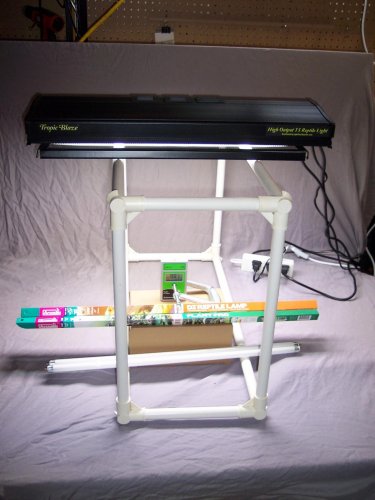
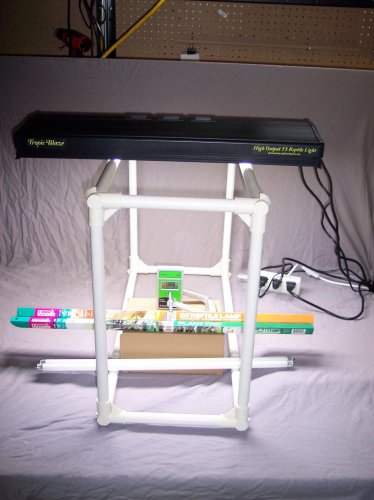
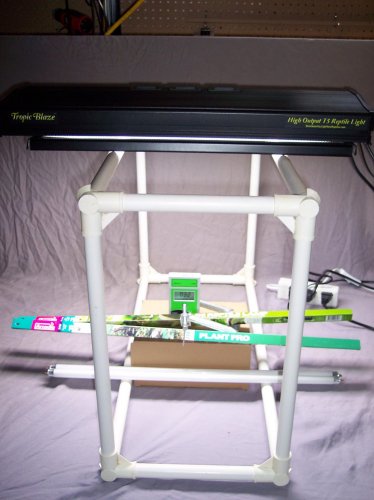
Hi i am looking at getting 46" bulbs to go over 2 extra large ReptiBreeze
I was looking at Lightyourreptiles.com and they seem to only have T5 Arcadia
Just wondering what you guys think about the t5s.
Also on the site it recommends that they are at least 12" away, does that seem correct?
thanks
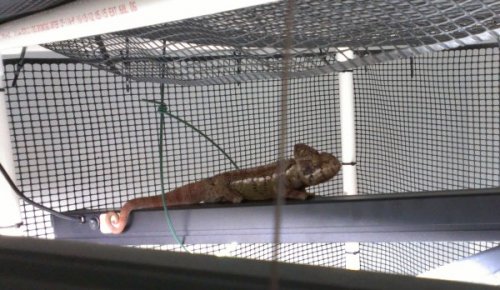
While it might be a recommendation to stay 12" away, in most cases that isn't possible. What you need are plenty of areas where the chameleon can get away from the light.
I am getting some t5, 6% arcadias next week and while my chams can get within 6" or so to the bulb (through screen too), there is dense foliage. So they can get out of the lights completely if they need to.
HI.

I am glad to see people are aware of and discussing the variables in applying UV lighting!
The days of sticking one mercury vapor bulb or an 18" 5.0 reptisun over a animal sitting "static" on a perch are evolving!
Now we are looking forward and advancing to creating DYNAMIC environments for our reptiles to live, enjoy and thrive in!
But personally I always try to be conservative in the
*broad* recommendations that I give simply because there are SO many variables from one set up to the next.
As opposed to specific suggestions for specific set ups.
(And I know that Solarmeters are expensive so not everyone is going to have one. )
Let me see if I can give some more insight here...
Because, you see.... there are many factors to keep in mind.
Like:
Different brands of cages have different densities of screen.... so that can be a big factor how much UV is getting filtered down.
Some screen will only filter down UV 20% while others can knock it down 35% or more.
Different set ups can vary greatly how heavy the plant growth and shade is in the environment.
Some set ups are just brimming with plants and foliage,

while some folks habitats are kept a bit sparse... so there is less "shade" from the UV light.

Perch locations...
some set ups just have one or two perches plunked right under a light-- while others have vines that go everywhere.. so the animal is free to "meander" throughout the day from higher UV to lower UV ...
and not forced to sit on one or two perches just plunked smack dab under the light.
Cage size and depth (front to back) also makes a difference and well as cage height as to how close the animal is going to be to the light most of the day.
So when I mention making sure the perches are 12" -14" away right under say..a 12% bulb going through screen ....
I am always thinking that I need to be making sure the advice will be good for the broadest variety of set ups out there.
Because I actually care about peoples pets and would not want anyone to accidentally over-UV their pet.
Ideally, we must look to Nature to show us the way--
Chams come from environments of dappled sunlight living in the foliage and trees... so they can wander out on a branch and be sitting in direct tropical sun with a reading of 250 - 300 Uw/cm2.... (as on a solarmeter 6.2)...
and sit in the bright sun for a while... and then simply meander back down the branch into the partial foliage farther and be in a 60 - 80 uw/cm2 partial sunlight area....
and then maybe during the hottest part of the day... walk further back along the branch into the dense foliage into full shade with 0-20 uw/cm2 UV levels.
So they would travel through DIFFERENT UV Gradients / zones all in the course of .. say...30 minutes!
Now keep in mind YOUNGER animals are NOT going to be out in the open as much due to predation, and they would be too exposed out in the open and get picked off by a hungry bird or something

...
so they may just wander cautiously from the partial foliage to dense shade /cover... and not risk exposure as much in full sun out on open branches.
This is probably true for the tiny pygmy chams as well....they may stay in thicker brush to avoid hungry eyes of predators too.
Setting your enclosure up with Nature in mind---
and offering UV gradients in the cage is a good thing to shoot for!
And the larger the cage the better! (This is always true with any reptile)
It would be wonderful to have more actual wild studies on all the different cham species to go by... with exact UV data on each type of animal (at each stage in life.)
but in lieu of that...
we must go with what traditionally works--
as well as applying a good dose of common sense when using UV ---
to get the best results!
HEY!
Here is a species guide that has a few chams listed and uv recommendations:
http://www.arcadia-reptile.com/lighting-guide/#
Thank you.
Cheers!
Todd