Wow Kevin.......I did read that site very thoroughly. I understand words and I can interpret charts. There are issues with large amounts of UVB below 300. Not small amounts like Exo-Terra produces. But large amounts like the Zoo Med compact lights did in fact produce. I see no evidence that this has changed. Until I do, I won't try ZooMed or R-Zilla compacts.
Maybe you should examine the first chart in the link below (the one that shows Vitamin D3 synthesis, DNA damage and the real sun). The peak DNA synthesis happens below the range real sun produces and in the range of DNA damage. The report says that although the higher wavelengths don't produce as much D3 synthesis per unit you get what you need because you get a lot of it.
http://www.uvguide.co.uk/phototherapyphosphor-tests.htm
I don't belong to your "club". I used to think it sounded like a good club to belong to. It doesn't sound like discussion and other opinions are welcome there. Or that you think anyone thats not in your club can know what they are talking about. I've done nothing but present some information. I've spent over four hours total looking at all this stuff at a minimum. Probably much more than that. Dismissing my effort by saying I've done no "foot work" or can't read a chart is not very kind...in fact your wording was really very unkind and not merited.
Sorry if I've offended you in some way to get this reaction from you. But I'm standing by my opinion and advise to others. Nothing you posted has changed my opinion or interpretation of what is available on the subject. I think consumers should expect more technical information on these products. Sure, I can call ZooMed. The novice who goes into a store to purchase a product without the benefit of this forum would have no idea there might or could be a problem from reading the product packaging or by going to the ZooMed or R-Zilla website. They certainly would never think they had to call the manufacturer first to find out if the product had been changed so it did not burn or blind chameleons.
It isn't a "club", it is a discussion board, similar to this, where people can go to find information. If you read through the posts, there is lots of data from Dr. Baines, herself, talking about her tests and how the lamp is good and how she hasn't had time to post the data. I think she even might have links to pages not yet public. I might be thinking of charts I have seen from her presentation that isn't public or data that she has talked about before.... but regardless, I don't understand the obsession. Saying a lamp performs one way and is safe and then rejecting that claim just because you can't see a chart that reflects the finding spoken about, doesn't make sense to me
I am not really sure where you get the impression that you can't express your opinion on the UVB yahoo group. I mean it isn't a place to stand up on a soap box and preach, it isn't there for opinions. The UVB meter group is there as a place to discuss your UVB meter, how to use it and to network data. People post to the group once or twice a month with general questions. It seems to me that with the UVB group, if you don't contribute you don't get much feedback, so sure, read and soak it up. Freeloaders don't stick around very long (which is nice) because people won't do the work for you. I think it's good because it works itself out, if you don't do research and ask something obvious, you either don't hear a peep or someone tells you to check the data files. This, I believe is how a forum should be run so that people don't fill the place up with annoying repeated questions that cover up the data that would have been easy to find if people didn't have to sift through countless, useless posts. The idea is to create a space where people can put data out in the open to be talked about, not a Q&A machine. You don't go to the library and ask someone a question do you? no, you go to a computer or librarian to search for a book on the topic so you can find the info you need. She isn't gonna read the book to ya, or conclude the data for you, it's up to you.
Now about the chart. The chart you are referring to has a bit at the begining of the page that states:
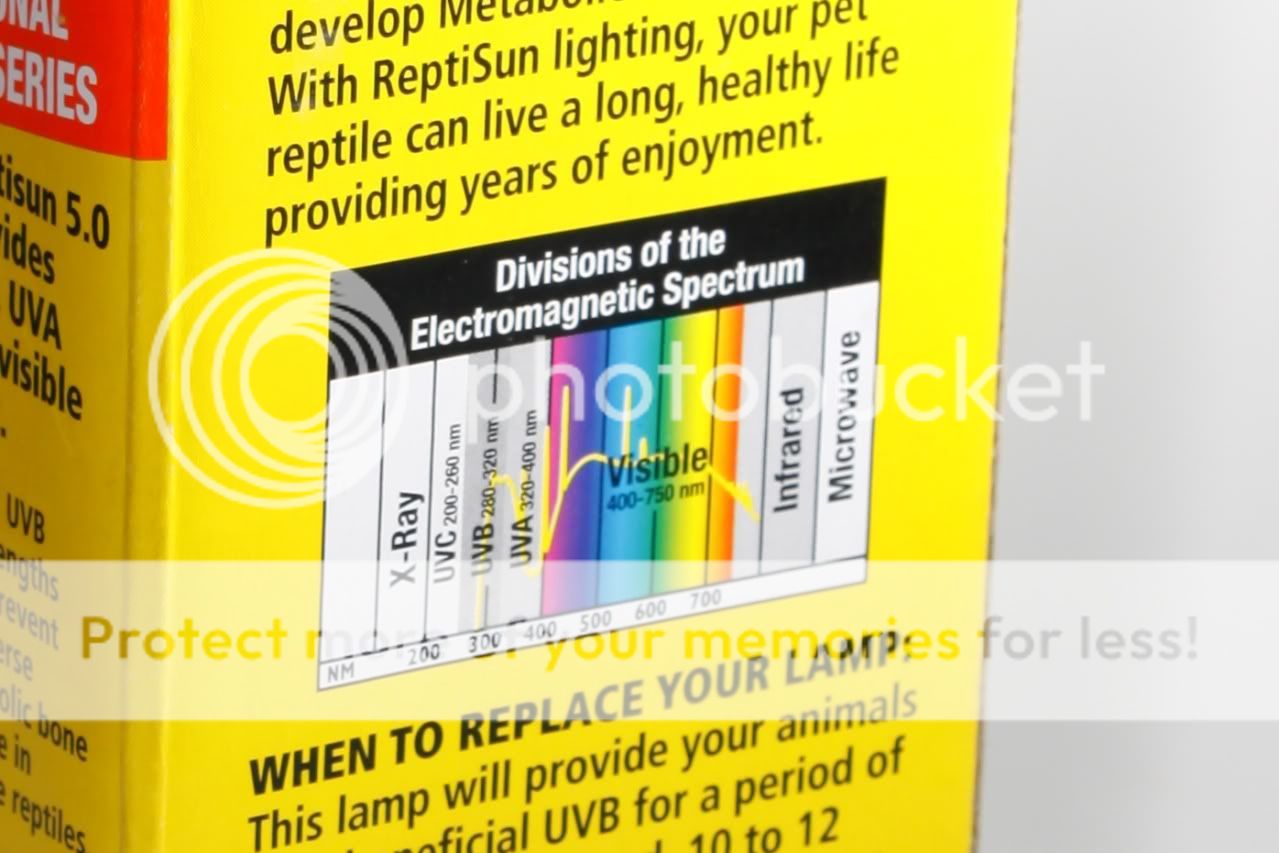
This report was written in 2007 and these test results refer to the versions of ZooMed Reptisun Compact Lamps, Big Apple Herpetological Mystic Lamps and R-Zilla Desert 50 Series lamps which were on sale at that time. The chart you are referring to talks about the sun vs. the harmful rays you are concerned about. It says that natural sun doesn't get lower than 300nm. All of the lamps you seem to think are 'safe' have readings in the 'bad zone' that is below 300nm. The amount of 'bad' that is below 300nm is marginal. The red line is showing how much of that spectra would be needed to be harmful. The levels shown in the next diagram are half that of the 'damaging' amounts. This means you get half the amount of UVB that could cause issue. Sorta like saying electricity can hurt.... but you need 110v to 'get hurt' and you subject someone to only 30v... sure there is electricity, but not enough to hurt you.
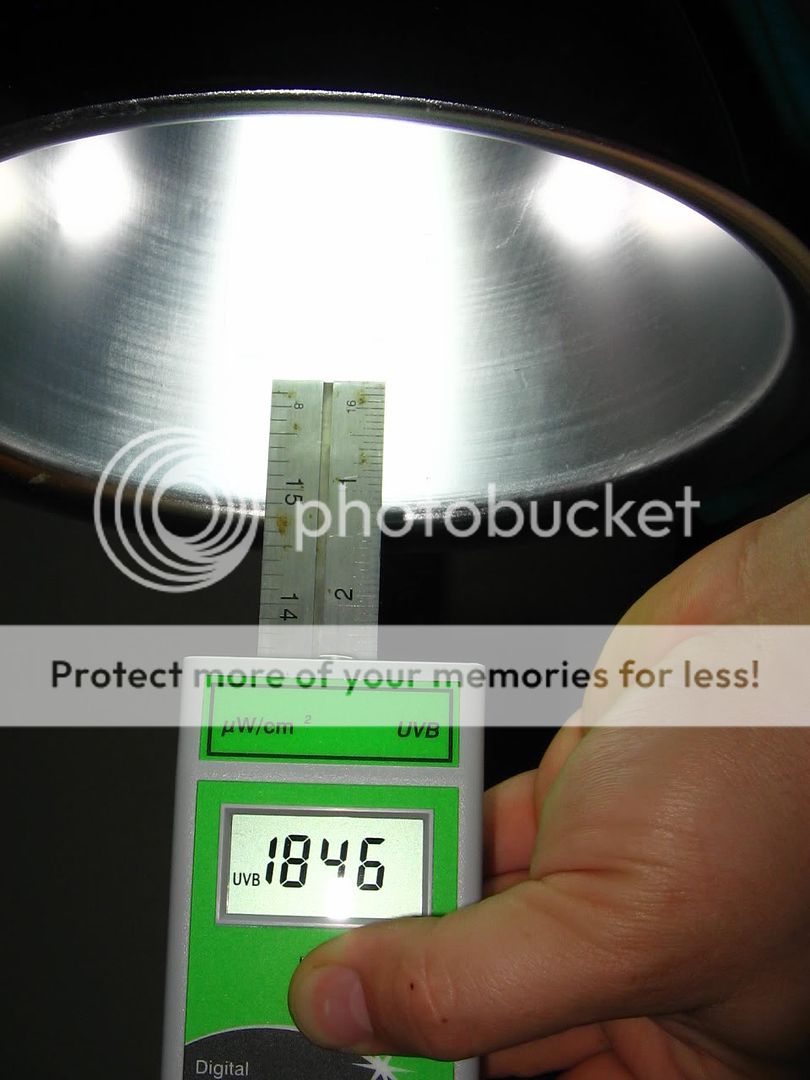
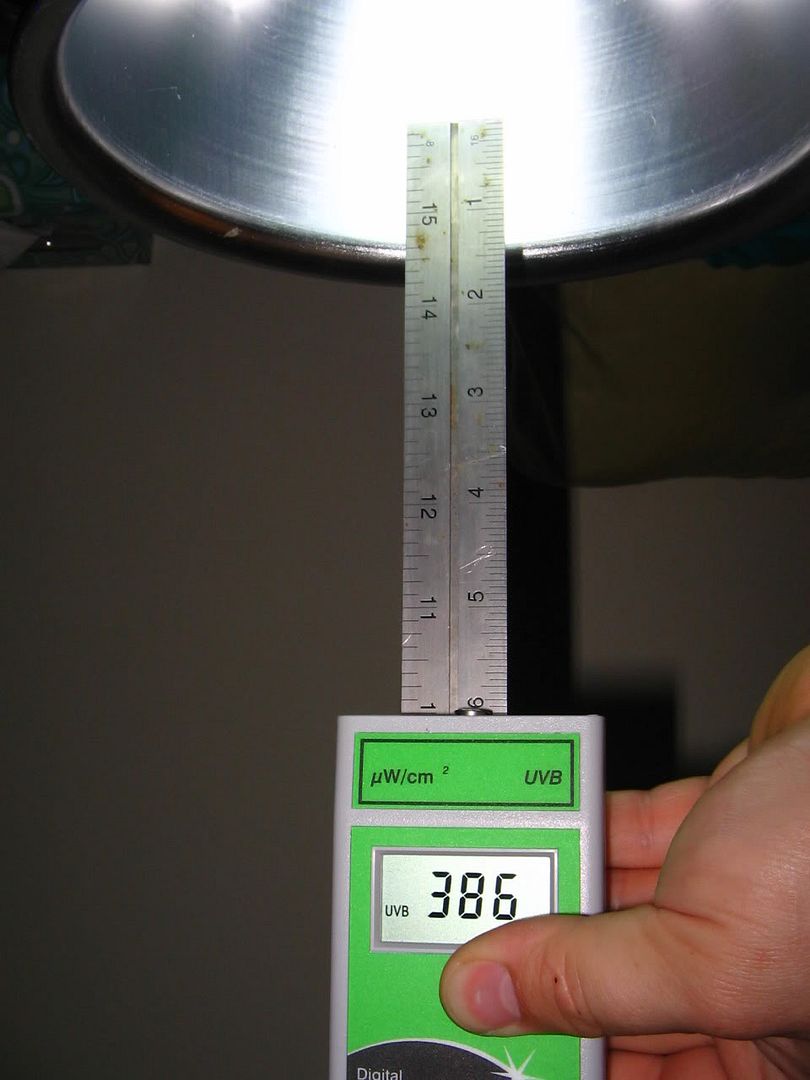
The main issue with the CFL lamps, is that if you don't use it right, it will harm the animal. This is possible even with the linear tubes. You could still take the new lamps from any manufacturer, and if you didn't let your cham get far enough away, they would STILL get hurt. It doesn't matter the spectra, too much is still too much, and not good.
I believe if you go to the CFL page of the site the majority of the data has been removed and sited as 'out of date' and that new data is on it's way.
This is what is stated on the CFL page of the UV guide:
http://www.uvguide.co.uk/compactlamps.htm
This page is currently being revised, because the specifications for ZooMed compact lamps
have been altered significantly by the manufacturers, since the 2005 survey - the results are no longer applicable.
The 2005 test results for the ZooMed Compact Lamps have now been removed.
Please bear with us and accept our apologies for any inconvenience that removing part of this page may cause,
but we believe that the information about the previous style of ZooMed compact lamps could be misleading.
We are currently completing tests on the new generation of ZooMed Reptisun Compact Lamps.
We have also now tested several other brands including Lucky Reptile, ESU, Ferplast, Zilla
and Namiba Terra Replux compact lamps. These results will also be featured on the new page.
Please remember: always follow the manufacturer's instructions when positioning a new lamp.
So my point is, I don't think you've looked enough if you can't conclude the new lamps are safe, with or without the chart.