Storing silkworm eggs ?

Revising an old thread, but hoping that some of the contributors are still around. I'm going to have a whole mess of 5th instar silkworms in about a week and I'd like to try letting some cocoon and mate, but I have no idea how to set that up. My searches for that information led me here, actually.

I plan to store the eggs per @lele 's recommendations above, but I'm not clear on how to go from emerging moth to eggs attached to something to put into the ziplock container. When I've ordered them, they come glued in a cup, but I'm sure that isn't where she laid the eggs. What sort of substrate do they lay on? Do you just put that substrate right into the Ziplock?

Thanks!
Hi, so I've been raising silkworms since 2020. Usually I place the mating pairs in a container lined with towel paper or wax paper. It's probably best to put a lid and some kind of ventilation. They usually stay put but I have had some climb out and wander off.
You don't have to worry about sticking them down. The female glues them down when laying the eggs. I forgot what it's called.

Lastly, don't refrigerate the eggs right away. Wait until they turn black, that takes three days. This means that the eggs have entered diapause, which is like hibernation for insects. However if they don't turn black, they are not dormant and will hatch. Placing these eggs in the fridge will kill them.

I hope this helps. Good luck.
 
Hi, so I've been raising silkworms since 2020. Usually I place the mating pairs in a container lined with towel paper or wax paper. It's probably best to put a lid and some kind of ventilation. They usually stay put but I have had some climb out and wander off.
You don't have to worry about sticking them down. The female glues them down when laying the eggs. I forgot what it's called.

Lastly, don't refrigerate the eggs right away. Wait until they turn black, that takes three days. This means that the eggs have entered diapause, which is like hibernation for insects. However if they don't turn black, they are not dormant and will hatch. Placing these eggs in the fridge will kill them. To tell male from female, males are crazy and flap their wings & move almost nonstop when triggered. The females are plump & pretty much just sit there.

I hope this helps. Good luck.
^^^ 100%. I use wax or parchment paper for the moths to emerge onto and lay the eggs on. To try and keep things contained, I will place a small paper or plastic cup (with small air hole poked) over the mating pair. This also helps the happy couple not be disturbed by the single males. Once they separate I remove the male so the female can lay her eggs in peace.
 
Hi, so I've been raising silkworms since 2020. Usually I place the mating pairs in a container lined with towel paper or wax paper. It's probably best to put a lid and some kind of ventilation. They usually stay put but I have had some climb out and wander off.
You don't have to worry about sticking them down. The female glues them down when laying the eggs. I forgot what it's called.

Lastly, don't refrigerate the eggs right away. Wait until they turn black, that takes three days. This means that the eggs have entered diapause, which is like hibernation for insects. However if they don't turn black, they are not dormant and will hatch. Placing these eggs in the fridge will kill them.

I hope this helps. Good luck.
I'm reading that some eggs go into diapause and some simply don't. Is there a logic to that? I don't mind as long as good share do, I'll just raise the others right away. But 1000s hatching all at once for one chameleon is a bit much.
 
I'm reading that some eggs go into diapause and some simply don't. Is there a logic to that? I don't mind as long as good share do, I'll just raise the others right away. But 1000s hatching all at once for one chameleon is a bit much.
I’ve found that almost all of mine turn dark within a few days. Once they do, in the fridge they go for a few months. I think it’s only been once that I had a batch from one moth hatch while I was waiting for them to darken. It was a surprise as at the time, I didn’t even know they could. It was only about 100+ baby silkies. Do make sure though to always have some chow mix on hand…just in case. I get my chow (and eggs) from https://www.coastalsilkworms.com/ who has really good prices and speedy service.
 
I'm reading that some eggs go into diapause and some simply don't. Is there a logic to that? I don't mind as long as good share do, I'll just raise the others right away. But 1000s hatching all at once for one chameleon is a bit much.
Yes. The mulberry silkworm has three groups defined by breeding patterns. This has nothing to do with being zebra, regular etc. It has more to do with where they came from. The ones from European sericulture are univoltine; meaning they have just one generation per year then the eggs go dormant for winter. Those from China, Japan and Korea are bivoltine thus they breed twice a year, meaning that one generation doesn't go dormant but one does.
In moths and butterflies, this is determined by environmental cues. Those external cues tell them what season they are in and when winter will be approaching. Although B. Mori is a domestic species, they are still tuned to these patterns. Yes, I know they are bred more often than that, globally but this refers to their natural rhythym, which we fool by simulating winter when storing them.

I've also read a report that says that for the silkworms, the trigger for a batch of eggs may be already determined by what their mother experienced in the egg. I find this a bit confusing since I have had sister moths raised at the same time give different results.

There's not much we can do to influence this; believe me I checked. I hope I explained this well.
 
Yes. The mulberry silkworm has three groups defined by breeding patterns. This has nothing to do with being zebra, regular etc. It has more to do with where they came from. The ones from European sericulture are univoltine; meaning they have just one generation per year then the eggs go dormant for winter. Those from China, Japan and Korea are bivoltine thus they breed twice a year, meaning that one generation doesn't go dormant but one does.
In moths and butterflies, this is determined by environmental cues. Those external cues tell them what season they are in and when winter will be approaching. Although B. Mori is a domestic species, they are still tuned to these patterns. Yes, I know they are bred more often than that, globally but this refers to their natural rhythym, which we fool by simulating winter when storing them.

I've also read a report that says that for the silkworms, the trigger for a batch of eggs may be already determined by what their mother experienced in the egg. I find this a bit confusing since I have had sister moths raised at the same time give different results.

There's not much we can do to influence this; believe me I checked. I hope I explained this well.
Excellent explanation. So what does this all mean? If the eggs turn gray, toss in the freezer, and if they don't, just let them hatch?
 
Yes. The mulberry silkworm has three groups defined by breeding patterns. This has nothing to do with being zebra, regular etc. It has more to do with where they came from. The ones from European sericulture are univoltine; meaning they have just one generation per year then the eggs go dormant for winter. Those from China, Japan and Korea are bivoltine thus they breed twice a year, meaning that one generation doesn't go dormant but one does.
In moths and butterflies, this is determined by environmental cues. Those external cues tell them what season they are in and when winter will be approaching. Although B. Mori is a domestic species, they are still tuned to these patterns. Yes, I know they are bred more often than that, globally but this refers to their natural rhythym, which we fool by simulating winter when storing them.

I've also read a report that says that for the silkworms, the trigger for a batch of eggs may be already determined by what their mother experienced in the egg. I find this a bit confusing since I have had sister moths raised at the same time give different results.

There's not much we can do to influence this; believe me I checked. I hope I explained this well.
I’m constantly amazed by how much info others know about silkies. When I’ve looked, I’ve only really found stuff about the silk making process, and I really hate how that is done. Maybe I’ve just been looking in the wrong places or wrongly passing over the good info.
 
OK, we're getting to showtime in my office. LOL.

Some have started spinning and I have spread the worms out across three different totes with three different ideas for them. I put in a bunch of leaves in each of their totes, but not much eating was happening so I stopped adding a couple days ago. My searches told me that was the right thing to do. Maybe mistake #1.

Tote #1 is the tote they have been living in...plastic shoebox with the top cut out and replaced with screen. They have been climbing to the top corners and spinning, but I've been moving them out once they start if I catch them. This might be mistake #2.

Tote #2, plastic tote with egg crate glued on the sides and top. Pretty ingenious I thought. Any worms that were roaming around Tote #1 were picked off and placed into cells in the egg crate. Most have stayed but only one has spun. The rest just sit there. They are not dead and are moving, but not spinning support threads.

Tote #3, big tote that I filled with these: Dividers I've also been dropping 'roaming' worms from Tote #1 into here. Worms are spread out, but I'd say 50% have gone to the bottom. A few have spun but again, a lot seem to just be sitting around.

I added fresh leaves today, and there is definitely eating going on, so maybe that was the issue, that I pulled them off food too fast.

Any thoughts on where I am here? I'll post some pics soon.
 
This can be a messy time for them between food, poop and purging themselves right before cocooning. Make sure to have plenty of air flow and space for them or mold can develop. Keeping them clean can be a challenge though.
I use chow and will provide small amounts of food until it’s very obvious they are no longer eating. It never fails that even though we provide them with plenty of great places for them to anchor and cocoon, they choose the top corners of their bins. If at all possible, let those who have started spinning there, continue. They can only produce so much silk and disturbing/moving them often results in not having enough to create a good or even any cocoon. As long as they are fully enveloped in their cocoon, I will then move them to somewhere else as all the rest of their work is done inside. I have had some which pupate without any cocoon and they have emerged just fine. I do prefer if they are in a cocoon for protection so will clean out an empty cocoon (after a moth has emerged) and place the pupa in it. Often you will have some in full cocoons while others are still eating and pooping. Once the cocoon has fully formed, I move it to a clean bin. I place all of the cocoons in a decent sized bin on wax or parchment paper. The fluids they expel after emerging can evaporate and keep things dry. Hope this helps.
 
This can be a messy time for them between food, poop and purging themselves right before cocooning. Make sure to have plenty of air flow and space for them or mold can develop. Keeping them clean can be a challenge though.
I use chow and will provide small amounts of food until it’s very obvious they are no longer eating. It never fails that even though we provide them with plenty of great places for them to anchor and cocoon, they choose the top corners of their bins. If at all possible, let those who have started spinning there, continue. They can only produce so much silk and disturbing/moving them often results in not having enough to create a good or even any cocoon. As long as they are fully enveloped in their cocoon, I will then move them to somewhere else as all the rest of their work is done inside. I have had some which pupate without any cocoon and they have emerged just fine. I do prefer if they are in a cocoon for protection so will clean out an empty cocoon (after a moth has emerged) and place the pupa in it. Often you will have some in full cocoons while others are still eating and pooping. Once the cocoon has fully formed, I move it to a clean bin. I place all of the cocoons in a decent sized bin on wax or parchment paper. The fluids they expel after emerging can evaporate and keep things dry. Hope this helps.
Is the tote you move them to open top? I assume they can't get out, right?

Another question that I can't get a firm answer to...Claude gave me this info, which I was able to mostly verify:

Whether the eggs your moths lay go into diapause isn't purely about temperature/light you control after the fact — it depends heavily on the strain. Silkworm strains fall into three genetic categories:

Univoltine — always diapause, no matter what.
Multivoltine — never diapause, always hatch quickly. Most commercially sold "hatching eggs" (which is what you likely bought, since they hatched readily for you) are multivoltine hybrids, bred specifically for reliable non-diapause hatching.
Bivoltine — the only category that's actually photoperiod/temperature responsive, where long-day + warm rearing of the mother produces non-diapause eggs and short-day + cool produces diapause eggs.

If your stock is a multivoltine commercial hybrid (likely, given it hatched cleanly for you), the eggs your moths lay will probably be non-diapause regardless of what light/temp conditions you rear them under — the strain just isn't wired to diapause. You won't know until you try: lay eggs, hold a portion at room temp and see if they hatch in the usual 8–10 days (non-diapause) or sit dormant and darken (diapause attempt).

So, what has everyone's else' experience been? My whole goal has been to get eggs that I can bring out of cold storage every 2 week in small batches (10-20) to keep a nice steady supply of feeder-size worms all winter.
 
Is the tote you move them to open top? I assume they can't get out, right?

Another question that I can't get a firm answer to...Claude gave me this info, which I was able to mostly verify:

Whether the eggs your moths lay go into diapause isn't purely about temperature/light you control after the fact — it depends heavily on the strain. Silkworm strains fall into three genetic categories:

Univoltine — always diapause, no matter what.
Multivoltine — never diapause, always hatch quickly. Most commercially sold "hatching eggs" (which is what you likely bought, since they hatched readily for you) are multivoltine hybrids, bred specifically for reliable non-diapause hatching.
Bivoltine — the only category that's actually photoperiod/temperature responsive, where long-day + warm rearing of the mother produces non-diapause eggs and short-day + cool produces diapause eggs.


If your stock is a multivoltine commercial hybrid (likely, given it hatched cleanly for you), the eggs your moths lay will probably be non-diapause regardless of what light/temp conditions you rear them under — the strain just isn't wired to diapause. You won't know until you try: lay eggs, hold a portion at room temp and see if they hatch in the usual 8–10 days (non-diapause) or sit dormant and darken (diapause attempt).

So, what has everyone's else' experience been? My whole goal has been to get eggs that I can bring out of cold storage every 2 week in small batches (10-20) to keep a nice steady supply of feeder-size worms all winter.
I’ve learned to keep a lid on their bins. Lol Once had cocoons stuck on the wall and other places in a closet and the male moths are insane and will travel quite a bit if not confined.
I was unaware that some eggs may be ready to hatch soon after being laid. But, I don’t refrigerate them until they darken fully. Only once did I have a batch from one moth hatch right away and that was a surprise. All the rest darken within a few days and I diapause them for about 3 months before trying to hatch them. I have no access to mulberry leaves so have to rely upon chow mix and always make sure to have at least a couple of packets of it on hand. Depending on how many eggs I’m hatching, I’ll prepare the chow by 1/4 lb or even 1/8 lb for starting a small amount of freshly hatched eggs.
 
Well, the whole experiment ended poorly. Massive die off of the remaining worms, my fault for not cleaning out the uneaten leaves quickly enough. I pulled out the 2 dozen or so that were still alive and put them on a few fresh leaves, and took the ones that were wandering and put them in egg crate on Saturday. Today, I have one new cocoon and the rest of the worms are not dead, but basically just sitting where I left them, slowly dying.

I will end up with 35 cocoons (which is plenty for my goal), but I'm concerned about what happened. I had zero deaths from egg to this point, and a week ago I had 200+ worms just devouring leaves by the basketful. I wish I knew what I did wrong so I can avoid it next time.
 
Well, the whole experiment ended poorly. Massive die off of the remaining worms, my fault for not cleaning out the uneaten leaves quickly enough. I pulled out the 2 dozen or so that were still alive and put them on a few fresh leaves, and took the ones that were wandering and put them in egg crate on Saturday. Today, I have one new cocoon and the rest of the worms are not dead, but basically just sitting where I left them, slowly dying.

I will end up with 35 cocoons (which is plenty for my goal), but I'm concerned about what happened. I had zero deaths from egg to this point, and a week ago I had 200+ worms just devouring leaves by the basketful. I wish I knew what I did wrong so I can avoid it next time.
Silkies have basically no immune system, so it takes almost nothing to kill them. There are certain viruses and such that they get - flacherie, grasserie, pebrine. For the longest time, I’ve had pretty good luck raising them from egg to moth. Lately though, just as they are getting big enough to use as feeders, there is massive die off and I can’t figure out why. So, you aren’t alone. I keep them clean, sanitize everything used for them, fresh chow daily, good ventilation, have tried room temp of mid 70’s & also warmer, etc etc. I heard the zebra strain was hardier, but if anything, they died off worse than regular. From past experience, I’ve found that time of year somehow makes a difference. Late summer thru to the end of winter was the worst. Keep in mind that I’m in Florida and my house stays at the same temp year round. It would help to know what is killing them, but that can be a hard answer to find. The only things that I haven’t yet changed to rule out is my source for eggs and chow, as it is a reputable company. I may try this next. So, all I can say is to keep trying.
 
My initial thought was disease as well. Once one gets sick, it spreads through excretion. Sometimes a few just die for unknown reasons and no one else gets sick. This year I had a lot of problems with stuck sheds. When it's larger worms, I can save most of them, unfortunately, it is a lot harder when they are in their early instars.

Did you notice any symptoms such as vomiting, shrunken discolored worms or lack of appetite? Sorry that you are having this trouble. I feel that this is the hardest part of keeping silkworms. I hate seeing them die while I can't do anything to help them.
 
My initial thought was disease as well. Once one gets sick, it spreads through excretion. Sometimes a few just die for unknown reasons and no one else gets sick. This year I had a lot of problems with stuck sheds. When it's larger worms, I can save most of them, unfortunately, it is a lot harder when they are in their early instars.

Did you notice any symptoms such as vomiting, shrunken discolored worms or lack of appetite? Sorry that you are having this trouble. I feel that this is the hardest part of keeping silkworms. I hate seeing them die while I can't do anything to help them.
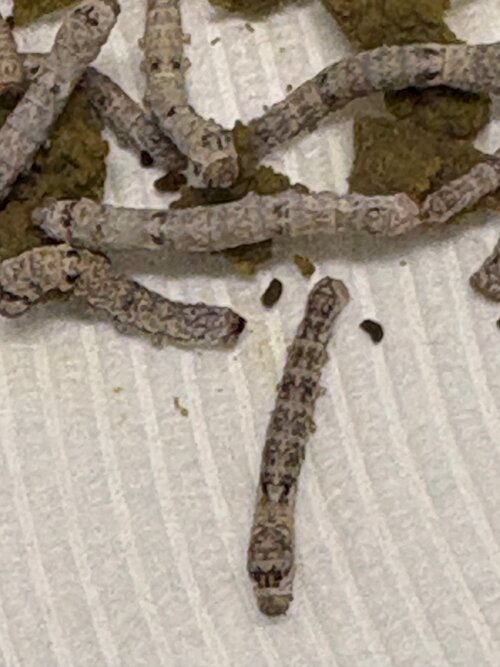
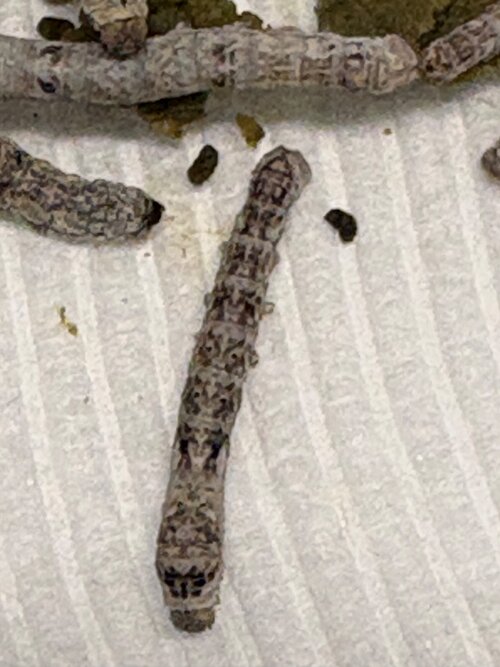
I too have noticed with mine that many have what appears to be stuck shed, but it’s not like normal. It’s very hard and dark brown, ending in an almost black tip. On some of the larger silkies I’ve gently removed it and while it does come off, it seems like a string of black slime and liquid follows it, and the poor little worm eventually dies anyhow. I’ve separated those which aren’t a nice consistent white as those seem to be the problematic ones, and that is kind of working. Those are still dying off while the white ones are ok. Pics of the problem silkies below. Any ideas?
IMG_9347.jpeg IMG_9349.jpeg
 
My initial thought was disease as well. Once one gets sick, it spreads through excretion. Sometimes a few just die for unknown reasons and no one else gets sick. This year I had a lot of problems with stuck sheds. When it's larger worms, I can save most of them, unfortunately, it is a lot harder when they are in their early instars.

Did you notice any symptoms such as vomiting, shrunken discolored worms or lack of appetite? Sorry that you are having this trouble. I feel that this is the hardest part of keeping silkworms. I hate seeing them die while I can't do anything to help them.
Well, like I said, everything was a-ok. Worms were a nice white, very plump and firm, and eating like it was the last mulberry tree on the planet. Then I had a couple worms start to spin in the top corners of the tote, and when I opened the tote I ripped their work up (didn't have a choice). It was then that I also noticed their eating way slowed down. Like, I could fill the tote with 2-3 handfuls of leaves and they were gone in a few hours, and overnight they started to hardly eat anything. A lot of them started to darken up but I assume that was them preparing to spin. In hindsight, I wonder if the spinning was a reaction to illness (trying to survive long enough to reproduce) rather than the natural end of their worm form.

I also had been harvesting leaves every couple of days and putting the extra in the fridge to keep them fresh-ish for the last few weeks and it worked fine, but this time, because of the feeding slowdown, the leaves got condensation on them. I didn't think twice about it, but looking back that might have make thing much worse. The leftover leaves, plus moisture, lead to some mold that I found when I emptied the bins on Saturday. I took the ones that looked good, put them in a clean bin with fresh picked leaves and they all are either dead or very close today. One spun and once it has harden up, I will move the cocoon to a new tote with the rest of them and hope for moths.

In the end, I bought 500 eggs on Amazon (from Oregon) on July 19 for $17, fed off at least 50 during their 4th and 5th instar stages, and got almost 3 dozen cocoons before it went to heck. For having zero clue what I was doing, I will still consider this a success if I get a second generation worth of eggs to play around with.
 
Back
Top Bottom