The problems could be just as much husbandry related as stress related then. Don't expect their recover to come so quickly either, it may be a long involved process.
You can beleive your buddy, or you can beleive the collective research of over 100+ years of scientists studying this species of chameleon in the wild and in captivity. No offense meant to your friend. I have no idea who he is or how he does is practices. However, those chameleons should be seperated. In fact, when chameleons of ANY species are sick, they should be sperated to confine the sickness.
Im a fan of respecting peoples husbandry methods- when they are clearly doing well and have healthy chameleons. But in this case it is clear that the chameleons need change and husbandry should be rethought.
If either of these are WC, then you may be facing an issue related to parasites. They may transfer from one to the other, and then to any other chameleons or reptiles you might have aswell. If so, you can have a fecal sample submitted for review by an experienced vet- generally a very cheap and quick procedure.
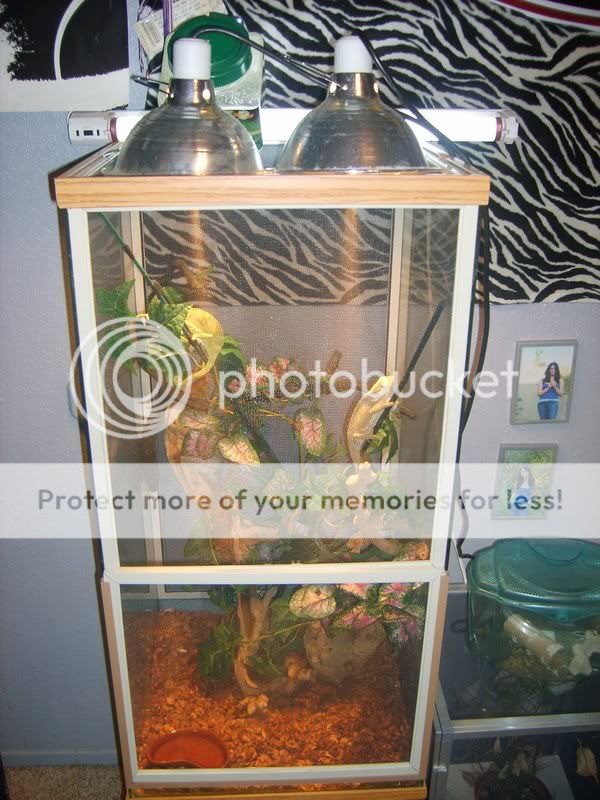
The solid walls on the cage are fine. It will healp keep up humidity, and the other mesh sides will give airflow. If you can cleary see a reflection in the glass from the inside of the cage, you should put a none reflective cover on the inside. You could take a large peice of bristol board and cut it to size and secure it well on the inside.
Hibiscus might do well in that cage, as they require lots of light. A Ficus benjamina might ba an alternative- though as said before if the branches break, the milk that will ooze can cause eye troubles, so you will need to find one that is well established.
The bottom of the cage can be covered with a ground cover plant providing it is none toxic and would not provide other dangers. This species has been known to descend to the ground, especially the males.



 .. not only does she look sick but i had seperated her from her male and now he looks the same that she started. i took them to the local reptile Dealer that i know very well and he just told me that i should use Visine eye drops on them 2-3 times a day for a week but that doesnt help with them not eating alot or poopin much either... i thought at first they were dehydrated but they drink! but now im just stumped.. and being on a tight budget i cant afford a Huge Vet bill..