Kind of late here, and I'm not sure how much this adds, but I figure I would chime in. For background, folks are listing their credentials so I'll list mine too-I'm a practicing human doctor with a PhD in hepatology (liver) who contributes to and studies veterinary science and publishes papers in that field, with collaborators and partner in exotics veterinary practice, but I am not a trained DVM.
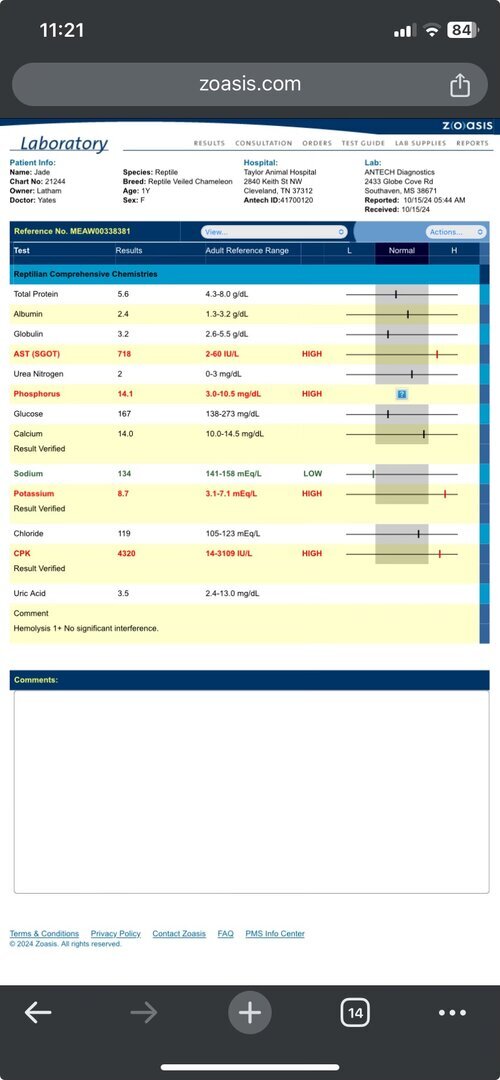
1) Lots of correct ideas are posted here about the CPK, potassium and AST elevation, but given the relatively low magnitude of CPK increase, this is probably representative of trauma during the actual blood draw process. Chameleons often thrash around while getting blood drawn and sometimes need to be stuck a few times (muscle damage) to get the blood. AST is not specific to the liver and is also released by damaged muscle, which further corroborates this idea. The liver isn't in synthetic failure yet based on other labs here. The liver is probably not the issue here, although to be fair some other labs could have/maybe should have been included to really assess liver damage if that was the goal. Anyway, these CPK and AST findings probably don't matter much for prognostication and are probably just an artifact of the blood draw damage itself.
2) The reference ranges here are a little funky. Not to throw shade at this vet's practice in any way, as this is a very common practice, but the reference ranges aren't well-defined in chameleons and plus at places that don't see many chameleons, often the reference ranges are derived from just what has been seen there. So for instance, the calcium is actually getting pretty high even though it's not technically high based on the reference range.
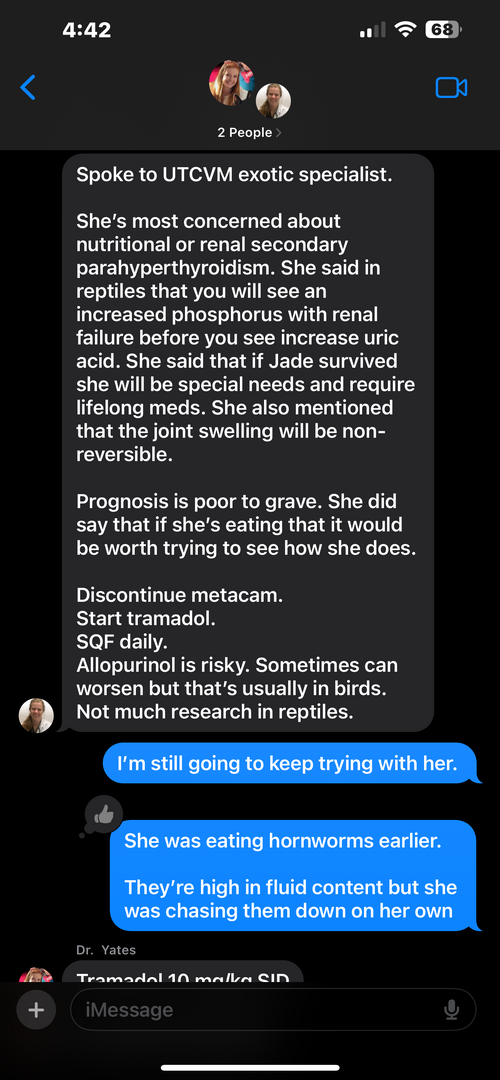
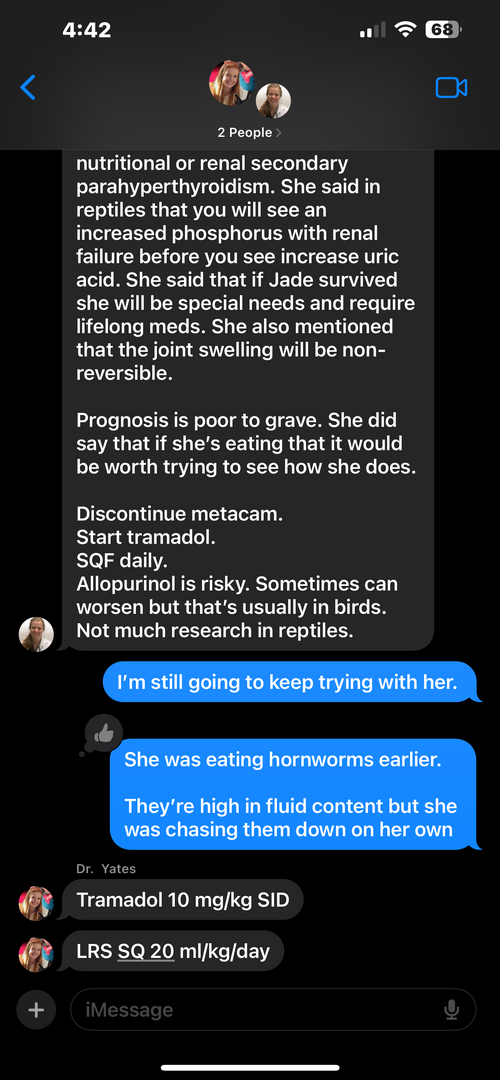
3) Even if phosphorous elevation precedes uric acid, if we are calling it gout (not pseudogout) then the uric acid crystals would still need to be precipitating from somewhere. The fact the uric acid level is not high means it's not likely to be uric acid-induced gout. So it's a good idea to NOT use allopurinol at this stage. It could be pseudogout indeed, given that the calcium is high so potentially that could be what one would find in the joints. Unfortunately this is not well-characterized in reptiles/chameleons at all so treatment would basically still just be painkillers/anti-inflammatories.
4) Pain control/anti-inflammatories are a good idea (what you are doing already). Impressive that they can get a joint tap in this chameleon. That will indeed be helpful. I would add to this, see if you can get a CBC. The joint tap will tell you if this is reversible with antibiotics. It's possible there is a kidney infection or infection elsewhere that is reversible and is leading to this clinical picture though (although admittedly I don't know the whole clinical picture). So I might suggest getting a CBC if there is enough volume of blood next time. This could nudge towards or against an infectious cause.
5) I would agree that regardless, this is not a great prognosis. However, that doesn't mean there is no chance for her. Make sure her hydration is optimized. By the way, not proceeding with medications isn't giving up on her IMO. You have already done a lot of good work for her and whatever choice you make has merit under these difficult circumstances.
Please rest easy knowing you've done a great job being diligent with her care and asking the right questions while also consulting with the right people. Hang in there, her too!