Hi.

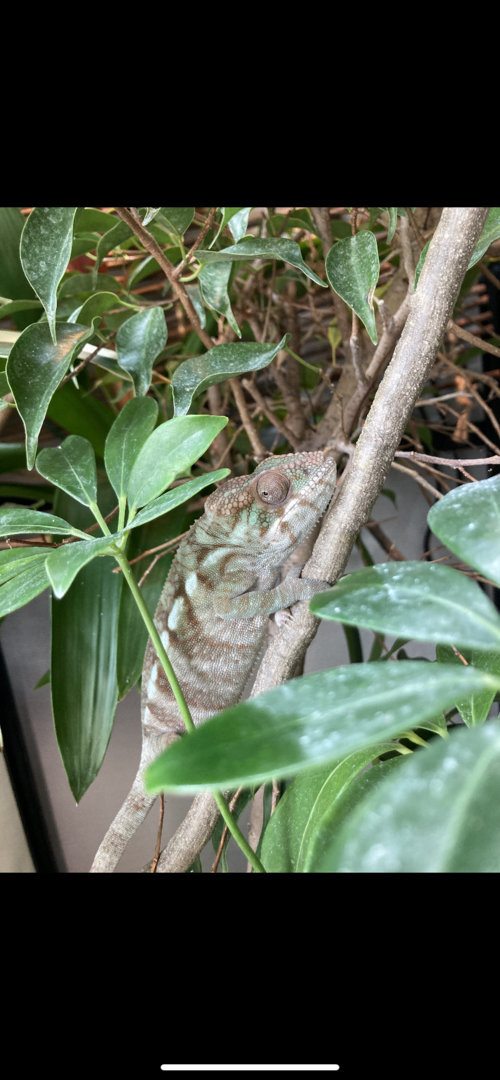
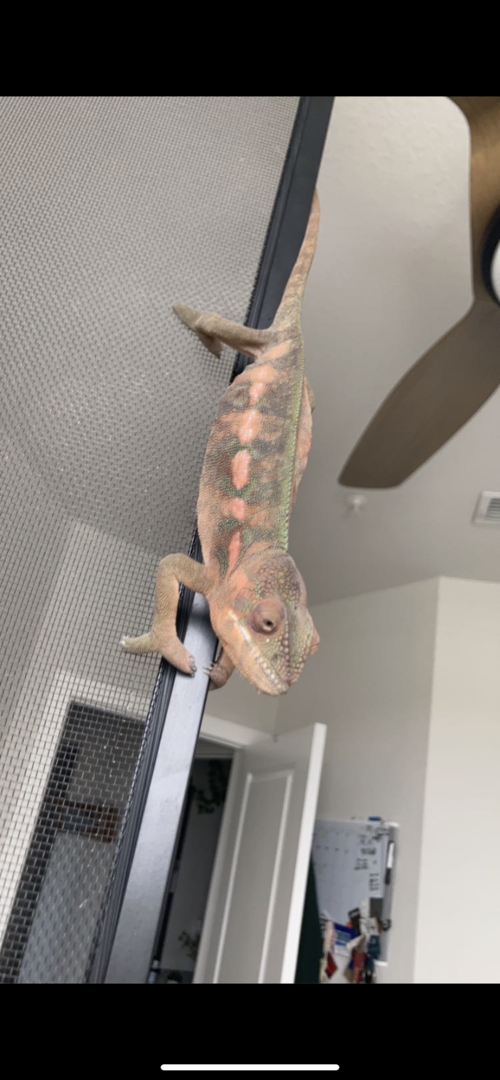
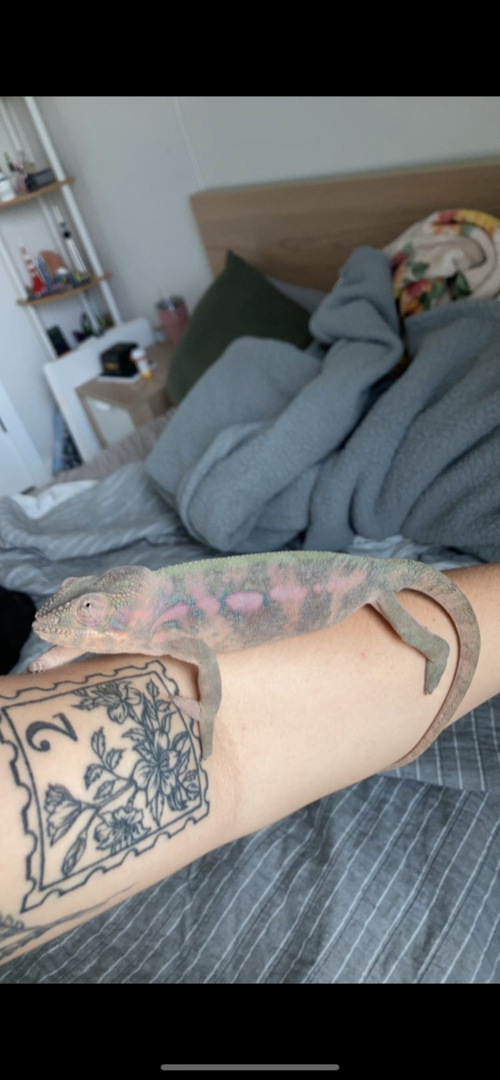
Sounds like Dart is receptive. My (veiled) girls have never lost their appetites when receptive, but each chameleon is different. My little panther girl is having her first receptive period too (I suspect at least) and she’s all over her enclosure. I‘m kind of learning about female panthers as I go, so I can only tell you what I know in general and with my own.
I’m still feeding my little girl about 5 small feeders daily as she’s still tiny and needs to do more growing. I do have a lay bin in her enclosure. Since she’s so small I used a plastic bin that is about 8-10” wide and long and filled with about 4” of washed play sand. Once she lays her first clutch, I’ll be feeding her the same that I do my veileds - 3-4 feeders, 3 days a week. Basking temps are already kept at no higher than 80F.
The receptive period can last anywhere from one to several weeks. A few weeks or longer after that you can usually expect your girl to lay her eggs. She’ll find her bin when she needs it…or she may chose a plant pot and that’s fine. Right before laying, she may not want to eat, may start getting restless again (spending more time checking out the lower part of her enclosure) or she might not give any signs at all. Once you see she’s in her bin and started digging, walk away and get a light sheet to cover up just the visible lower half of the enclosure so she can’t see you. If she sees anyone, she may stop digging and there’s risk of becoming egg bound. Keep your normal light schedule. She may dig a few holes until she’s satisfied with one. She’ll probably sleep in her tunnel. Once she’s happy with the tunnel she’s dug, she’ll turn around with bottom in the tunnel and lay her eggs. She’ll carefully cover all of her holes. When all done, you’ll find her sitting on her basking branch looking much thinner. Give her a good misting and some food. I like giving silkworms and hornworms after they lay to help rehydrate them. You’ll want to feed her very well for a couple of days after and then start the reduced feeding schedule. I know reduced feeding and temps help reduce egg production and laying in veileds and in theory should do the same for our lady panthers