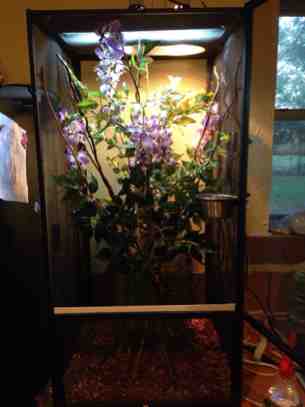
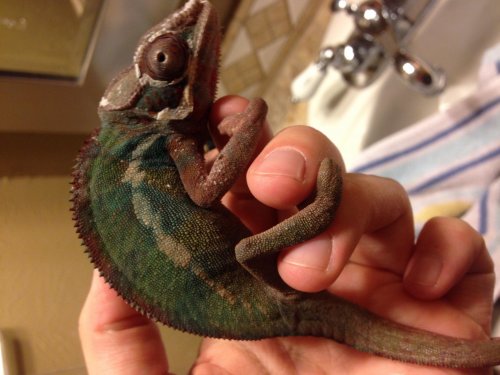
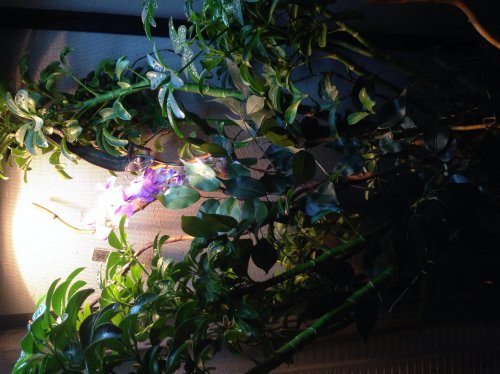
That uvb bulb that comes with the zilla is 3% you need to upgrade to at least reptisun 5.0 or equivalent. If you click the resources tab in green right under the Chameleon Forums banner you will find info on panthers and care sheets for them, this is quoted from there, ( I would also highly recommend reading member JannB blogs
https://www.chameleonforums.com/blogs/jannb/325-info-new-keepers-young-veiled-panther-chameleons.html)
"Panther Chameleons - Food & Nutrition
Feeding:
Panther chameleons are insectivores meaning they should only be fed live insects. Great feeder insects include crickets, silkworms, hornworms, butterworms, dubia roaches and superworms. Waxworms and mealworms are high in fat content and harder to digest so should only be used on occasion. The rule of thumb is to not feed insects that are longer than the width of your chameleon's head.
Neonates: as many small crickets as they can eat several times a day
Juveniles 3-6 months of age: 10-12 small crickets daily
Juveniles 6-12 months of age: 10-12 medium crickets every other day
Adults over 12 months of age: 7-10 medium-large crickets every other day
Chameleons should be fed in the first half of the day to give them time to bask and digest their food properly. Crickets need to be properly gutloaded with calcium rich vegetables several hours before being fed to your chameleon. Inadequate dietary calcium leads to metabolic bone disease, a very serious illness. Commercially available gutloads usually aren't properly balanced or sufficient for good nutrition. See Chameleon Food for more information.
Supplementation:
Calcium and other vitamins are very important to your chameleon's health. Feeder insects should be lightly dusted with powdered supplement before being fed to your chameleon. Many keepers successfully use calcium (without D3 or phosphorus) at nearly every feeding, multivitamin once every 2 weeks, and calcium with D3 once every 2 weeks.
Hydration & Misting
The cage should be misted at least twice a day, drying out completely between misting sessions. This raises relative humidity as well as stimulates your chameleon to want to drink. Water can be provided by means of a dripper (not a waterfall or water bowl). The dripper should be placed on top of the cage so that the water droplets drip down and accumulate on plant leaves. Other watering options include manual and automated misting sytems. Chameleons do not recognize standing water as a drinking source. See Water & Humidity for more information. "