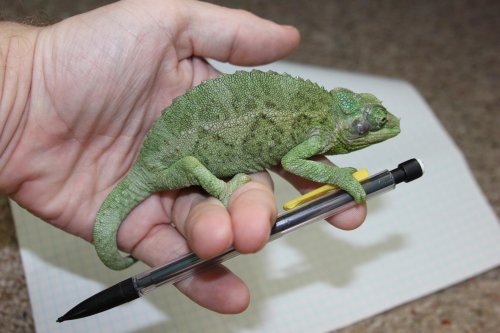
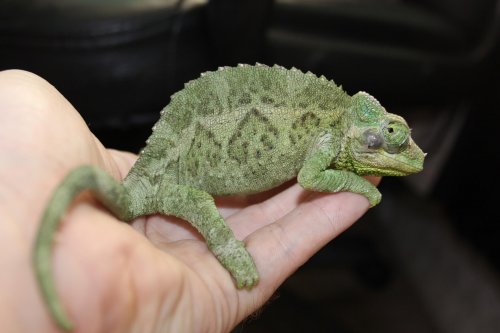
Mouth-rot high up in Pregnant Jackson's cheek

Reddogzz

New Member
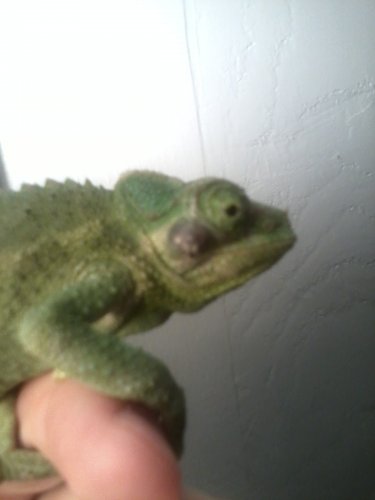
I have a female jackson's chameleon, she gave birth 3.5 months ago. One week after giving birth she became pregnant again. She came down with mouth rot a month and a half ago. We took her to the vet but the vet said that baytril would kill the babies. She is active, drinking around 5 ml, eating 6-9 superworms/ crickets per day. We removed some plaque from her mouth and treated her mouth with diluted iodine per the vet's recommendation. The mouth rot went away from her mouth, but there is still a large black swollen bulge the size of a pea high in her cheek next to her eye, the bulge stinks and bacteria is obviously inside of it. The vet gave us some baytril a month ago in case she had her babies, but I don't know what to do.

She is a healthy solid green color at all times and is active but I don't want to take any chances.

SO here are my questions:

After a jackson's chameleon has babies, if they get pregnant again, how long until those babies are born? (I have read 3 months but it has already been longer)

Can the vet put her under, make an incision, and remove the plaque from the cheek? Has anyone had a positive experience with sedating a chameleon?

I have some rot guard but I didn't notice it helping... only when I cleared out the plaque from her mouth, did her mouth wound clear. Would giving her the rotguard to ingest orally help reduce the infection at this point?

PS I called ALL the vets on our island and I am seeing the only one that is willing to treat reptiles, but he does not have a lot of experience.
 

Attachments

  • 1115142150-01.jpg
    1115142150-01.jpg
    180.6 KB · Views: 298
  • IMG_4347_1.jpg
    IMG_4347_1.jpg
    245.4 KB · Views: 364
  • IMG_4349_2.jpg
    IMG_4349_2.jpg
    239.7 KB · Views: 495
The most common bacteria found in mouth rot cases in my experience is pseudamonas...and its opportunistic so it tends to come back.

I would suggest you email ferrit on this forum..she's a vet and should be able to tell you the best options that would be best for the female and her babies.
 
You can always have more babies. That being said, finding a female jax to breed that good (ie: one week later) is difficult. If it were me, I would go with the baytril, twenty seconds after reading this. She may die or even refuse to breed again, if it gets worse. Good luck. (Health issues with a pregnant female can create some hard decisions. Don't waiver. You need to pick one path at the beginning, but remain flexible if need arises.)
 
After a jackson's chameleon has babies, if they get pregnant again, how long until those babies are born? (I have read 3 months but it has already been longer)

Average gestation is 6-9 month's for jacksonii xantholophus.

Sorry I cannot help with the rest of your questions.

Carl
 
You can always have more babies. That being said, finding a female jax to breed that good (ie: one week later) is difficult.

Thank you for the reply :)
To clear things up a bit... she didn't breed again... she just got pregnant again without mating. Like she looks like a tennis ball with legs. I read that they can continue to have birth every three months because they store the male's sperm. It looks like this may have happened because she went from being really skinny after pregnancy for about a week or so to being plump, to being really really plump, without any increase in apatite.

This excerpt is from the article I read, and it really looks like this might be what happened.


http://www.reptilesmagazine.com/Care-Sheets/Lizards/Jacksons-Chameleon/

"Gestation is typically seven to nine months for the first brood. After which time, if proper breeding has occurred, another brood will be born every three months thereafter, due to the chameleon's unique ability to store sperm. Reintroduction of a healthy female to the male two weeks after giving birth is recommended to keep sperm counts high."


I posted higher quality photos if anyone is be able to tell how far along she is.
 
A good vet should probably be able to deal with this. She looks very good otherwise. Probably the infection will need to be opened from the outside, cleaned out, and kept open while on antibiotics, flushed out regularly (weak betadyne every day) and then kept covered with sliver sulfadiazine until everything heals.

Just a guess. Hopefully a real vet will come on this thread soon.

But you don't want to delay treatment- stuff will decay inside and make things worse, and you don't want it in the bone.

You *might* be risking any babies. (I don't think so). But if she dies, so will the babies anyway.
 
pregnancy time with chameleons can vary dramatically depending on husbandry. Some jacks have been reported at 3 months, others up to 9 months.
 
First..I'm not a vet but I've kept chameleons for over 25 years. In my experience, I have never known a case of mouth rot or an infection of that magnitude to be cured by using a topical antibiotic. The area needs to be cleaned out well, flushed, a culture and sensitivity test done so that the chameleon can be put on the appropriate antibiotic....and without being put out for that I can only imagine how painful it must be. Any attempts I've seen where people just "disinfect" the area and apply a topical antibiotic may appear to solve the problem but usually the chameleon will die some time later because the infection has gone systemic.

There are several vet's on this forum...i hope one (or more) of them will comment.
 
Thank-you, my vet isn't sure what exactly needs to be done, they just gave me some baytril and said to give it to her after she has babies
 
Located in Hilo HI

When I do a google search, I find three different vet names... but they are all my current vet who has changed names/locations several times. I called the other vets in the yellow pages list and they ALL tell me that only one person sees reptiles. I cannot find any on the resources list. We have laws preventing jackson's chameleons from leaving the island.

My vet might be willing to surgically remove the infection at this point but....

I am still bitter because my vet told me on two different appointments that I was overreacting about my male chameleon's symptoms and that he just needed to eat more. My male ... didn't make it, and we found out he could have easily been treated.

I am hoping that a vet can make a comment on what to do for our female though:

Can we determine how far along she is from the photos?

What needs to be done to remove the infection from her cheek? Will the oral baytril solution be enough?
 
Located in Hilo HI

When I do a google search, I find three different vet names... but they are all my current vet who has changed names/locations several times. I called the other vets in the yellow pages list and they ALL tell me that only one person sees reptiles. I cannot find any on the resources list. We have laws preventing jackson's chameleons from leaving the island.

My vet might be willing to surgically remove the infection at this point but....

I am still bitter because my vet told me on two different appointments that I was overreacting about my male chameleon's symptoms and that he just needed to eat more. My male ... didn't make it, and we found out he could have easily been treated.

I am hoping that a vet can make a comment on what to do for our female though:

Can we determine how far along she is from the photos?

What needs to be done to remove the infection from her cheek? Will the oral baytril solution be enough?

I doubt it. This infection has been present for a long time and has probably spread farther than you can see on the exterior. I agree with others who say it will need to be opened up and cleaned out followed by meds. These things are notorious for recurring (been there done that).
 
Others have given you great advice already!

Probably the infection will need to be opened from the outside, cleaned out, and kept open while on antibiotics, flushed out regularly (weak betadyne every day) and then kept covered with sliver sulfadiazine until everything heals.

The area needs to be cleaned out well, flushed, a culture and sensitivity test done so that the chameleon can be put on the appropriate antibiotic....and without being put out for that I can only imagine how painful it must be. Any attempts I've seen where people just "disinfect" the area and apply a topical antibiotic may appear to solve the problem but usually the chameleon will die some time later because the infection has gone systemic.

It appears to be an abscess, and unlike mammals the pus of reptiles becomes so thick that it actually dries out and can harden. So it usually has to be removed because otherwise antibiotics can't penetrate the pus to treat it and there is always some bacteria remaining in it to restart the infection even if it does go down. Baytril doesn't have very good activity against bacteria of an abscess so I would change antibiotics. A culture and sensitivity from a sample of the abscess would be ideal to determine what bacteria are in there and what they're susceptible to. Unfortunately it is a little pricey. Flux's plan above is a good one.

As for the babies, there's not a great way to tell how far along she is since jacksons don't have eggs. The infection is already quite large so it needs to be prioritized. Most likely they babies will be fine but there is some risk to them. The health of the mom needs to be the priority or you may lose her and the babies.
 
Flux's plan above is a good one.

My brother once told me about a new idea to use another product that is better than the weakened betadyne, as whatever it is, is absorbed more deeply so penetrates better, but I can't remember what it was. Supposedly the diluted betadyne disinfects more on the surface, but that is what I have always used for irrigation (My father and brother are vets, looks like my #2 son will be one too!)
 
I'm not a vet, but I've treated that before.

It needs to be opened, cleaned out, use a Chlorhexidine solution to clean it.

It should be cultured if possible. If not I'd use either Baytil or Tri-methal-sulfate (spelling) in an oral form. Be ready for a long term treatment plan.
 
Thank you all so much, so I just ask the vet to remove the abscess and to do a culture and sensitivity, so we know which antibiotics work best?
 
Back
Top Bottom