
Navigation
Install the app
How to install the app on iOS
Follow along with the video below to see how to install our site as a web app on your home screen.
Note: This feature may not be available in some browsers.
More options
You are using an out of date browser. It may not display this or other websites correctly.
You should upgrade or use an alternative browser.
You should upgrade or use an alternative browser.
melleri hatching!
- Thread starter pamnsam94
- Start date


pamnsam94
Established Member


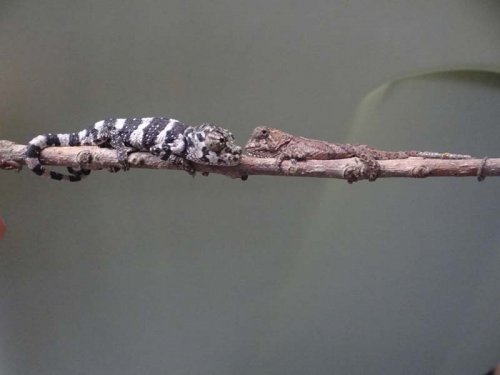
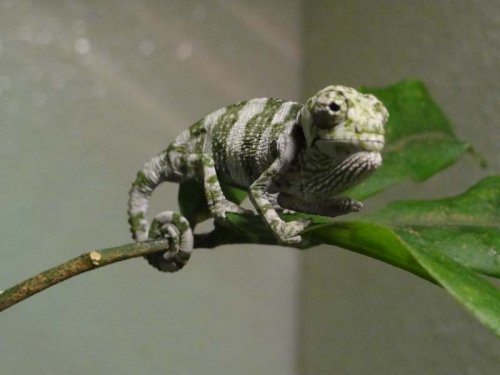
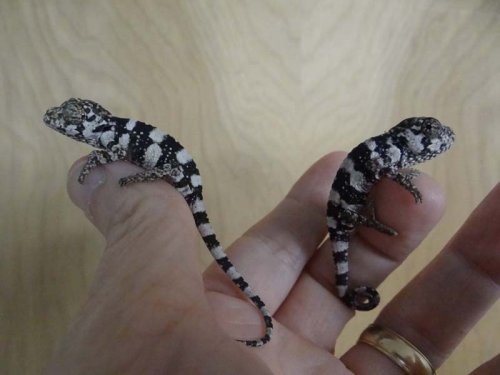
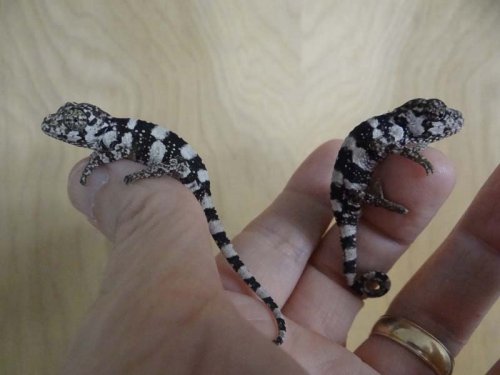
Update. Three hatched on the 19th, none hatched on the 20th, six hatched on the 21st, three hatched on the 22nd, one on the 23rd, and two hatched today. Only one egg left. I currently have 15 neonates some of which I've seen eating. Of the species I've kept, I don't think I've ever had eggs hatching spread out this far apart, but I know others have with other species.
Now the bad news. Yesterday, I had another egg shrink. It only had a single slit in it, although it was larger than the slit in the one eggs that shrunk on the 19th (that baby never made it out). This morning, there was absolutely no progress in the egg that shrunk yesterday. I cut it partially open and right away I saw the baby's mouth open with its tongue slightly protruding. I left him in the egg with his head sticking out, but I'm 99.9% sure it's dead.
The following may belong in a separate thread (off topic a little), but when babies don't hatch, we often say "it was simply too weak to cut its way out." I wonder how often that really is the case. Sometimes it seems to me that it could be simple a timing thing. I've noticed that with these guys anyway, the slitting occurred pretty much simultaneously with the shrinking, or close to it. In the cases where the cutting didn't occur early, it seems those individuals took longer overall to hatch (from the first sign of sweating to actual emergence), and that the total amount of time that the neonate took to slit the egg was longer. Maybe an egg is easier to slit internally when there is more internal pressure from the fluids. I also find it interesting that some individuals bolt out, almost flying out , whereas others take a really long time to emerge. I can't say for sure, but it seems that the ones who cut early where the ones that bolted out (maybe they weren't as exhausted as the ones that waited longer before making significant cuts??). Keep in mind this is very speculative and is simply a casual observation. I can't make any definitive conclusions, but I am curious as to why the two died. Were they too weak or was it something else? I would love to hear from any of you who have observed dozens of panther or veiled clutches hatch. Maybe you have something more concrete rather than just mere speculation.
I'm assuming that often, lack of overall vigor is a reason for them not getting out of the egg, especially in cases, like I've seen before, where a baby dies with it's head sticking out. Other times, oxygen deprivation might be a reason. I'm sure many of you have seen a head poke out only to go back it. I wonder if in these instances, they are taking their first breath. With all of the squirming around they do inside the egg, I'm wondering whether their oxygen demands are higher thereby creating a need for them to cut adequate slits and poke their nose out as soon as possible. I just want to know physiologically what exactly happens during the hatching process in terms of the babies receiving enough oxygen. Full of questions and a "need" to know.
Perry
Now the bad news. Yesterday, I had another egg shrink. It only had a single slit in it, although it was larger than the slit in the one eggs that shrunk on the 19th (that baby never made it out). This morning, there was absolutely no progress in the egg that shrunk yesterday. I cut it partially open and right away I saw the baby's mouth open with its tongue slightly protruding. I left him in the egg with his head sticking out, but I'm 99.9% sure it's dead.
The following may belong in a separate thread (off topic a little), but when babies don't hatch, we often say "it was simply too weak to cut its way out." I wonder how often that really is the case. Sometimes it seems to me that it could be simple a timing thing. I've noticed that with these guys anyway, the slitting occurred pretty much simultaneously with the shrinking, or close to it. In the cases where the cutting didn't occur early, it seems those individuals took longer overall to hatch (from the first sign of sweating to actual emergence), and that the total amount of time that the neonate took to slit the egg was longer. Maybe an egg is easier to slit internally when there is more internal pressure from the fluids. I also find it interesting that some individuals bolt out, almost flying out
, whereas others take a really long time to emerge. I can't say for sure, but it seems that the ones who cut early where the ones that bolted out (maybe they weren't as exhausted as the ones that waited longer before making significant cuts??). Keep in mind this is very speculative and is simply a casual observation. I can't make any definitive conclusions, but I am curious as to why the two died. Were they too weak or was it something else? I would love to hear from any of you who have observed dozens of panther or veiled clutches hatch. Maybe you have something more concrete rather than just mere speculation. I'm assuming that often, lack of overall vigor is a reason for them not getting out of the egg, especially in cases, like I've seen before, where a baby dies with it's head sticking out. Other times, oxygen deprivation might be a reason. I'm sure many of you have seen a head poke out only to go back it. I wonder if in these instances, they are taking their first breath. With all of the squirming around they do inside the egg, I'm wondering whether their oxygen demands are higher thereby creating a need for them to cut adequate slits and poke their nose out as soon as possible. I just want to know physiologically what exactly happens during the hatching process in terms of the babies receiving enough oxygen. Full of questions and a "need" to know.
Perry

coldbloodedAL
Avid Member
I know member Seeco will cut his multis out of the egg after a period of time. What his mortality rate is after he cuts them out, cannot say.. I think he may even have made a blog on it.
Again, Congratulations on the hatch!!!
Again, Congratulations on the hatch!!!
pamnsam94
Established Member


spawn
Member
That's awesome! How soon after hatching do they eat/shed? Do they acclimatize to the circadian clock immediately (in other words - if one hatches 20 minutes before sun down, will he march around or stay put and sleep)? Do they hatch in the morning? Or at all hours of the day between all of them so far?


djfishygillz
Avid Member
Congrats on the breeding. I haven't seen anyone accomplish this feet!
pamnsam94
Established Member
That's awesome! How soon after hatching do they eat/shed? Do they acclimatize to the circadian clock immediately (in other words - if one hatches 20 minutes before sun down, will he march around or stay put and sleep)? Do they hatch in the morning? Or at all hours of the day between all of them so far?
Thanks. Within a day, I saw some of them eating. They're in a room without a window so they don't see sunlight, but they've adjusted pretty well already to the lighting schedule I have them on. It seems they're already picking their favorite places to sleep. As far as hatching times, they've hatched at all hours of the day.
Perry

Dooley1
Avid Member
Congrats on baby melleri.
I have seen no difference when waiting to slit or not waiting. I've had eggs sweat more than 7 days and still hatch. I've had them shrink and wait a day before slitting and be fine. I've had them barely sweat at all and hatch fine...didn't notice any difference in the health of the babies either.
This doesn't offer much insight, but to get to the point, I don't see a difference and babies hatch weekly at my house so I see a lot of variation even within the same clutch.
I have seen no difference when waiting to slit or not waiting. I've had eggs sweat more than 7 days and still hatch. I've had them shrink and wait a day before slitting and be fine. I've had them barely sweat at all and hatch fine...didn't notice any difference in the health of the babies either.
This doesn't offer much insight, but to get to the point, I don't see a difference and babies hatch weekly at my house so I see a lot of variation even within the same clutch.
pamnsam94
Established Member
Congrats on baby melleri.
I have seen no difference when waiting to slit or not waiting. I've had eggs sweat more than 7 days and still hatch. I've had them shrink and wait a day before slitting and be fine. I've had them barely sweat at all and hatch fine...didn't notice any difference in the health of the babies either.
This doesn't offer much insight, but to get to the point, I don't see a difference and babies hatch weekly at my house so I see a lot of variation even within the same clutch.
Thanks Kevin. Very interesting. In my experience, whenever an egg completely shrinks with only a small slit, and if there is no progression after a day, then there is a problem. Just to make sure, I always waited days before making the determination that the baby was dead. It remains a very difficult decision in determining whether or not to intervene and try to cut the baby out. I usually take a "hands off" approach, but because I've never experienced a completely shrunken egg with a tiny slit that ended up hatching, in this instance of the two baby melleri dying, I decided to cut after a full day of nothing happening. I kind of wondered if I might have contributed to their deaths in some way, but I highly doubt it. I'm pretty confident they were dead before I opened the eggs the rest of the way. There was no movement whatsoever as I cut to get the babies out and one of them had its mouth slightly open with its tongue partially protruding. I speculated that maybe a shrunken egg, having more give to it than an egg with fluid inside, might not be as easy for the baby to cut, but your experience with countless carpet chameleons would indicate otherwise. Thanks for the info.
Perry
Dooley1
Avid Member
Perry,
I used to cut open eggs when I didn't have enough of them to spare, and each egg was like gold to me. I am sure those melleri were dead before you cut the eggs open. If you can cut open a jelly-bean sized carpet eggs safely and the baby inside is fine, then melleri sized eggs should not be a problem.
It is a let down when you feel as though they should have hatched-but you had a great hatch rate...so whooohooo for your new baby melleri
Kevin
I used to cut open eggs when I didn't have enough of them to spare, and each egg was like gold to me. I am sure those melleri were dead before you cut the eggs open. If you can cut open a jelly-bean sized carpet eggs safely and the baby inside is fine, then melleri sized eggs should not be a problem.
It is a let down when you feel as though they should have hatched-but you had a great hatch rate...so whooohooo for your new baby melleri
Kevin
pamnsam94
Established Member
Perry,
I used to cut open eggs when I didn't have enough of them to spare, and each egg was like gold to me. I am sure those melleri were dead before you cut the eggs open. If you can cut open a jelly-bean sized carpet eggs safely and the baby inside is fine, then melleri sized eggs should not be a problem.
It is a let down when you feel as though they should have hatched-but you had a great hatch rate...so whooohooo for your new baby melleri
Kevin
I'm not let down too much and I'm grateful for the ones that hatched.
By the way, nothing happened with the final egg yesterday, but today it finally hatched! So the total count: 16 out of 18 eggs made it out. I'm pretty excited. An eight day spread between the first and last baby hatching is the longest spread of time I've ever had with any clutch. Even with the clutch of 65 or so melleri I had hatch in 2001 (?), I recall them all hatching within 3 or 4 days of each other. Anyway, now comes the hard part.Perry


