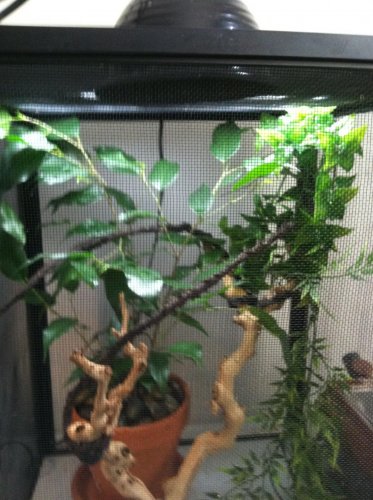
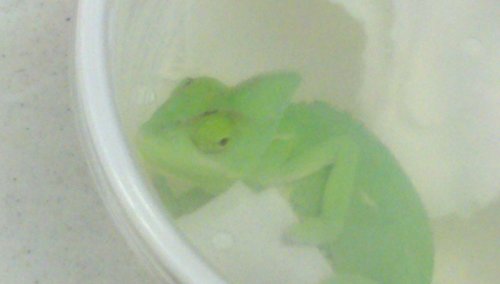
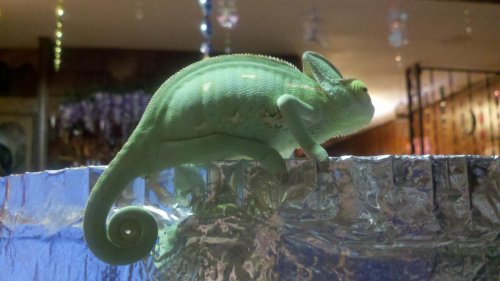
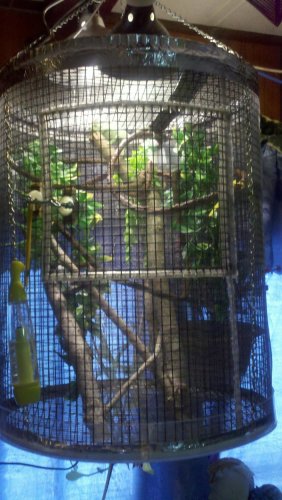
Just got her.

Hey shrilly, just a thought here. I am not sure if this will be an indoor or outdoor cage, but I am about to start an outdoor sunning enclosure and have the same wire mesh and someone pointed out that firefly's are highly toxic to chameleons. I am thinking about switching to aluminum screen instead. If you get firefly's where you live you might want to take that into consideration. Although it looks like you are planning to use it for indoors. Just wanted to throw that out there. I think your cage is going to be awesome when it's done. Keep posting pics:)

thank you so much for the heads up. Yes i am making it a indoor enclosure trying to get everything set up i am sanding it and putting sealant on the wood i will definitely post more pics!
 
Not to bad but you def need a real cage. Check out the site sponsors for some good deals. Also I would read up on the feeding, vitamins and suplements they need to have with their food. Keep surfing this forum and you can learn everything you need.
 
Assuming that its still in the little glass cage still...if you bought a long linear Repti-sun 5.0 UVB light and hood to go with it you could lay it across the back of the cage and remove the basking light as long as the temperature in the cage stays in the low 80's by doing that. Young chameleons have small bodies that can overheat, cool, dehydrate much more quickly than the adults so temperatures in that range (low 80's F) are fine for them. It also keeps them from growing too fast and possible developing bone issues if the "newbie" keeper hasn't got everything spot-on at first.

You said the cage is near a window...does the sun shine directly on the cage at any time? If so I would consider moving it somewhere else. Do you have air conditioning?

At that age you can feed her as much as she will eat in a minute or two for the first feeding of the day and leave a cricket or two in the cage for her to eat later. Make sure the crickets are of a size that would fit into her mouth easily. (Width between her eyes.)

Fake plants will do for a while, but veileds will eat plants so once its a couple of months old, I would switch to real ones. Be sure to wash them well (both sides of the leaves) before using them in the cage. I would also cover the soil with pebbles that are definitely too big for the chameleon to ingest so that it won't eat the soil.

Some of the following has been mentioned already...but I'm mentioning it again rather than re-reading all the posts...

As has been suggested...I would remove the substrate. Often substrate can be ingested and lead to impaction...as well as harbor bacteria and mold if kept too moist.

I gutload/feed my crickets, locusts, superworms, etc. a wide variety of greens (dandelions, kale, collards, endive, escarole, etc.) and veggies (carrots, squash, zucchini, sweet red pepper, sweet potato, etc.). I don't like most commercial foods since it makes it harder to balance the nutrients...but there are a few out there that come highly recommended.

A dripper can be made with a plastic (take-out) cup that has a very tiny hole punched in the bottom of it. It should drip at the rate of one or two drips per second.

Here's the gist on supplements...and a few good sites for you to read...
Appropriate cage temperatures aid in digestion and thus play a part indirectly in nutrient absorption.

Exposure to UVB from either direct sunlight or a proper UVB light allows the chameleon to produce D3 so that it can use the calcium in its system to make/keep the bones strong and be used in other systems in the chameleon as well. The UVB should not pass through glass or plastic no matter whether its from the sun or the UVB light. The most often recommended UVB light is the long linear fluorescent Repti-sun 5.0 tube light. Some of the compacts, spirals and tube lights have caused health issues, but so far there have been no bad reports against this one.

Since many of the feeder insects have a poor ratio of calcium to phosphorus in them, its important to dust the insects just before you feed them to the chameleon at most feedings with a phos.-free calcium powder to help make up for it. (I use Rep-cal phosphorus-free calcium).

If you also dust twice a month with a phos.-free calcium/D3 powder it will ensure that your chameleon gets some D3 without overdoing it. It leaves the chameleon to produce the rest of what it needs through its exposure to the UVB light. D3 from supplements can build up in the system but D3 produced from exposure to UVB shouldn't as long as the chameleon can move in and out of it. (I use Rep-cal phos.-free calcium/D3).

Dusting twice a month as well with a vitamin powder that contains a beta carotene (prOformed) source of vitamin A will ensure that the chameleon gets some vitamins without the danger of overdosing the vitamin A. PrEformed sources of vitamin A can build up in the system and may prevent the D3 from doing its job and push the chameleon towards MBD. However, there is controversy as to whether all/any chameleons can convert the beta carotene and so some people give some prEformed vitamin A once in a while. (I use herptivite which has beta carotene.)

Gutloading/feeding the insects well helps to provide what the chameleon needs. I gutload crickets, roaches, locusts, superworms, etc. with an assortment of greens (dandelions, kale, collards, endive, escarole, mustard greens, etc.) and veggies (carrots, squash, sweet potato, sweet red pepper, zucchini, etc.)

Calcium, phos., D3 and vitamin A are important players in bone health and other systems in the chameleon (muscles, etc.) and they need to be in balance. When trying to balance them, you need to look at the supplements, what you feed the insects and what you feed the chameleon.

Here are some good sites for you to read...
http://chameleonnews.com/07FebWheelock.html
http://web.archive.org/web/200605020...Vitamin.A.html
http://web.archive.org/web/200406080...d.Calcium.html
http://www.uvguide.co.uk/
http://web.archive.org/web/200601140...ww.adcham.com/
If you can't access the sites above that have the word "archive" in you can do it through the WayBackMachine.

Hope this helps!

 
Assuming that its still in the little glass cage still...if you bought a long linear Repti-sun 5.0 UVB light and hood to go with it you could lay it across the back of the cage and remove the basking light as long as the temperature in the cage stays in the low 80's by doing that. Young chameleons have small bodies that can overheat, cool, dehydrate much more quickly than the adults so temperatures in that range (low 80's F) are fine for them. It also keeps them from growing too fast and possible developing bone issues if the "newbie" keeper hasn't got everything spot-on at first.

You said the cage is near a window...does the sun shine directly on the cage at any time? If so I would consider moving it somewhere else. Do you have air conditioning?

At that age you can feed her as much as she will eat in a minute or two for the first feeding of the day and leave a cricket or two in the cage for her to eat later. Make sure the crickets are of a size that would fit into her mouth easily. (Width between her eyes.)

Fake plants will do for a while, but veileds will eat plants so once its a couple of months old, I would switch to real ones. Be sure to wash them well (both sides of the leaves) before using them in the cage. I would also cover the soil with pebbles that are definitely too big for the chameleon to ingest so that it won't eat the soil.

Some of the following has been mentioned already...but I'm mentioning it again rather than re-reading all the posts...

As has been suggested...I would remove the substrate. Often substrate can be ingested and lead to impaction...as well as harbor bacteria and mold if kept too moist.

I gutload/feed my crickets, locusts, superworms, etc. a wide variety of greens (dandelions, kale, collards, endive, escarole, etc.) and veggies (carrots, squash, zucchini, sweet red pepper, sweet potato, etc.). I don't like most commercial foods since it makes it harder to balance the nutrients...but there are a few out there that come highly recommended.

A dripper can be made with a plastic (take-out) cup that has a very tiny hole punched in the bottom of it. It should drip at the rate of one or two drips per second.

Here's the gist on supplements...and a few good sites for you to read...
Appropriate cage temperatures aid in digestion and thus play a part indirectly in nutrient absorption.

Exposure to UVB from either direct sunlight or a proper UVB light allows the chameleon to produce D3 so that it can use the calcium in its system to make/keep the bones strong and be used in other systems in the chameleon as well. The UVB should not pass through glass or plastic no matter whether its from the sun or the UVB light. The most often recommended UVB light is the long linear fluorescent Repti-sun 5.0 tube light. Some of the compacts, spirals and tube lights have caused health issues, but so far there have been no bad reports against this one.

Since many of the feeder insects have a poor ratio of calcium to phosphorus in them, its important to dust the insects just before you feed them to the chameleon at most feedings with a phos.-free calcium powder to help make up for it. (I use Rep-cal phosphorus-free calcium).

If you also dust twice a month with a phos.-free calcium/D3 powder it will ensure that your chameleon gets some D3 without overdoing it. It leaves the chameleon to produce the rest of what it needs through its exposure to the UVB light. D3 from supplements can build up in the system but D3 produced from exposure to UVB shouldn't as long as the chameleon can move in and out of it. (I use Rep-cal phos.-free calcium/D3).

Dusting twice a month as well with a vitamin powder that contains a beta carotene (prOformed) source of vitamin A will ensure that the chameleon gets some vitamins without the danger of overdosing the vitamin A. PrEformed sources of vitamin A can build up in the system and may prevent the D3 from doing its job and push the chameleon towards MBD. However, there is controversy as to whether all/any chameleons can convert the beta carotene and so some people give some prEformed vitamin A once in a while. (I use herptivite which has beta carotene.)

Gutloading/feeding the insects well helps to provide what the chameleon needs. I gutload crickets, roaches, locusts, superworms, etc. with an assortment of greens (dandelions, kale, collards, endive, escarole, mustard greens, etc.) and veggies (carrots, squash, sweet potato, sweet red pepper, zucchini, etc.)

Calcium, phos., D3 and vitamin A are important players in bone health and other systems in the chameleon (muscles, etc.) and they need to be in balance. When trying to balance them, you need to look at the supplements, what you feed the insects and what you feed the chameleon.

Here are some good sites for you to read...
http://chameleonnews.com/07FebWheelock.html
http://web.archive.org/web/200605020...Vitamin.A.html
http://web.archive.org/web/200406080...d.Calcium.html
http://www.uvguide.co.uk/
http://web.archive.org/web/200601140...ww.adcham.com/
If you can't access the sites above that have the word "archive" in you can do it through the WayBackMachine.

Hope this helps!

thank you so much for all the info the window is covered with a blanket so it is ok at the moment i am building her a cage i started sanding and everything
 
only take the lights off for that glass tank when you get your screen mesh cage you can put the lights back on top of it. deff take the bowl of water out. that uvb bulb will do fine everyone has their own tricks of the trade but when you get a screen mesh and decide to put a plant in it go with the flouricent tube. the plants will do better under it. you can pick up a zoomed screen cage at petsmart or a zilla at petco if you want one asap. but for that small of a cage all you need is one heat/basking light no more then 60 watt. good luck and keep us informed on your little guy or girl!! here i'll post a pic of my cage for my baby chams for you. hear is the pic for my soon to be nosey be male i keep it simple so i can keep an eye on him to see if he is eating his crickets . when they get bigger i put in more folage for them but this is more then a good set up for a baby cham!!
 

Attachments

  • IMG_0099.jpg
    IMG_0099.jpg
    252.9 KB · Views: 150
only take the lights off for that glass tank when you get your screen mesh cage you can put the lights back on top of it. deff take the bowl of water out. that uvb bulb will do fine everyone has their own tricks of the trade but when you get a screen mesh and decide to put a plant in it go with the flouricent tube. the plants will do better under it. you can pick up a zoomed screen cage at petsmart or a zilla at petco if you want one asap. but for that small of a cage all you need is one heat/basking light no more then 60 watt. good luck and keep us informed on your little guy or girl!! here i'll post a pic of my cage for my baby chams for you. hear is the pic for my soon to be nosey be male i keep it simple so i can keep an eye on him to see if he is eating his crickets . when they get bigger i put in more folage for them but this is more then a good set up for a baby cham!!

Thank you for the info zoomed screen cage as in a meshing material or a cage cage?
 
So, since no one seemed to touch on this, and getting your habitat set up properly is ubber important, I read that you thought you had a veiled and that you think it is a female. If you dont know, post pics of it.

Veileds have casques (pointy crown thiing on their heads) (Females are smaller)
Male veileds have tarsal spurs- little pimply bump thing on the back of their back feet, females dont (normally)

Good luck with your cham. I have a 4 month old male veiled and they are so addicting.
 
If you dont know, post pics of it.
................
Good luck with your cham. I have a 4 month old male veiled and they are so addicting.

Seconded. I have a male and a female Veiled and I wanted more so I had to get a Savannah Monitor to play with instead of buying more Chams!
We all like to see pics anyway, so see if you can get a couple of your new setup as well as of Esme......
And then you'll be addicted to showing off your lizard as well!
 
Seconded. I have a male and a female Veiled and I wanted more so I had to get a Savannah Monitor to play with instead of buying more Chams!
We all like to see pics anyway, so see if you can get a couple of your new setup as well as of Esme......
And then you'll be addicted to showing off your lizard as well!

its a veiled..not sure male or female..he posted a small pic and then we all got on his case for the enclosure..lol..he working his a$$ off right now to properly care for his lil cham..all i can say is..first off, the best thing done so far was to come here and ask questions +1 for that brother (said in hulk hogan voice) lol
 
So, since no one seemed to touch on this, and getting your habitat set up properly is ubber important, I read that you thought you had a veiled and that you think it is a female. If you dont know, post pics of it.

Veileds have casques (pointy crown thiing on their heads) (Females are smaller)
Male veileds have tarsal spurs- little pimply bump thing on the back of their back feet, females dont (normally)

Good luck with your cham. I have a 4 month old male veiled and they are so addicting.

Do you know that until I came to this site I didn't know how to tell veiled male from female? This forum is terrific. I hope that Shrilly continues to listen to all the wonderful advice. I spent about three months preparing a home and our family for the day we purchased our first chamy, Gizmo, now 'Ms. Gizmo'. I heeded all the warnings and built my own screen/wire cage. It hangs from the ceiling and the lights are suspended above it, shining down. They are on timers so the lighting alternates. Seriously, Shrilly could have wrapped the bird cage in fiberglass screening with hot glue and it would have been fine for several months. Quick fix!

We don't have a drip system but I mix her vitamins in filtered water and make ice cubes. Twice a day I place three or four cubes on top and let them drip. She loves it. We have a hand mister and spray the vines about three times a day. I give her 5 meal worms in the morning and 5 crickets in the evening. Once a week we bring her out for about 20 minutes. (We wash our hands first and don't let her get anywhere but on our hands while she's out.) She hisses once or twice and then gets really friendly. She's about 10 months old now and seems quite personable. Now I'm going to have to build another - larger - cage for another bundle of joy. We're hooked!

Oh, and she wants to sit on her 'house' and watch while I clean it. She can't wait to get back inside as soon as I'm done. Lol

Thanks for all the wealth of expertise and information. I know how much you all care for your lizard family members too.
 

Attachments

  • 2011-04-25_15-12-55_125.jpg
    2011-04-25_15-12-55_125.jpg
    153.4 KB · Views: 193
  • 2011-05-28_14-10-57_695.jpg
    2011-05-28_14-10-57_695.jpg
    251.7 KB · Views: 205
  • 2011-05-28_15-09-07_137.jpg
    2011-05-28_15-09-07_137.jpg
    260.5 KB · Views: 224
Do you know that until I came to this site I didn't know how to tell veiled male from female? This forum is terrific. I hope that Shrilly continues to listen to all the wonderful advice. I spent about three months preparing a home and our family for the day we purchased our first chamy, Gizmo, now 'Ms. Gizmo'. I heeded all the warnings and built my own screen/wire cage. It hangs from the ceiling and the lights are suspended above it, shining down. They are on timers so the lighting alternates. Seriously, Shrilly could have wrapped the bird cage in fiberglass screening with hot glue and it would have been fine for several months. Quick fix!

We don't have a drip system but I mix her vitamins in filtered water and make ice cubes. Twice a day I place three or four cubes on top and let them drip. She loves it. We have a hand mister and spray the vines about three times a day. I give her 5 meal worms in the morning and 5 crickets in the evening. Once a week we bring her out for about 20 minutes. (We wash our hands first and don't let her get anywhere but on our hands while she's out.) She hisses once or twice and then gets really friendly. She's about 10 months old now and seems quite personable. Now I'm going to have to build another - larger - cage for another bundle of joy. We're hooked!

Oh, and she wants to sit on her 'house' and watch while I clean it. She can't wait to get back inside as soon as I'm done. Lol

Thanks for all the wealth of expertise and information. I know how much you all care for your lizard family members too.

Most ppl put their supplements on their feeders, never heard of it being given thru the water. Not sure you should.
 
I dust the crickets too but put Calcimze (Exo-Terra) in the water along with Reptisafe with electrolytes. I gut load with orange cubes and dry gut load food. Everyone has different ideas and opinions. I keep reading and learning all the time. She loves the ice cube drip better than the spraying. Once I saw this white powdery film around her nostrils and thought she had a fungus! After hours of research and talking to local pet shop folks, I realized it was the cricket dusting powder. Whew, was I scared. I bathed her in luke-warm water and couldn't sleep for days. She's fine, though.
 
There is such a wealth of help here. You will do well following all the advice. Mine is to get her out of that glass enclosure asap! I've seen some die from being in them. I'm new too so keep reading and learning as well. Keep us posted on your progress. I hope it will all be successful. They are such a joy to raise.
 
I dust the crickets too but put Calcimze (Exo-Terra) in the water along with Reptisafe with electrolytes. I gut load with orange cubes and dry gut load food. Everyone has different ideas and opinions. I keep reading and learning all the time. She loves the ice cube drip better than the spraying. Once I saw this white powdery film around her nostrils and thought she had a fungus! After hours of research and talking to local pet shop folks, I realized it was the cricket dusting powder. Whew, was I scared. I bathed her in luke-warm water and couldn't sleep for days. She's fine, though.

Some say that white stuff is excess salt being excreted from the body. If you really dont like it I use a warm wet q tip to clean it off, but its no biggie.
 
Thanks guys glad to know the communittee is at my back as i take this journey and yes i am working hard had rough start because the ppl at petsmart werent pet"smart" i like it here it makes me feel better about what i am doing and motivates me to keep on top of this cage right now i would love to work on it but my gf wants to go to sleep with me so lol as you can see im set to GO! thank you communitee stick with me!
 
Back
Top Bottom