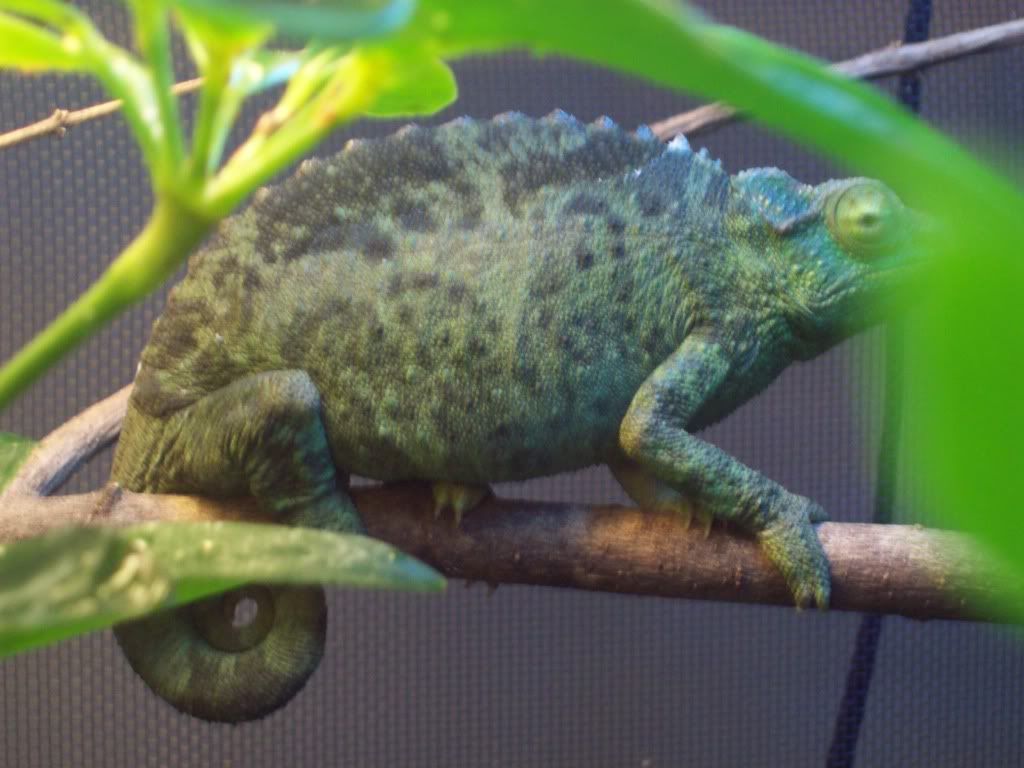
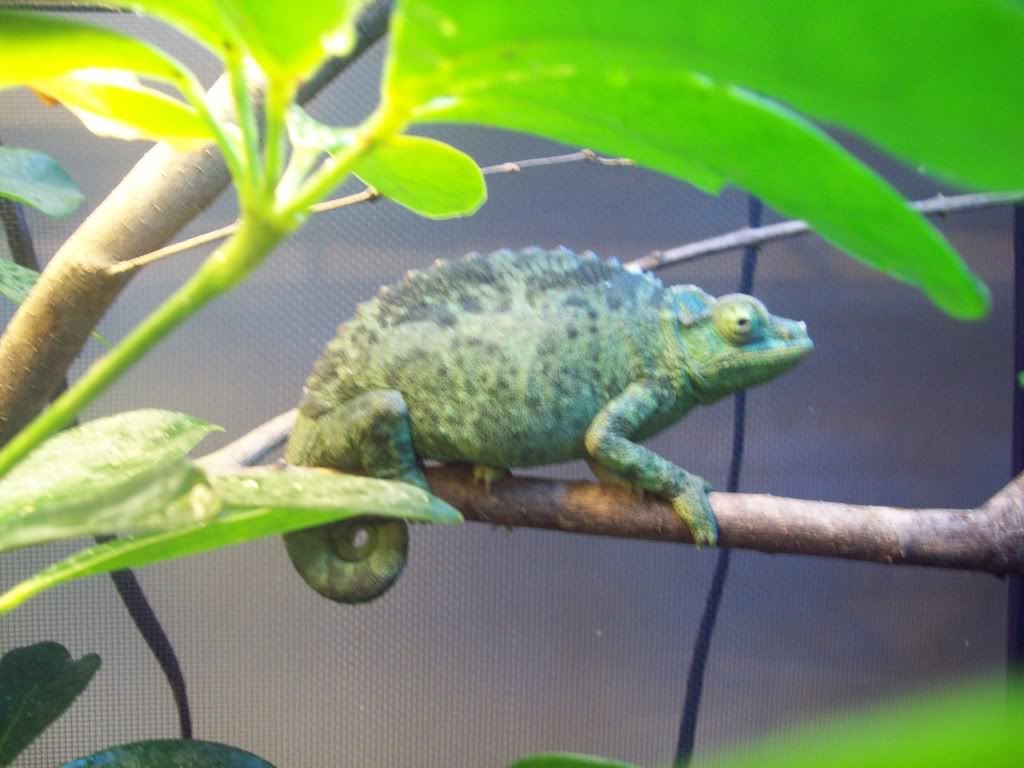
consecutive clutching jmo
based on the pics posted, i would say even though she is not displaying the most typical gravid coloration, that she does appear to be gravid and is likely working on a followup clutch. jacksons do save sperm, and once impregnated, are certainly capable of having followup or "back to back" clutches, without further impregnation. imo it is also possible for them to have already started a 2nd clutch before giving birth to to the first one, making it possible to have the followup clutch in less time than the standard gestation of 6-7 mth.- the last clutch of jacksons i had, was a less than successful birthing of less than 10 neonates. i dont remember the exact dates or of # of neonates, but it was less than 10 neonates and if i remember correctly, it was less than 5 months after the previous birthing by the same female (with no further m/f contact), so its likely possible it could even happen in less time than 5 months. i will try to see if i can find the info. all were born under developed and with the yolk sac still attatched. all but one died in the first week, i was only able to keep the strongest one alive for about a month. see posts "unexpected birthing" and "micro neonate", i will try to find the links. this is just my opinion, but i think being in close proximity to the male even if there is no contact, might be a factor in premature followup clutches. i dont think they need to see the male to know he is there. just a hunch, no scientific basis. i think my advice would first be to get a small digital scale that weighs up to about 500grams and is capable of 1/10 gram increments, you can usually find them at head or tobacco smoke shops for around $20. try to get one with a tare feature (most have). so you can zero out the weight of whatever container you are using to weigh her in. that being said, i think the best course of action would be to proceed on the assumption that she is again gravid. i would start weighing her 1x a week and keep a written log of her weight, that will provide a much clearer gauge of what is going on, as opposed to just winging it. a mid-late term xanth should gain at very least a gram or two a week. Whether m or f, weight change is often one of the earliest indicators of changes in health, thats why imo, its always a good idea, to weigh any cham regularly. its always a good idea to keep chams on a diverse of feeder plan as possible, but, i think situations like this, merit extra effort in that regard. imo, not really a good time to feed an excess of cricks or mealworms, better conditioning feeders would be silks, dubia, bsfl. if you are having probs getting her to eat , you can probably entice her with blue or green bottle flies (or even their maggots if they were raised by you on wholesome media). (jmo, houseflies, especially wc should be avoided). bottle flies are almost irresistable to xanths and if she refuses those, then i would say it is cause for concern, or possibly a warning sign that she is less than a month from birthing. premature, underweight, undersized or otherwise underdeveloped clutches do not always display the lumpiness that healthy full term clutches do, so they can easily catch you off guard. i recently gave this same advice in another thread, but i think one of the most important things you can do, is to examine her ultra thoroughly, and make a mental, if not a written note, as to every detail of her condition, make note of even the slightest details, issues, skin anomolies etc. and keep a sharp eye out for even the slightest changes. also be a good time to keep an extra close eye on her urates for changes. clutch developement is based in part on temp, you might want to consider lowering her basking temp to about 80*, that way, if it is a premature or back to back clutching, it will give a little added time for developement. i dont think its imperative, but, if $ isnt a big issue, then a trip to a proven herp vet might be worthwhile. hope that helps . jmo