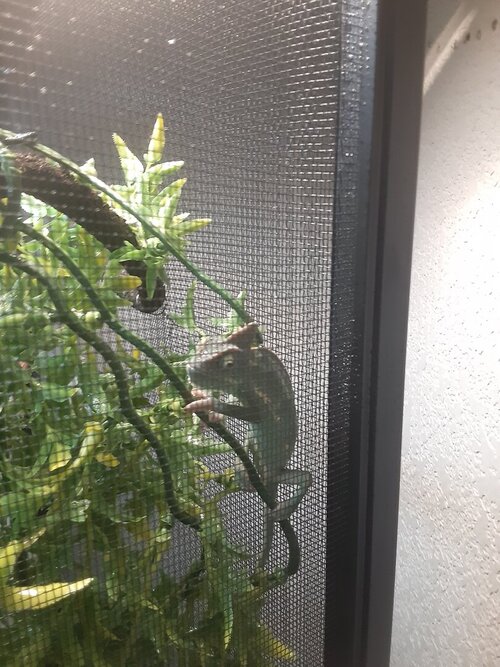
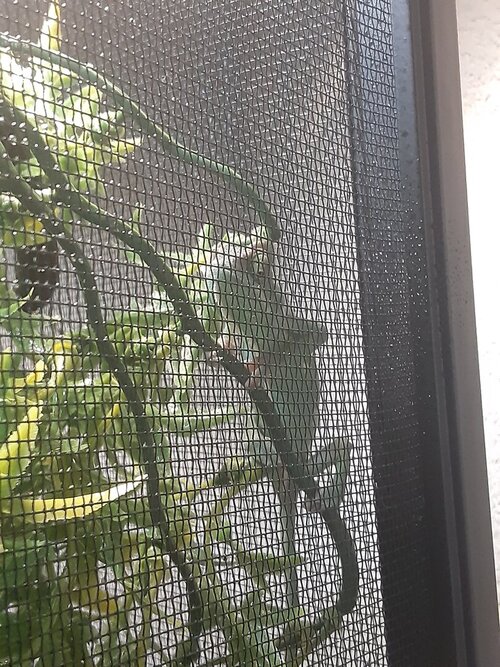
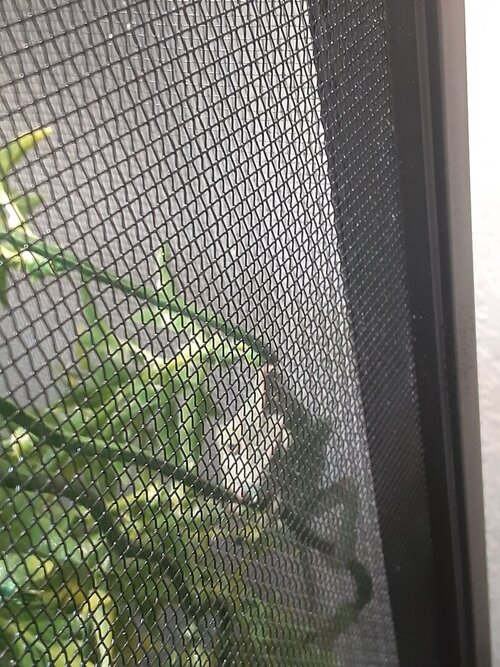
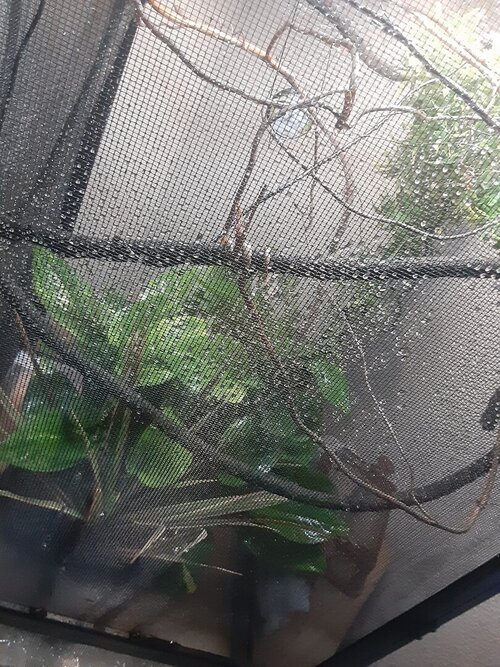
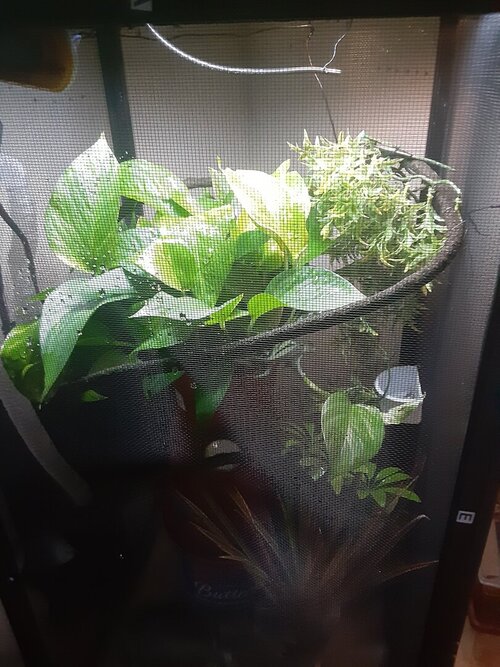
You said..."I want everyone to take a look at my setup I did the best I could with the info I was given and the limited money and supplies. But the cage drains and the plants are live except her vines she sits in I only run the fogger and on the side of the cage near the bottom at night for humidity I had it in the shot to show its existence".
You said..."She eats crickets that I bought food for that's supposed to be gut load"... I would feed/gutload crickets, roaches, superworms, locusts with a wide assortment of greens such as dandelions, kale, collards, endive, escarole, mustard greens, and veggies such as carrots, squash, zucchini, sweet potato, sweet red pepper, and a very small amount of berries, apples, pears, melon, etc. You can feed her appropriately sized locusts, crickets, roaches, BSFL, silkworms and once in a while wax worms, superworms, hornworms, etc.
You said...."And idk how old she is but I keep her basking area between 80 to 90 during day and at night a cooler cage that sits around 70 my house doesn't seem to get colder"...80F is warm enough for a female and especially once she is sexually mature.
Are you are that female veileds can produce eggs even without having mated once they are mature? Diet and temperatures can slow down or even stop the production and extend her life. If not controlled she can develop huge clutches, MBD, follicular stasis, eggbinding and prolapse and die.
As she approaches sexual maturity you will want to feed her only 4 or 5 crickets or equal calories in other insects every 2 or 3 days...and keep the basking temp at 80F. (All lights should always be out at night BTW.)
You will also need a proper lay in in the cage at all times once she is approaching maturity.
You said..."Humidity sits around 40 during day and gets around 80 to 100 at night. She wasn't drinking enough for a moment but she is now!"...how do you provide water?
You said..."I want to take good care of her and Petco just saw me as a sale. Please give me any tips! Ideas are welcome too!"...
Please tell us what specific supplements you are dusting the insects with and how often you use each. I'm particularly looking at phos, calcium, D3 and the form of vitamin A in them.
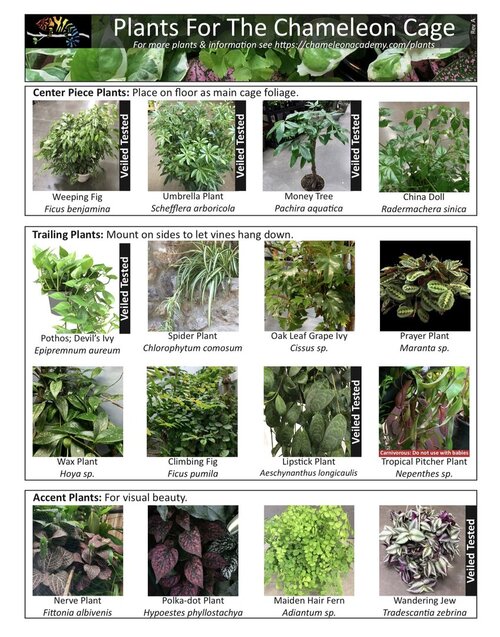
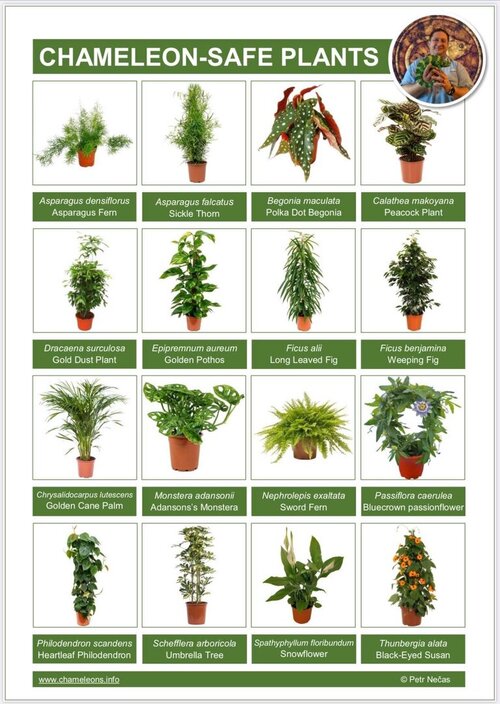
I would add more live/real greenery that is nontoxic and well washed both sides of the leaves. Cover the soil with big stones that are definitely too big to ingest so she won't eat the soil.
Please tell us what specific lights you use and are they all off at night?


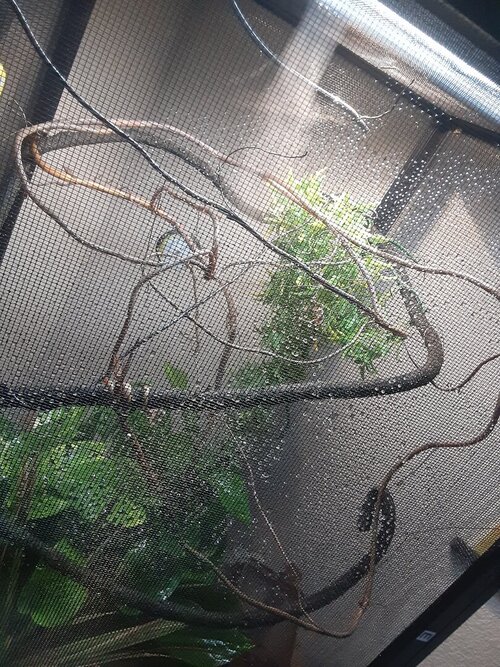
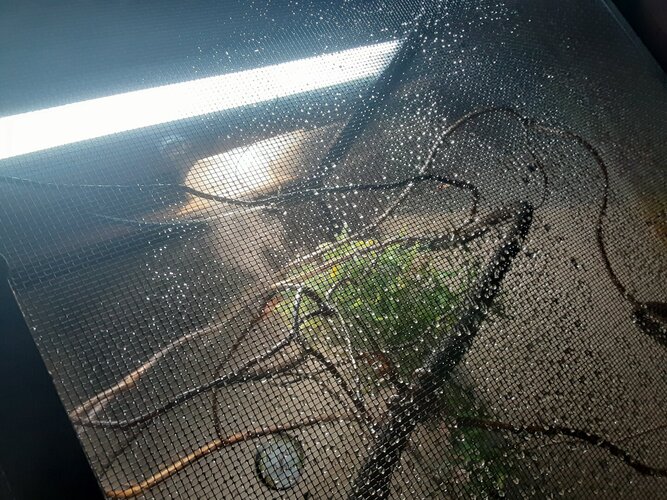




 i use a t8 lighting for the USB and a 50w day light.


