Navigation
Install the app
How to install the app on iOS
Follow along with the video below to see how to install our site as a web app on your home screen.
Note: This feature may not be available in some browsers.
More options
You are using an out of date browser. It may not display this or other websites correctly.
You should upgrade or use an alternative browser.
You should upgrade or use an alternative browser.
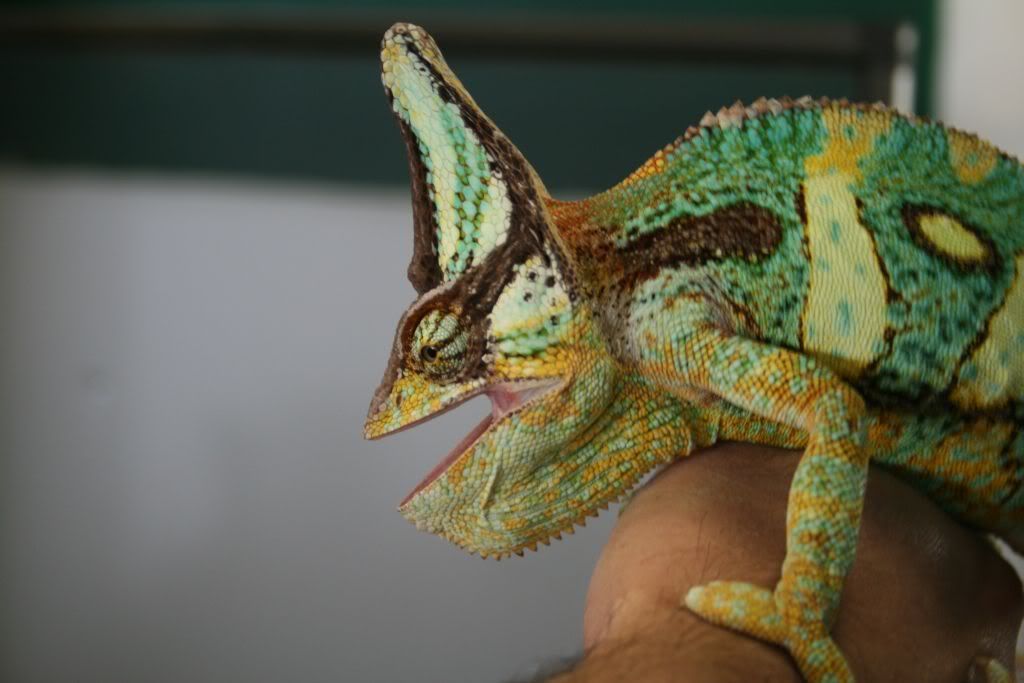
Half rabbit, half veiled?
- Thread starter dectr6
- Start date


 Holy crap! Is that yours? Thats a huge Casque!!!
Vampire.queen
New Member
Wow, that´s huge! Do you know how old he is?

Justin Carl
Avid Member


Yea, that guy is from A1 Reptiles.
That Veiled is famous, this is like the third thread I've seen him in.
That Veiled is famous, this is like the third thread I've seen him in.


Eric Adrignola
Avid Member

that veiled has been around for a long time. Got a nice casque, but it's not freakish. The camera angle makes it look way outsized. It's definatly a big one, too bad he doesnt' post more pics.

Brad Ramsey
Retired Moderator
I get more concerned when I see these "freakish" captive males with little tiny casques.
There was certainly no lack of calcium in this boys diet growing up.
-Brad
There was certainly no lack of calcium in this boys diet growing up.
-Brad
Justin Carl
Avid Member
I get more concerned when I see these "freakish" captive males with little tiny casques.
There was certainly no lack of calcium in this boys diet growing up.
-Brad
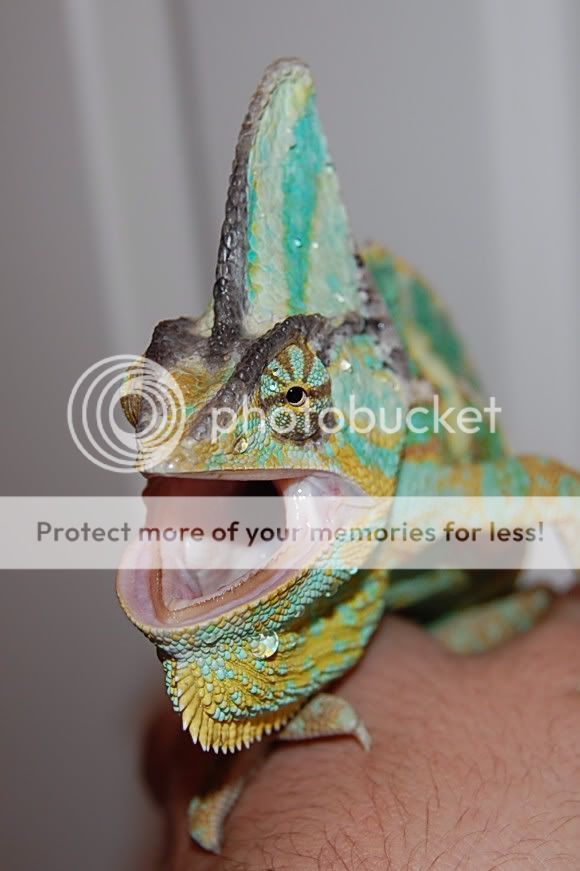
I think my guy has a short casque, but wouldnt consider it a lack of calcium.
Pure genetics, the father had a short casque.
Brad Ramsey
Retired Moderator
Surely there will be variances in casque size of healthy animals .. but I maintain that the ideal for the species leans toward a taller casque ... as in the Florida wild caught males that Josh is always showing us.
http://www.lostlakechameleons.com/test/veiled.html
-Brad
http://www.lostlakechameleons.com/test/veiled.html
-Brad
Eric Adrignola
Avid Member
I agree - it's genetics. If the casque is deformed, then it's a calcium problem.
I've heard a few people claim that the shorter casqued veileds simply have some C.orientalis blood in them. Possible, I guess. I'm sure there's a lot of variety in the populations, so it's hard to say for sure.
one thing's for certain - veileds with large casques really show any problems with calcium - those things can be all over the place.
Edit - I agree, Brad. Sexual selection sure favors large casques in the wild. At least in Florida. Might be different in parts of Yemen, but I doubt it. When captiver beeding neglects to favor such things that would be a factor in th ewild, captive populations start to diverge. Probably no real benifit to the casque aside from the fact that females like it, it makes them look larger ( making territory defense more effecient), and simply aides in their ability to mate with more females.
It might not help the individual survive in the wild, but it sure as heck helps him get the girls.
I've heard a few people claim that the shorter casqued veileds simply have some C.orientalis blood in them. Possible, I guess. I'm sure there's a lot of variety in the populations, so it's hard to say for sure.
one thing's for certain - veileds with large casques really show any problems with calcium - those things can be all over the place.
Edit - I agree, Brad. Sexual selection sure favors large casques in the wild. At least in Florida. Might be different in parts of Yemen, but I doubt it. When captiver beeding neglects to favor such things that would be a factor in th ewild, captive populations start to diverge. Probably no real benifit to the casque aside from the fact that females like it, it makes them look larger ( making territory defense more effecient), and simply aides in their ability to mate with more females.
It might not help the individual survive in the wild, but it sure as heck helps him get the girls.

SSimsswiSS
Avid Member
Here's one of my rabbits! doing what rabbit do.
I refer to them as sharkfins though.
I refer to them as sharkfins though.
Last edited:

Brad Ramsey
Retired Moderator
I refer to them as sharkfins though.
Very nice looking male!
-Brad

boothy
New Member
There are two subspecies of Veiled Chameleons, C. calyptratus calyptratus and C. calyptratus calcarifer. The main difference between the two, is the casque which is a fleshly fin-shaped protruberance on the top of the head. The casque of C. c. calyptratus is generally higher than that of C. c. calcarifer this is why some have high and short casques, one lives near moist humid forest and the other on the edge of a desert, stick forest thats dry all the time resulting in them eating plant matter to get the needed moisture from leaves of trees and certian plants they eat to have toxins in them to kill parasites in the body ex, schefflera plant has toxins that kills a certian digestive parasite and stomac parasite but this is why we have short casques and tall ones
Brad Ramsey
Retired Moderator
We don't see many (if any) calcarifer specimens here.
They are all calyptratus.
-Brad
They are all calyptratus.
-Brad

Champhibians
New Member
I think we do see them, I think they have been bred togeather for years. I know that they will bred togeather. They look pretty much the same. If I had to guess I would say the male in my avatar is a mix breed. He has a very small casques. But I know for sure that thier was no lack of calcium in his diet Well thats my 2 cents thought