Chris...you said there is a space into a body cavity that is left when the tongue is pulled out...can you show this clearly so we can see what you mean please?
Here are the best photos I have to show this. The first thing you have to understand is that the tongue skeleton is not inside the oral cavity (the mouth). It is located in the peripheral muscle and tissue with parts of it being attached muscularly to the sternum. Because of the extreme movement that the hyobranchial apparatus goes through when the tongue is extended forward and withdrawn back into the mouth, a large part of the area the tongue skeleton occupies in the throat area (again, not in the oral cavity but its peripheral tissue and muscle) is relatively open (not tightly packed with muscle and tissue). The entoglossal process extends into the oral cavity but the tongue completely surrounds it, acting as a physical barrier between the oral cavity and the tongue skeleton, which is sitting within the internal lumen of the tongue.
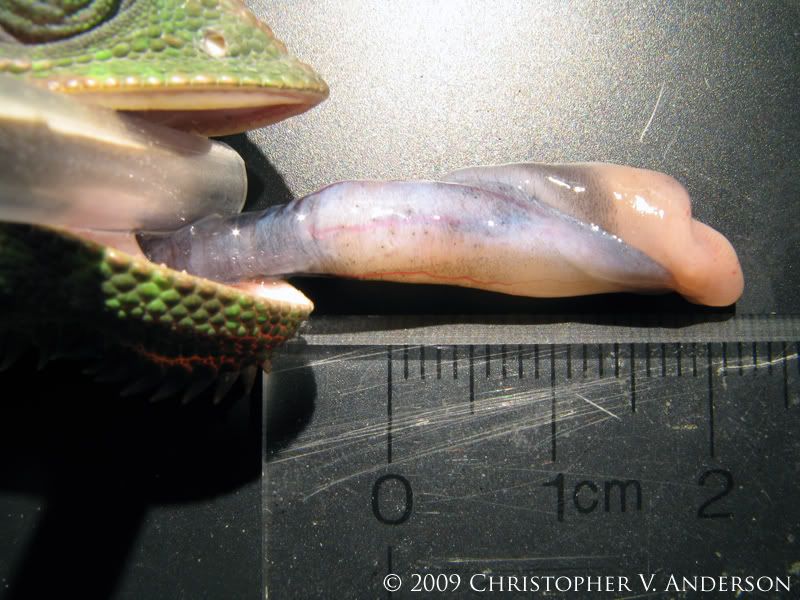
Here is a photo of the intact tongue in its resting position at the start of a surgery nested over the entoglossal process as it typically is:
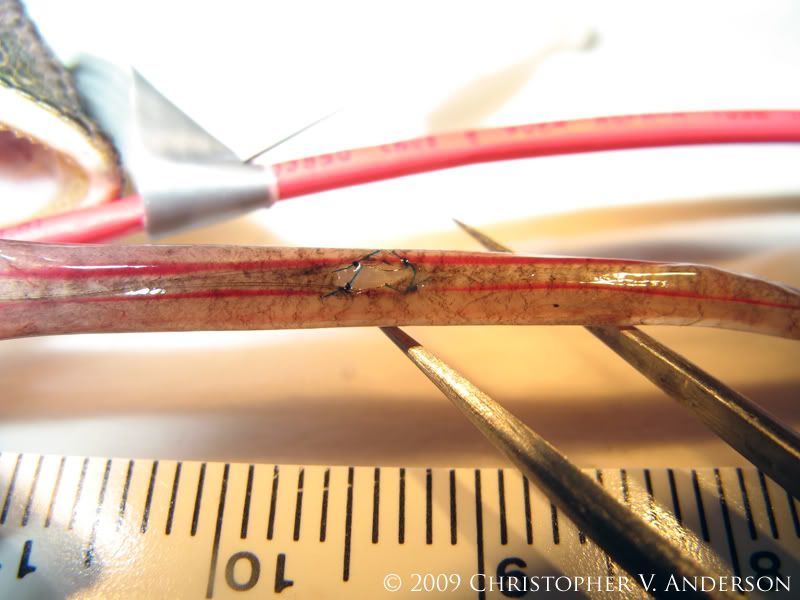
Here is a photo of the tongue in its extended position at the end of a surgery where you can see an incision that was made in the tongue that created a window and exposed the entoglossal process underneath:
As you can see, the tongue skeleton is typically not exposed to the oral cavity because the tongue completely envelops it.
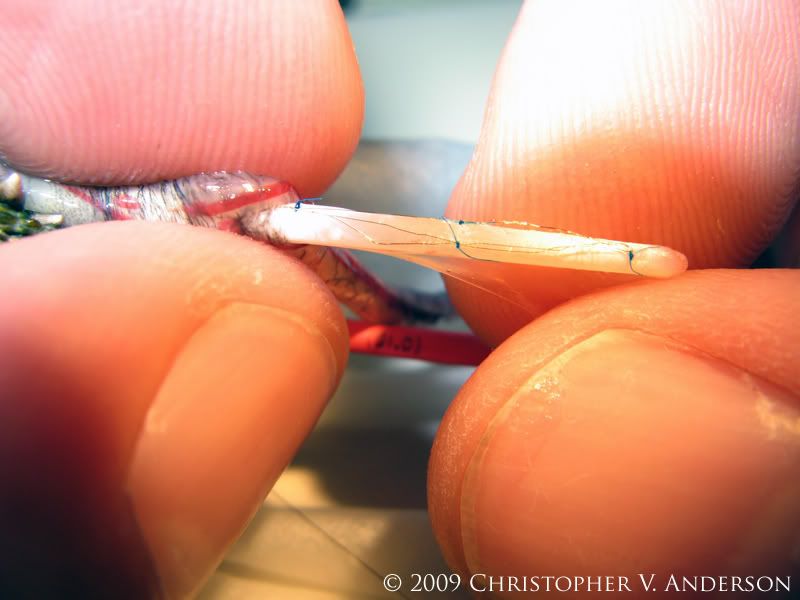
Here is a photo from the middle of a surgery where the entoglossal process was extended out of the incision seen in the previous photo:
Now if you imagine that the entoglossal process was not just pulled out of a small incision but rather the tongue was just cut off, that is basically the situation you have with Kayla's cham. Theoretically, water, food, air, etc., can now get into the lumen of what is left of the tongue and follow the entoglossal process into the peripheral tissue and muscle layers where it originates.
You can think about it in two ways. First, imagine having a hole in the skin of your arm and then going swimming in a compost pile. Your skin, which normally acts as a barrier between the outer environment and your internal tissue and muscle layers, is broken and the derbies and liquid you are now swimming in can seep into your arm's tissue and muscle layers. The second way to think about it is wearing a glove on your hand. If you cut the thumb off your glove and put the glove on, your thumb is now exposed to the outer environment and air, liquids, etc., can seep inside your glove around your thumb where the hole in the glove is seen.
Its completely possible that scar tissue will form around the entoglossal process and seal off the underlying tissue layers, I don't know. Just like having a gash in your arm, however, you've broken the protective layer that prevents outside contaminants from getting into the tissue and muscle layers.
Chris



 I think were doing okay now...Since I made this second batch of "Bug Juice" and giving her small amouts at a time..she's more willing to let me handle and open her mouth to give it, and right away she swallows it...




 BUt I feel a little bit better about it


