Putting my feedback in red.
Your Chameleon – Veiled Chameleon, female, about 8 months old, got her in February 2021.
Handling – I handle her every day, usually taking her out more than once a day.
If you’re expecting her to lay eggs, you shouldn’t handle her.
Feeding – Mostly feed her small mealworms, about 15 every other day. I will give her red bell peppers and peas/green beans. She also eats the occasional spider and random bugs she finds when she’s out of her cage (I watch her closely and make sure the bugs aren’t poisonous to her). I get her crickets a few times a month and feed them Fluker’s Cricket Quencher.
There’s major changes here you need to make. Mealworms are ok for once in a rare while, but not as staples. @Flick boy already gave you the feeder and gutloading graphics. Try to have at least 2-3 staple feeders and offer an assortment. My staple feeders are roaches, silkworms and crickets, with the occasional superworm and pupated bsfl as treats. The cricket quencher will keep your bugs alive for a short time, but you need them to be healthy in order to be nutritious for your chameleon. Also, you are potentially over feeding. I feed my girls 3-4 feeders, 3 days a week (plus treats). More on this later.
Supplements – I dust worms and crickets with Zoo Med’s Repitvite (without D3) and Zoo Med’s Repti-Calcium.
You don’t say how often you are using these. You should be using the calcium without D3 at every feeding except once per week. For that one feeding you’ll rotate using the Reptivite without D3 with a multivitamin. So, weeks 1&3, one feeding with Reptivite and weeks 2&4, one feeding with a multivitamin.
Watering – I mist her cage with a spray bottle every couple hours. I don’t see her drink from the leaves but I spray her mouth until she starts drinking (I don’t force it).
Many chams are very secretive about drinking. Mine won’t drink if I’m even in the same room. Is better to mist for at least 2 minutes, 2-3 times a day. Let the enclosure dry out. Some choose to use a dripper instead of a mid day misting, and that’s fine for about 15-20 mins.
Fecal Description – Has not been tested for parasites. Feces are brown, usually goes every few days, maybe two or three times a week.
It’s always a good idea to have a fecal check for parasites. Since she’s already had a vet visit, you should be able to drop off a fresh sample for testing.
History – She has eaten a lot of dirt, she loves it. I had to put screen around her plants so she can’t get to it.
Using river rocks that are too large for her to ingest around the plants will help with soil eating. I’m worried she’s also eating the sand for her to lay eggs.
She may be. Just taking a random guess that she may be eating soil as she hasn’t been getting any D3. Honestly, I don’t know but often humans and animals will eat soil and other things (called pica) to get the nutrients they are lacking. She has also tried eating fake plants.
Yes, she will and this is why you should have only live and safe plants. It only takes one bite of a fake leaf to get impacted and that could be fatal if untreated promptly. She is always running around her cage wanting to get out.
More on this in a minute. She loves sitting on blinds and looking out the window. Her orange/yellow spots showed up mid to late June 2021.
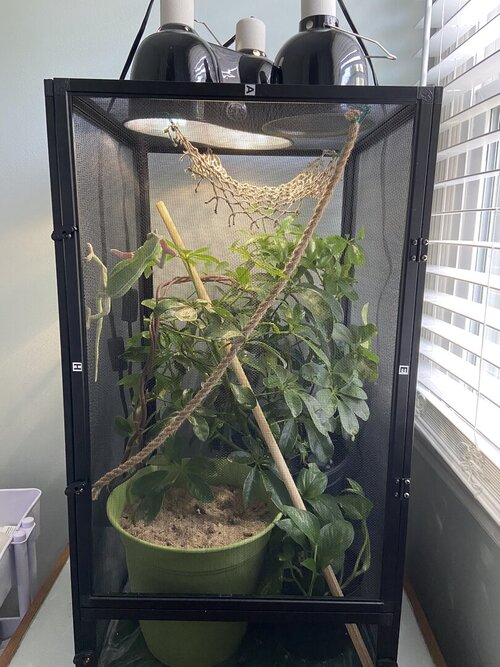
Cage Info: Zoo Med’s Repti Breeze Chameleon Kit. Came with cage, fake leaves, fake vine, felt for bottom, calcium, and lights
The majority of the items in the kit you’ll find aren’t useful. Not your fault…Zoo Med needs to stop making them.
Cage Type – Screen cage. About 30in H x 16in L x 16in W.
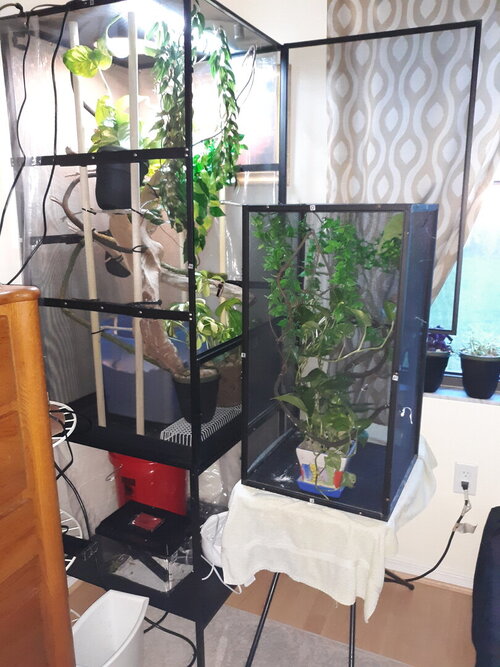
Your little lady has outgrown this and needs more space. This is why she’s so eager to come out of her enclosure…she doesn’t like it. The minimum size is a 2x2x4’ or equivalent. If I can find it, I’ll post a pic of the size difference.
Lighting – Zoo Med 5.0 UVB bulb, blue light bulb and 75w spot basking bulb. Schedule is usually 7am-7pm. I used to use a timer to make it exact but left it at home when I moved, so the schedule is a little wonky at the moment but when I get a timer, it will be 7am-7pm.
Sad to say, but your uvb isn’t doing much in the way of providing any uvb at any distance past 2-3” directly below it. You’ll need to get a linear T5 fixture with either a 5.0 or Arcadia 6% uvb bulb. It’ll need to be long enough to span the width of the enclosure. You’ll then want the light to be around 8-9” above basking area. Your 12 hour schedule is perfect! You may also want to invest in a good plant light to help keep your plants alive.
Temperature – I use a Zoo Med thermometer. The highest the temp goes is usually 73 degrees, which is why I bought the spot basking light, but it doesn’t seem to help much. The temp at night is usually 69 degrees. She stays at the top of her cage mostly.
You’ll want basking temp to be around 80. What is the wattage of the basking light? I use a 60 watt and it provides the perfect temp at basking area. Or your thermometer isn’t working properly. Best thermometer is a digital one with a probe tip. Your night time temp drop is ideal.
Humidity – I don’t measure humidity, I just go by the temp.
It’s really important to measure humidity. Ideal range during the day is between 30-50%. At night when it’s cool, it can go up to 80-100% which simulates natural hydration thru ‘fog’. Again, digital hygrometer with a probe works well.
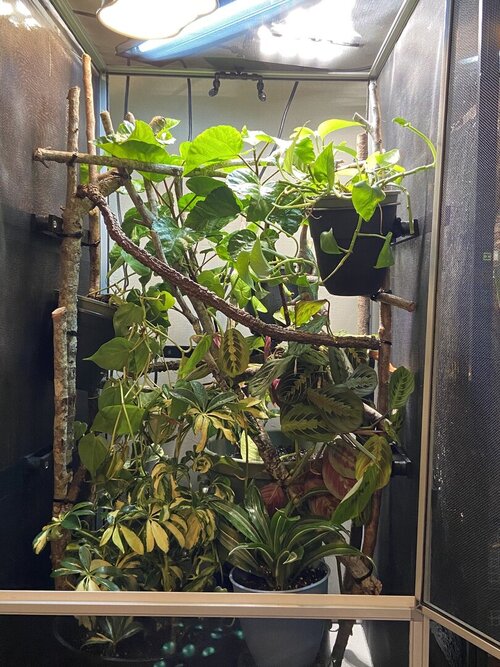
Plants – Used to have a Yucca plant, small pathos and a Schefflera arboricola, then switched to hibiscus, but now she has the small pathos, and schefflera arboricola.
I’m going to guess the hibiscus died. They have very high light needs. Pothos and philodendron are great and will grow fine without special lighting. For just about all others though, they’ll do better with or need grow lights. I use this and it’s strong enough for hibiscus. https://www.amazon.com/gp/product/B07TKKG8Q3/ref=ppx_yo_dt_b_search_asin_title?ie=UTF8&psc=1
Placement – Cage is located out of sight next to a window. There is a ceiling fan in the same room. The distance from the floor to top of the cage is 55 in.
Be careful that any sunlight coming in won’t overheat her. Also in cooler months make sure there’s no drafts from the window. I have my chams almost to the ceiling. The higher they are, the safer they feel.
Location – Tennessee.
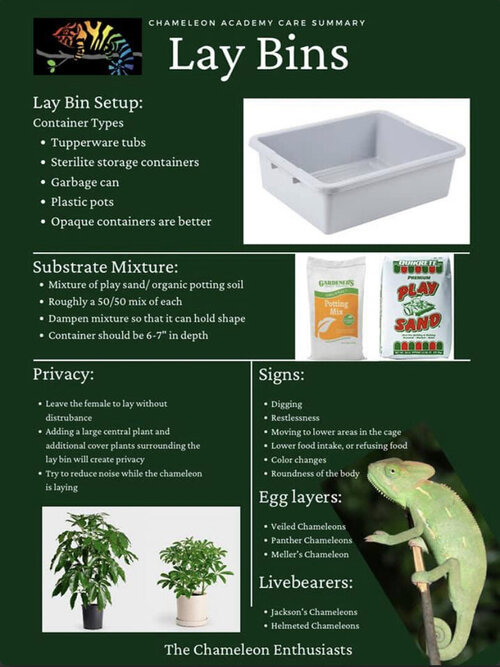
Current Problem – She needs to lay eggs but hasn’t. Her stomach is very swollen. The vet indicated that it would be 30-40 days until she laid eggs, but that was almost 2 months ago
I’m going to question the experience and knowledge of your vet because they told you to give her lay bin of moss. Although they did better than one I went to that said there was no way to tell if my cham had eggs or not… hellooo…x rays!
Anyhow, as this is already quite long, let me address this in a separate post.





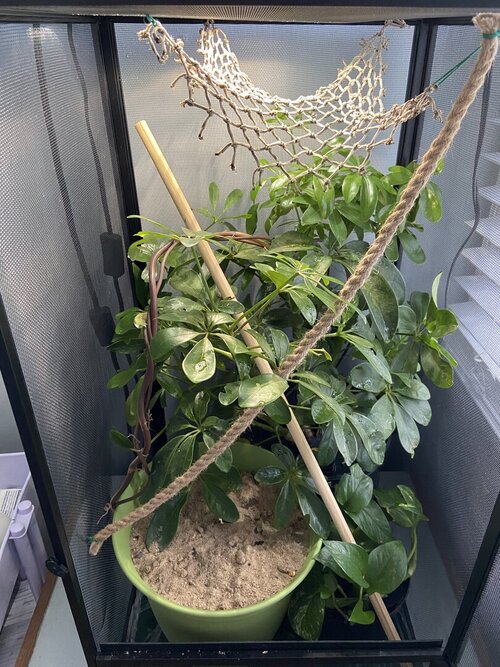
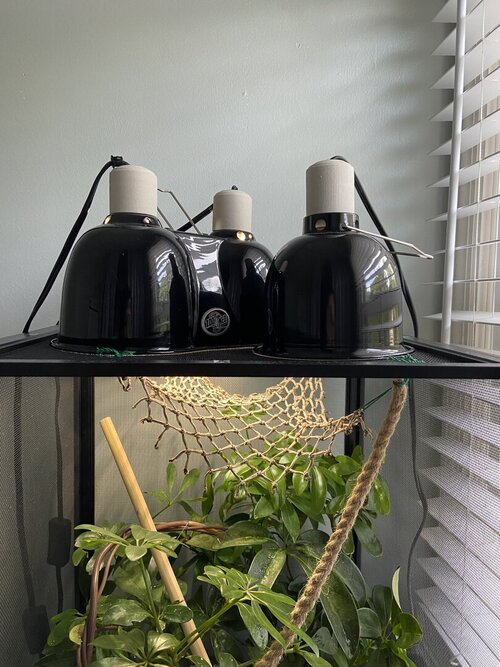
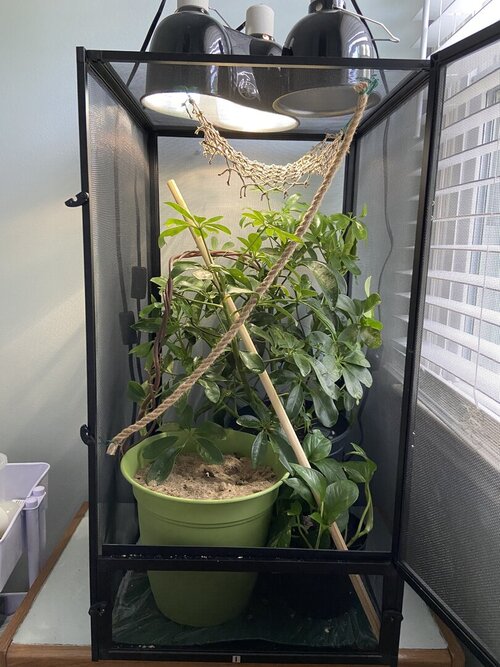
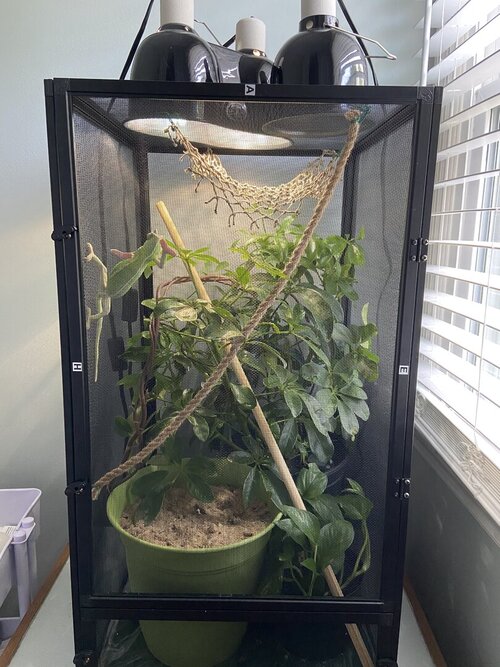
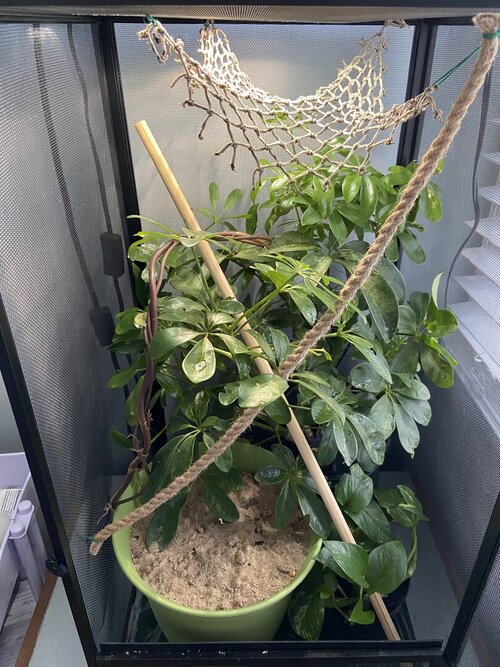
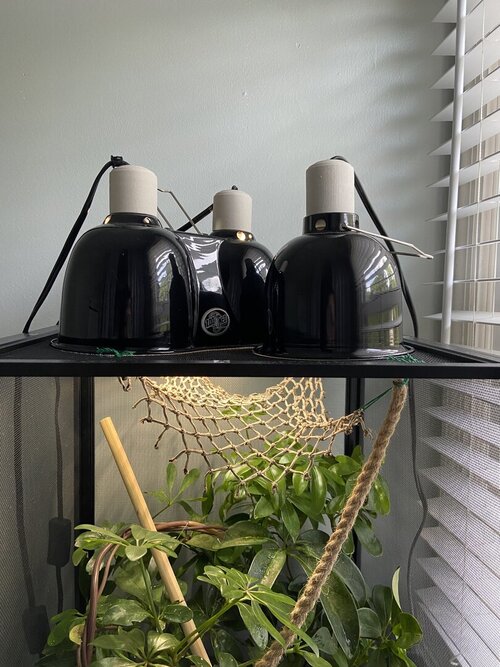
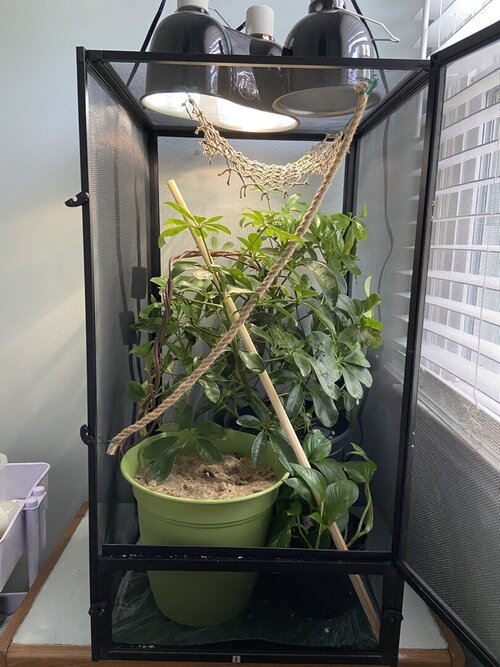


 Not sure if anyone else is working on reviewing your husbandry, so I’ll get started on it. I do see a lot of changes that need to be made. Give me a bit of time and I’ll have my feedback.