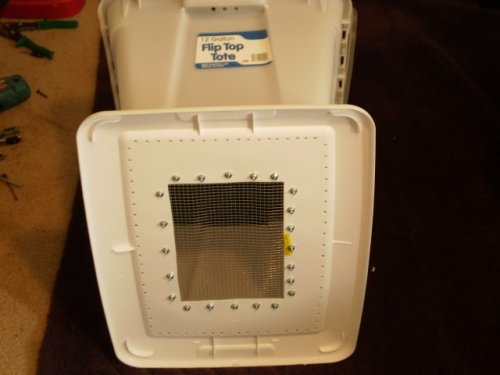
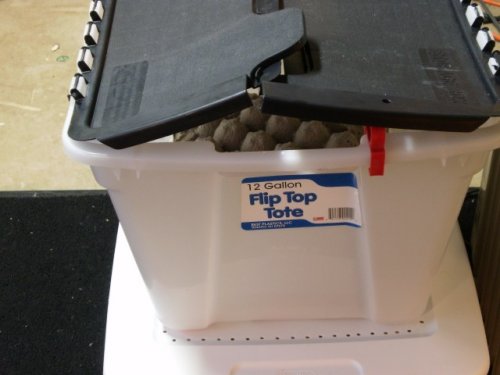
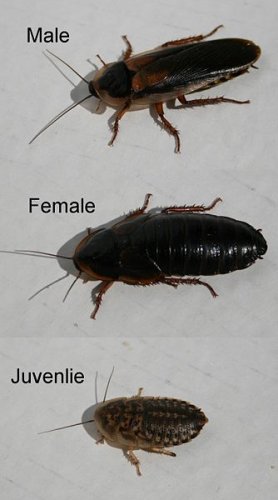
If anyone is responding, please post your answer here. There are probably others interested in hearing about dubias.
Sorry for the delay in response.
1. Would you recommend replacing crickets with Dubias as a staple?
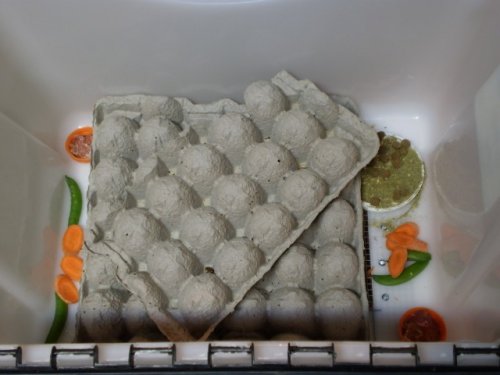
A: Replacing crickets with dubia is a preference thing on your part and your chams. For me personally, I prefer it because dubias do not smell, require way less care, don't really climb much, and most importantly make little noise (no chirping--just the sound similar to rain when they are more lively at night in their housing). Your cham's preference --self explanatory (they can be picky eaters and depends if they have an acquired taste for dubia). I still alternate some super/wax/silk worms occasionally, but dubia is my staple feeder.
2. How long does it take for newborn dubias to grow to the 1in and bigger stages?
A: Babies mature in about 4-6 months depending on temperature and food supply. Adults live 1-2 years.
3. If I were to start a colony, How many males and females should I begin with? Also how many should I purchase as food while the spawn of the adults grow?
A: I suggest 100 total, atlhough some people suggest more if you are feeding right away. From my experience 100 worked well and I started feeding from my first colony immediately. I provide about 50% adults (more than most others offer) and ~ 50% male:female ratio (most like to keep females as breeders for their own colony). This should be enough to ensure they start breeding for you right away, and if you cham is 6 months old, depending on breed, you may want to start feeding him the juvies.
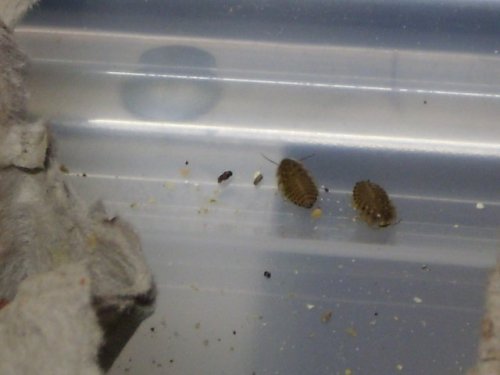
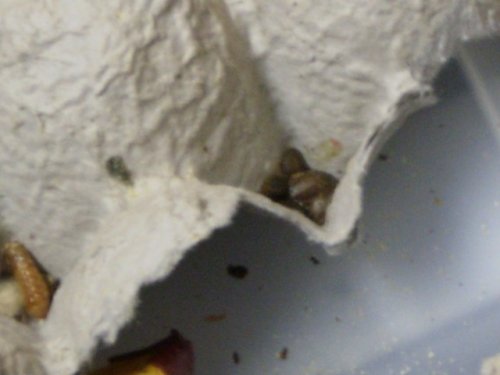
Other breeding info: They breed much better when you keep them warm & toasty. Ideal temperature range is the higher end of a 75--95 degrees Fahrenheit range. They will not breed below 68F. Mating occurs when the male deposits a sperm packet in the female. This sperm packet inhibits the female from further mating. Females then lay an egg sack, they then pull this sack back into themselves to incubate ovoviviparity. Gestation is about one month (28 days). The babies hatch inside the female. Between 20 and 40 live young, each about 2 mm long, are produced in each clutch.
I still have them available for sale -- any quantity, size, sex distribution. Prices vary. Shipping included in price! Please PM or e-mail me at
[email protected] Paypal is preferred method of payment to
[email protected]