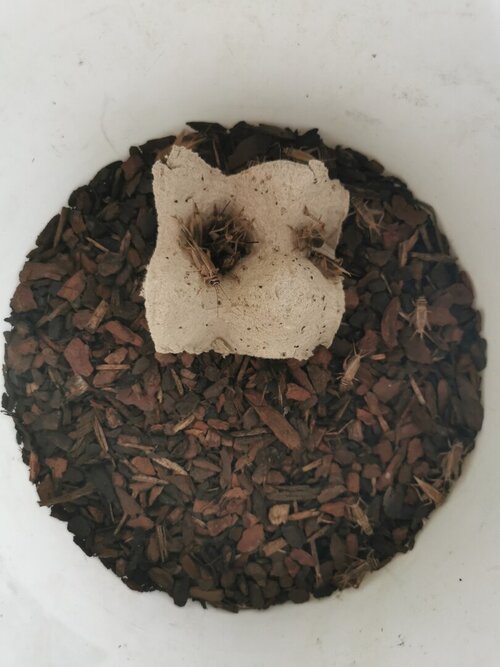
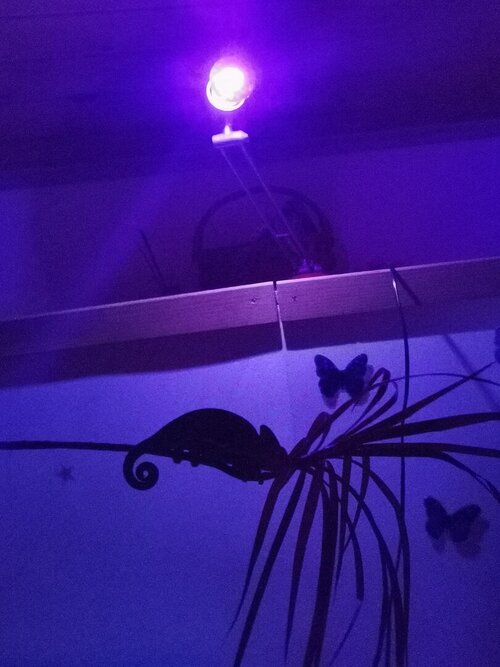
Flick Boy has said a lot of good stuff. I'd change up your feeders and get your lighting situation updated ASAP. No lights at all at night, and the Arcadia 6% T5 bulbs are ideal. You don't have to change them more than once a year, and it'll give your cham the proper amount of UVB - chameleons are VERY sensitive creatures and we want to do right by them. I'd add that for the feeders, for a baby of a few months, you can feed her as much as she'll eat. 20+ feeders in a day isn't uncommon. Additionally, try feeding her mostly in the morning. Chams need that basking temperature to digest food and if you're feeding her late at night, that'll cause issues with digestion. I usually feed my cham all his food in the morning and let him graze if he doesn't eat it all straight away (he usually eats it all straight away). If you aren't yet, I'd suggest cup-feeding your cham. That way you'll know exactly how much she's taking in.
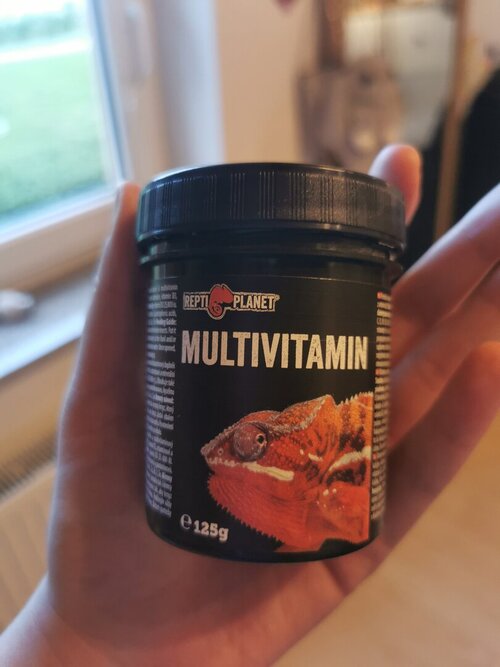
Flick Boy mentioned some good stuff about your supplements as well. You definitely want a phosphorus-free calcium supplement that does NOT have D3 in it. Too much D3 can cause issues with your cham, including eye issues. Right now you're overdosing her. I'd hold off on any more of that for a couple months for her body to process it, then go down to 2x/month with the D3 multivitamin and with all other feedings, just use the plain calcium.
As for feeding when your cham gets a bit older, I'll default to
@MissSkittles or
@kinyonga because I *believe* they've both raised females and can explain both lay bins and the "lady diet" to keep your cham from producing too many eggs.
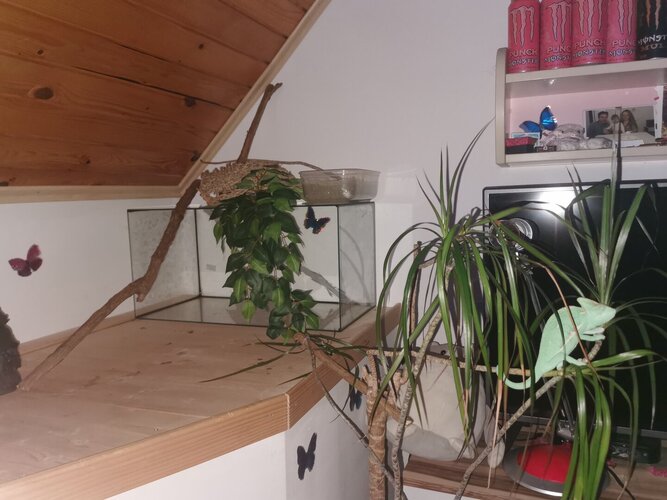
Definitely get some digital thermometers for reading your humidity and basking and ambient temperatures. I have a probe thermometer that I have right under Little Guy (my cham's) basking area so I know how hot that area is. I have a humidity/temperature monitor in the cage as well for the other ambient readings. It sounds like your temperatures are pretty good, but don't go higher than that 27-28 for basking. We don't want to cook our little ones! If possible, a bigger temp drop at night would be beneficial. But I think if you have better airflow (see below on that), you can achieve that.
For humidity, it's really not a bad idea to invest in an automated mister like a Mistking. I have that on a timer, along with my lights, and a fan on the cage to regulate airflow. That fan is actually something I'd suggest for you - if your humidity levels are too high, that could be the cause of your cham's potential respiratory infection (RI). Misting THAT often doesn't allow the cage to dry out, and without much airflow like it looks like your enclosure has, you may be keeping things too wet. Too wet means a breeding ground for bacteria, and that can settle in the lungs. The Chameleon Academy link I posted in my original response will help you know when is best for misting sessions for your cham. You're currently misting way too much.
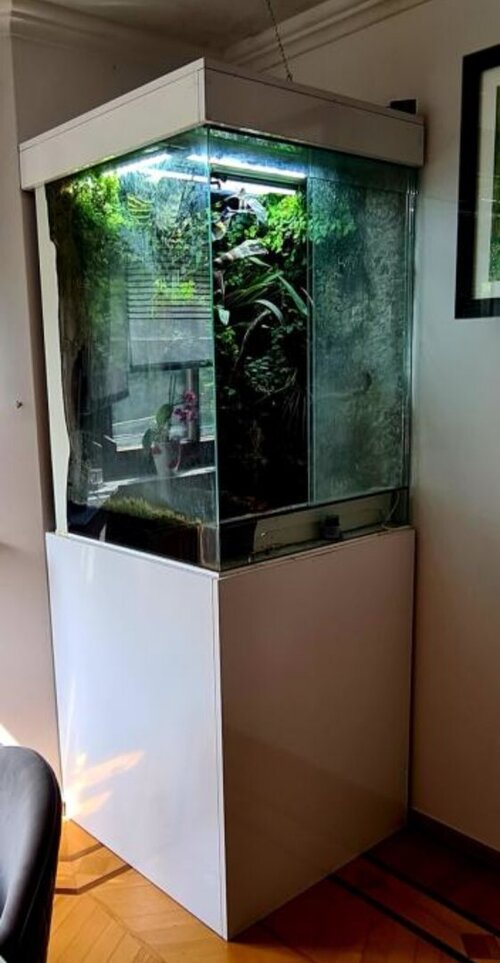
For the enclosure: You have what appears to be adequate space, but with it being glass, you DEFINITELY need airflow. Is there a screen on the bottom of the cage as well? In that little door area? For cages that aren't screens you want to make sure you have what we call the "chimney" effect. That's where air can circulate through the cage and keep from being too still and stagnant. On top of my cage, I have a computer fan that helps pull the air through. I have a small screen area at the bottom of the cage, and a screen on the top. By putting a fan that has the air being pushed upwards, it sucks air from the bottom to the top and allows good airflow, the cage to dry out between mistings, and my cham's lungs to remain healthy.
Here's the fan I purchased:
https://www.amazon.com/gp/product/B009OWVUJ0/ref=ppx_yo_dt_b_search_asin_title?ie=UTF8&psc=1
You also want to make sure there's a drain under the cage so extra water can leak out and not sit and make things too humid. I literally just drilled holes in the bottom section of my cage, raised on some pieces of wood, and have a catch-container beneath it for the water to drain out.
Do you have all live plants in the cage?
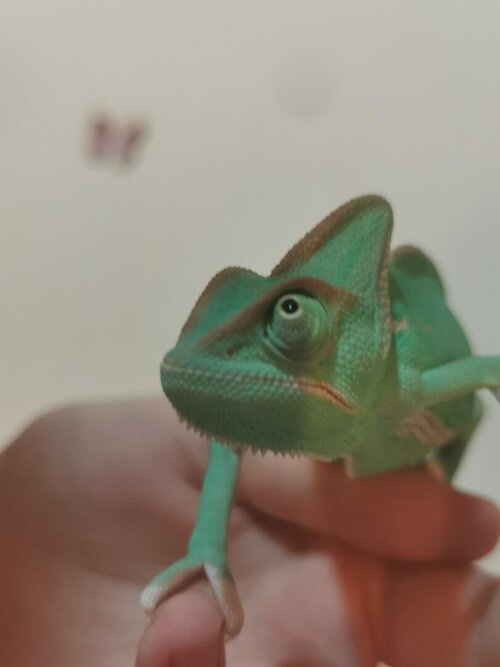
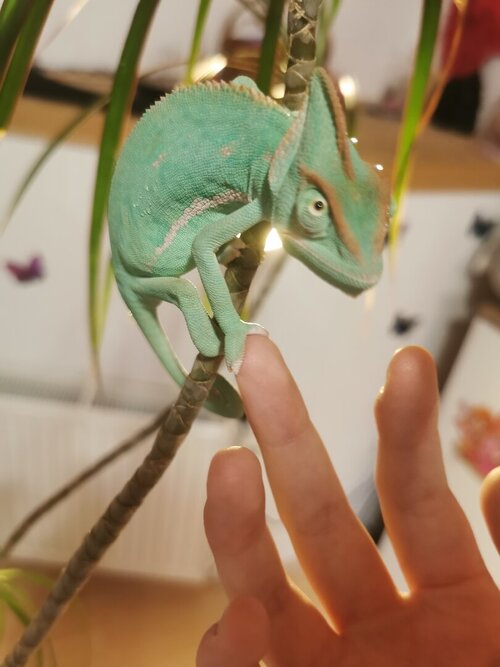
And I'll iterate again - find a reptile vet ASAP if you're hearing clicking/wheezing/popping sounds from her, and if she's gaping a lot. Chams generally won't recover from RIs on their own.
Sorry for the book of a reply. I assure you, it's all there to help you out, not accuse.



 IMG_20230611_212339.jpg131.2 KB · Views: 158
 IMG_20230608_171055.jpg41.2 KB · Views: 146
 IMG_20230607_200612.jpg87.9 KB · Views: 146
 IMG_20230530_221359.jpg61.2 KB · Views: 141
 Snapchat-1730155971.jpg73.4 KB · Views: 148
 Snapchat-528245656.jpg87.9 KB · Views: 145
 Snapchat-1735061787.jpg70.1 KB · Views: 155
 Snapchat-590467101.jpg67.7 KB · Views: 169
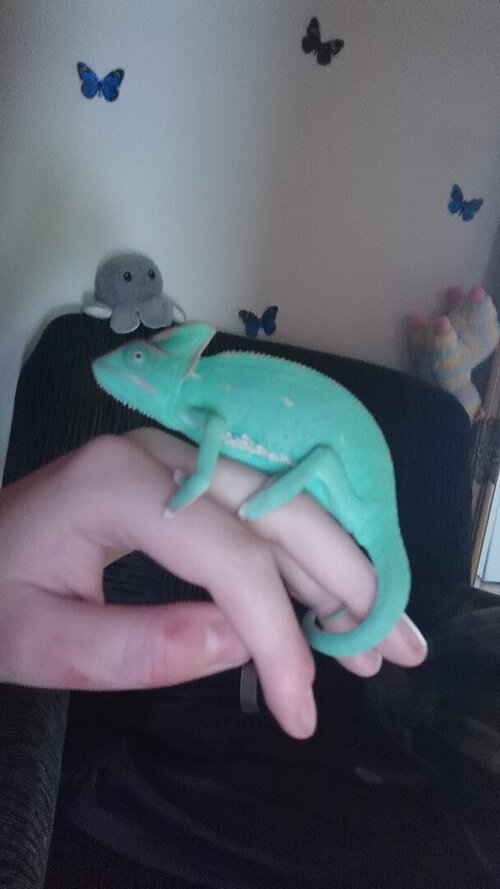 Snapchat-2096829816.jpg78.3 KB · Views: 155
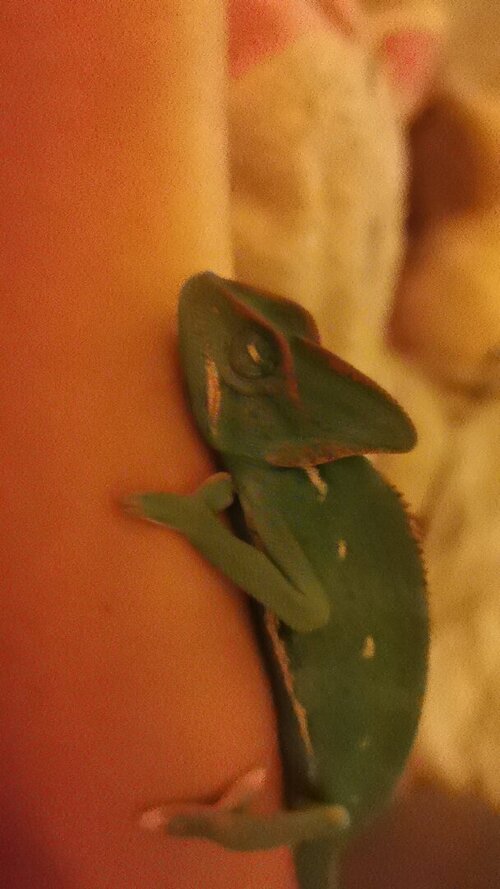 Snapchat-2050814020.jpg101.3 KB · Views: 165