Tropheus
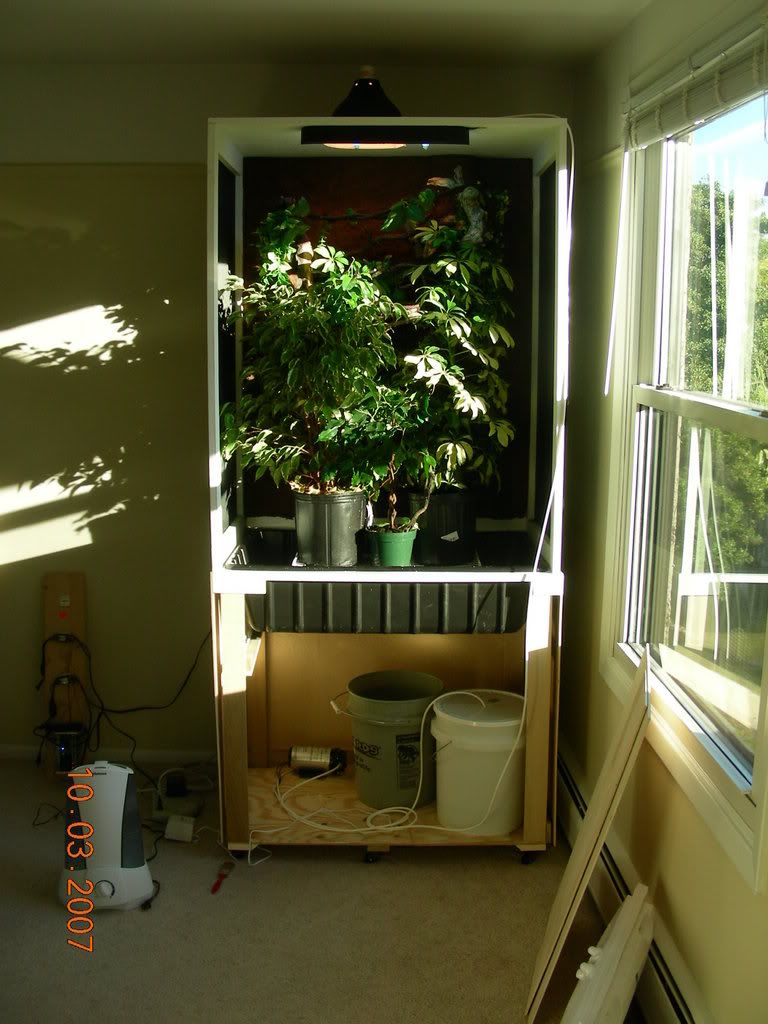
However you end up with watering, drainage control, etc, there are many options open to you. In the end it is often governed by what the area around the cage will tolerate. In example, if indoors on good floors, even a tub in the bottom will not solve the problem of splash from leaves, etc. caused by the drip of any water off leaves, regardless of whether you started with a mister, dripper, etc. I write that more for others to consider when building a cage, as moisture containment, use of a tub, etc, is often step one in planning, above which the rest of the cage is designed if it is to be an indoor cage. Such things as cage dimensions, height off floor, etc, and often location, are all impacted by choice of drainage.
However you go, one important factor to keep in mind will be to avoid the accumulation of any standing water inside the cage. Whether this is something as seemingly innocent as a tray under a potted plant, or a larger tub, any standing water will become contaminated, whether more quickly by loose/dead crickets or chameleon droppings, or more slowly just by air currents and organis debris. After two days, and certainly by four, this can reach dangerous levels such that it can be taken up by loose crickets etc. Turning them into poison pills, they transfer large doses of otherwise more random common bacteria back into the chameleon, causing potentially fatal consequences over a time frame of 4-12 weeks, depending on just how nasty the standing water gets. Eliminating standing water is one of the most overlooked problems with indoor caging, and also one of the most difficult to engineer if not planned for in advance.
To all indoor cage builders, wheels on a cage can work wonders.
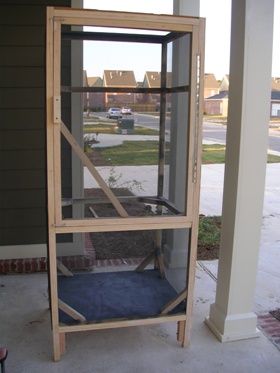
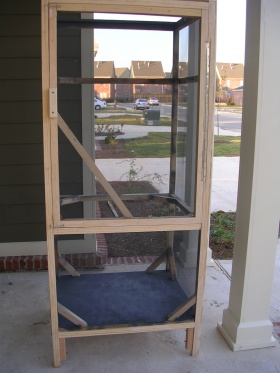
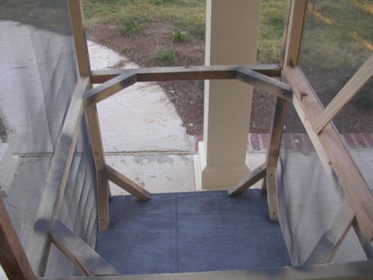
Nice looking craftsmanship, btw.