LED and its use on reptiles....
The LEDs are great for adding 6.5-ish light for plants and to light up reptile enclosures.
Specially designed full spectrum LEDs can give nice white "day"-light.
And LED use less than half the amount electricity for the same amount of light as a flo. light (t5 and t8) fixtures.
They also produce much less heat.
However--
As it has been mentioned in this thread and many others --
At the present time >>>>
There are NO good LED bulbs or LED units for UV-ing reptiles. Period.
Despite what ANYBODY says.

I say this because I have SADLY seen on Ebay recently some "Scammy" LED stuff that says it produces "UV" for reptiles.
Buyer beware!
These units are miss leading because they produce the WRONG kind of UV for Vit. D synthesis.
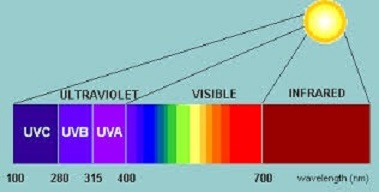
They give off UV A or "black-light UV".
These sellers are PREYING on people that do not know the difference between UV A (black-light wave-length UV) and UV B...
UV B that is needed in the 295 - 305 nano-meter range that will synthesize Vit D.
But these only have UV A in the 320 - 400 range ---
So by only using these LED "UV" lights to UV your animals....
They would get MBD and eventually die.
Now,
there are LED diodes out there that do produce UV B,
but they are very expensive ....
and for electrical reasons (having to do with the voltage of them)
they are very difficult and costly to add INTO A DIODE ARRAY that would also produce full spectrum visible light ,
AND UV A for reptile vision
AND UV B for vit D synthesis.
So....
as it stands right now, to create a LED diode array that has as good a quality light that you now can get from a HO t5 tube...
And give you UV B,
it would end up costing approx.
500.00 or 600.00 dollars for such a unit.
Now compare that to what under 100.00 buys you with an HO t5 double tube fixture that includes a 6.5K BROAD SPECTRUM day-light bulb and an Arcadia ho t5 tube.
It is not cost effective right now to develop and make the full spectrum UV B LED.
(I know this for fact

because I am working right now with a top engineer in China to create a Jungle Dawn® LED that will produce the correct amount of UV in THE RIGHT wave-lengths.... and it is a very slow, very expensive process. ugh.

)
And please....
For the sake of your animals---
Do not get suckered on e-bay into buying an LED unit that claims it will provide UV B and the correct lighting for your animals.
Because it does not.
(They may have had to remove these LED products (I HOPE!) due to false / miss-leading advertising. )
Also-- please see note on LED reef lighting units below.
LED Re-cap:
Pros:
LED is GOOD for adding more visible light to enclosures to brighten them up and grow plants.
LED is easy on the electric bill for adding more light.
LED is good for adding more light with-out adding more heat.
(NOTE: but if you NEED more heat, skip LED and use HO t5.)
Cons:
LED is designed to NOT produce heat, so they are NOT good for basking lamps.
LED units that provide correct UV A & UV B & Visible Light to match good 'ol flo. tubes
ARE NOT Commercially available at this time.
Reef Light LED units that say they produce UV ....
and they DO....
are spiked in all the WRONG wavelengths for reptile use.
Expensive waste of money-
LED reef lights
re-produce the spectrum of light AFTER it has been filtered through 30 - 40 feet of sea water--
as would be natural light hitting a tropical ocean reef.
It has most of the red filtered out, and is around 10k - 20k.
This is not natural
terrestrial lighting.
It grows spindly plants and is way too blue for vivarium and reptile use.
Also-
here's an important warning when using LED light-bulbs, or LED units on Cham cages:
LED must be kept COOL >>>>
and ANY kind of LED unit must be placed as FAR AWAY AS POSSIBLE from heat lights and dome lights over Cham enclosures....
because the heat radiating off the heat lights and dome lights will cause the LED units
to run too hot, overheat and fail prematurely.
~~~~~~~~~~~~~~~~~~~~~~~~~~~~~~~~~~
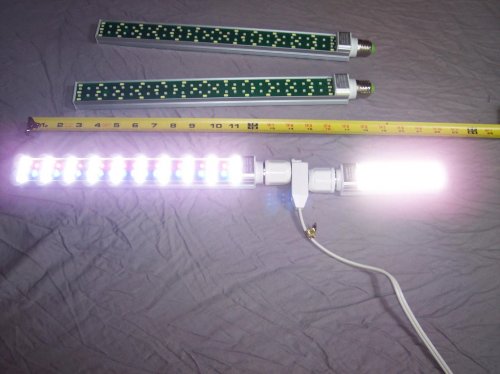
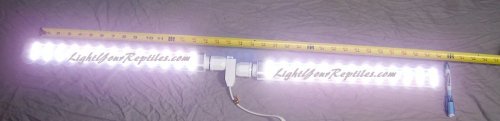
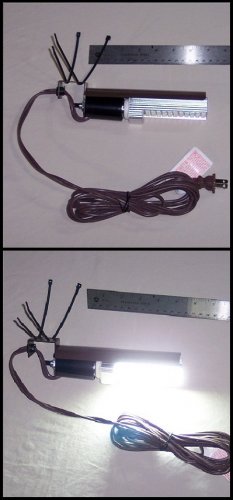
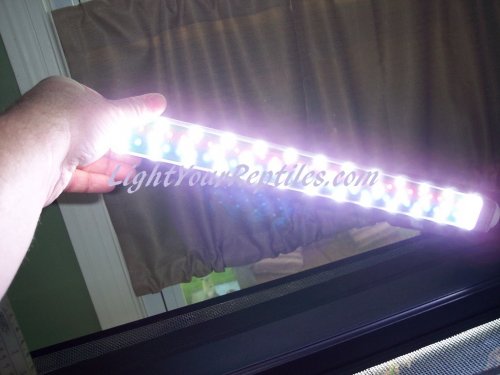
Below are some pics of LED products that produce "grow light" for plants and nice 6.5k light with good spectrum.
NONE of these pictured below produce UV.
Nor do they radiate much heat--
so they would need to be used in conjunction WITH a dome light for heat AND a UV producing Flo. Bulb (or Mercury Vapor spot-light bulb)
So using LEDs like shown below would make for 3 types of light over the average set up...
instead of the usual two (flo. light and incandescent lighting for heat.)
Cheers,
Todd
lightyourreptiles.com