samyulls0n
New Member
Last week I received a Brookesia Stumpffi pair (WC import) and they seem to be settling in decently well. This is a project I have been thinking about and planning for for years now, so I am happy to be finally given the chance to have them and see if I can get some stable bloodlines going. Both have been observed eating and seem to be decently active.
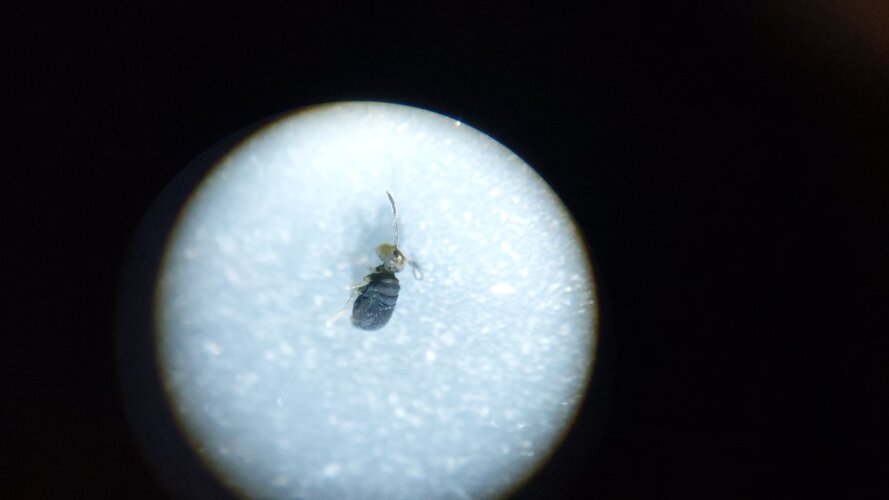
However, I had a panic moment earlier today when I noticed a couple moving black dots on the male (in separate enclosures for quarantine and close monitoring). See video attachment for one of the bugs I captured on a piece of scotch tape. Since I nabbed it with scotch tape, it's upside down on its back in the video. At first I was sure it must be mites, but then in the video I swear I think I'm seeing antennae, which would tell me not mite/tick family. If you stick around until the end of the video, I put my finger into the frame for scale. It's really just a tiny black dot until it starts moving.
It being Sunday before Presidents' Day, I'm not going to be able to get to reptile vet until Tuesday, but I want to find out as much as I can beforehand and try to do what I can asap. Anyone seen anything like these before? Any insight that might inform next steps I should take to take care of these little guys? TIA
Just a quick snippet about husbandry: I have a T5 5.0 uvb bulb and a T5 6500k bulb and temperatures are hitting about 80 during the day up at the top of the enclosure and stay about 72 on the bottom at the leaf
litter. Temps go down to about 68 at night. I am prioritizing getting them good and hydrated and keeping humidity high but also cycling air above to keep airflow moving. Trying to replicate the warm/wet season for them. This is a bio active setup that has been cycling since October, and it was thriving with plants/springtails, and I have not seen these little bugs before today and am assuming they came in on my male. There seem to be quite a few in the enclosure with him, but being a bioactive setup it's really hard to know for sure how many is in the enclosure and/or bothering the male. Not seeing any on the female or in the females's enclosure, thankfully.
Thanks again.
However, I had a panic moment earlier today when I noticed a couple moving black dots on the male (in separate enclosures for quarantine and close monitoring). See video attachment for one of the bugs I captured on a piece of scotch tape. Since I nabbed it with scotch tape, it's upside down on its back in the video. At first I was sure it must be mites, but then in the video I swear I think I'm seeing antennae, which would tell me not mite/tick family. If you stick around until the end of the video, I put my finger into the frame for scale. It's really just a tiny black dot until it starts moving.
It being Sunday before Presidents' Day, I'm not going to be able to get to reptile vet until Tuesday, but I want to find out as much as I can beforehand and try to do what I can asap. Anyone seen anything like these before? Any insight that might inform next steps I should take to take care of these little guys? TIA
Just a quick snippet about husbandry: I have a T5 5.0 uvb bulb and a T5 6500k bulb and temperatures are hitting about 80 during the day up at the top of the enclosure and stay about 72 on the bottom at the leaf
litter. Temps go down to about 68 at night. I am prioritizing getting them good and hydrated and keeping humidity high but also cycling air above to keep airflow moving. Trying to replicate the warm/wet season for them. This is a bio active setup that has been cycling since October, and it was thriving with plants/springtails, and I have not seen these little bugs before today and am assuming they came in on my male. There seem to be quite a few in the enclosure with him, but being a bioactive setup it's really hard to know for sure how many is in the enclosure and/or bothering the male. Not seeing any on the female or in the females's enclosure, thankfully.
Thanks again.
Last edited: