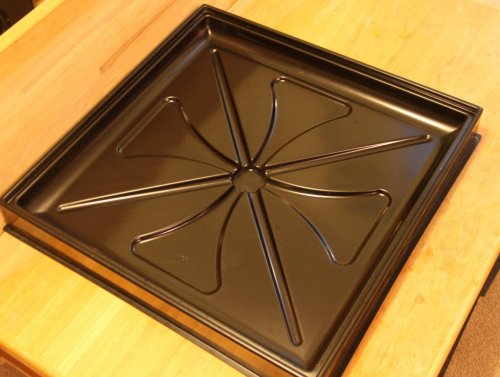
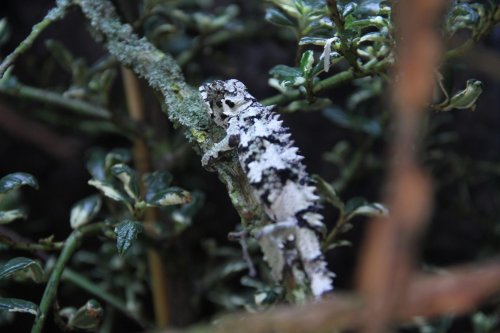
The enclosure is made from birch faced plywood then coated in a 2-part epoxy paint which they use for sealing ponds. It works well and is totally inert after 72hours. I then use one of our drainage tray in the base.
Then I fix 20mm thick cork panels to the side.(these are sheets used for insulation in europe and are fairly cheap. It works well as chams and feeders can crawl on it.
The base is then lined with porous membrane and then clay balls which help drainage and then filled with organic peat free soil. The plants then planted these are mainly ceanothus griseus var. horizontalis they're a food source for bees and butterflies during the summer. A very hardy plant that has very stable branches for climbing.The base of substrate is then covered in natural mosses.
The branches are Elm, chameleons love these as they're perfect for climbing and camouflage. These are very easy to wedge in between the cork panels.
We also add springtails,earthworms and woodlice to the substrate as the act as a small eco-system cleaning the soil.
The front has a full screen door and also a screen top, this system has to have good ventilation to work.
The thinking behind this is to allow your plants to flourish as well as your chams.
This is amazing!
How deep is the soil and how many woodlice/springtails/earthworms do you have in there?
And do you have problems with the springtails escaping the enclosure?
I'd like to build a vivarium like this some day as well. Great work!