

Andee
Chameleon Enthusiast
So I don't know how much this is breeding since this is a parthonogenetic species, and they are all females in this colony. But this is kind of how I do line breeding for insects in a way... a very simple way. I have hold backs from the original mother that caught my eye in the first group, she was a deep forest green, well about 80% of her babies carried that green in their genes. I have 4 hold backs from her nymphs group for sure to lay the new generation. The hold backs are an ever brighter green. One currently has a missing front limb but it has at least two molts left from the looks of it and I expect it to grow back. I figured since so many of the wonderful people in this community who show interest in my feeders, you would enjoy seeing how I get certain things I want out of them. It's literally just like chameleon breeding in a way ^^

Like always colors are much better in person but you get what you get XD. I am hoping at least one more will show such potential, even two more would be wonderful. I honestly don't need anymore than 6 until the next generation. But 4 would definitely give me enough.
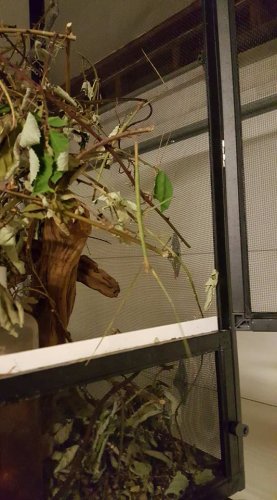
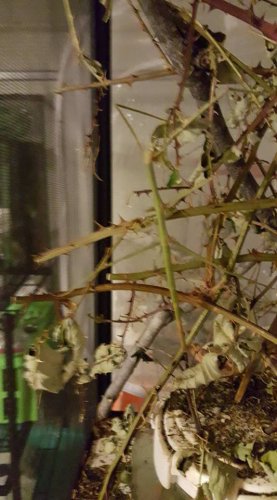
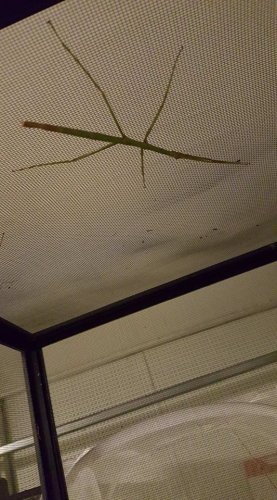
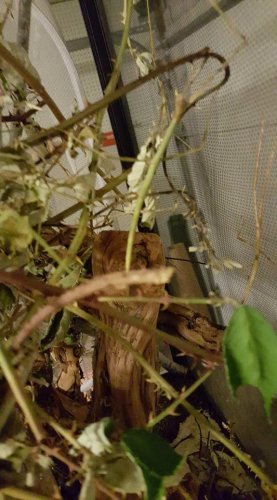
Like always colors are much better in person but you get what you get XD. I am hoping at least one more will show such potential, even two more would be wonderful. I honestly don't need anymore than 6 until the next generation. But 4 would definitely give me enough.


