spot grow?

cloverthechameleon

Avid Member
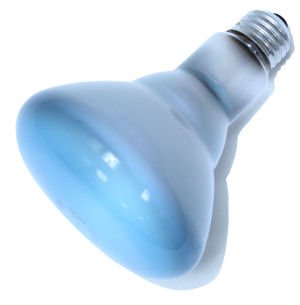
today i went to the hardware store 2 pick up a new basking lamp and i picked up a 60w spot grow by sylvia its a plant growin light and it gives off a bit more heat then a regular 60w (i think its 65w) does anyon know if this light is harmfull
 
Do you mean Sylvania? If so, is this the bulb you bought?

315Rsvr4lSL.jpg


They're commonly used for growing plants indoors, but not sure how well it would as a basking light? I guess hook it up and check temps.

The blue color might be a bit much for the cham too, like how CFL's can cause eye problems.
 
Do you mean Sylvania? If so, is this the bulb you bought?

315Rsvr4lSL.jpg


They're commonly used for growing plants indoors, but not sure how well it would as a basking light? I guess hook it up and check temps.

The blue color might be a bit much for the cham too, like how CFL's can cause eye problems.

There's rarely as much blue wavelength light in the lighting we provide in captivity as compared to natural sunlight, and even so, how would we expect bluish lighting to affect chameleons anyway?

CFLs do not cause eye problems. One particular type of fluorescent available several years ago was improperly constructed, and provided excessive short-wave UVB. That problem was corrected, and no bulbs today cause this problem. The problem had nothing whatsoever to do with the fact that it was a CFL, and everything to do with the improper phospher mix in the bulb. Exactly the same would have occured with a linear fluorescent if the same phosphors were used.

This mythology that CFLs cause eye problems is born entirely out of a problem with a bulb a few years ago, and people not paying attention to what the actual problem was. It's like refusing to ever go to a hospital because you heard that someone once died at one.

cj
 
There's rarely as much blue wavelength light in the lighting we provide in captivity as compared to natural sunlight, and even so, how would we expect bluish lighting to affect chameleons anyway?

CFLs do not cause eye problems. One particular type of fluorescent available several years ago was improperly constructed, and provided excessive short-wave UVB. That problem was corrected, and no bulbs today cause this problem. The problem had nothing whatsoever to do with the fact that it was a CFL, and everything to do with the improper phospher mix in the bulb. Exactly the same would have occured with a linear fluorescent if the same phosphors were used.

This mythology that CFLs cause eye problems is born entirely out of a problem with a bulb a few years ago, and people not paying attention to what the actual problem was. It's like refusing to ever go to a hospital because you heard that someone once died at one.

cj

Whether or not they cause eye problems, they do contain mercury and have been known to cause problems if handled incorrectly, not something you should risk using near any pet. Plus the negative environmental impact should be more than enough to keep anyone from buying CFL's.

The topic doesn't really have anything to do with CFL's so let's keep it on topic.

OP have you tested to see if you're getting proper heat from the bulb?
 
Whether or not they cause eye problems, they do contain mercury and have been known to cause problems if handled incorrectly, not something you should risk using near any pet. Plus the negative environmental impact should be more than enough to keep anyone from buying CFL's.

Two things:

1) the amount of mercury they contain is tiny. For example, the amount of mercury a person would take in if they were to sit in a small room, unventilated room with a broken bulb for several hours (as per EPA testing) is less than the amount of mercury a person gets from eating a single 6 oz can of tuna. Where does the mercury in the tuna come from? Primarily from burning coal used to make electricity. Even if a person handles a CFL incorrectly and it truly stupid when it comes to cleanup, the risk from mercury exposure is tiny as compared to many other sources.

2) ALL fluorescents contain mercury, not just CFLs, as do mercury vapor bulbs (obviously). Unless a person is keeping their chameleon outdoors consistently, where UV light is free, they must provide lighting that producdes UV, and every bulb that produces UV contains mercury. If you are really that worried about this issue, chameleons are not for you.

The topic doesn't really have anything to do with CFL's so let's keep it on topic.

You talk about CFLs at length, responding to some points I've made, and then chastize me for doing the same? Hello pot, I'd like to introduce you to kettle.

OP have you tested to see if you're getting proper heat from the bulb?

Agreed, this is the big question here.
 
Just make sure you get the correct temps. Those spot lights I used to use but switched to bulbs with not so much concentration.
 
Back
Top Bottom