greeneyes78
New Member
Chameleon Info:
• Your Chameleon – Male Ambanja Panther, approx. 1 year 9 mon. I have had him since he was 11 months old, from LanceCham.
• Handling – Before illness, very rarely. During illness he was handled daily for feeding and medicating.
• Feeding – Gut-loaded crickets, waxworms when he’ll eat them. He is given about 15 a day, but often only eats 5-7 of them because his eyes are not opened. We were hand feeding him for a while, but now he won’t let us handle him without hissing and biting.
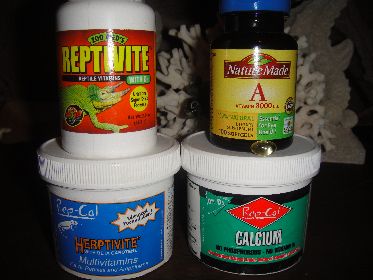
• Supplements - Pro Cal Calcium and Vitamin D
• Watering – I do see him drink eat time I mist. Mist 2-3 times daily. There is a plastic drop cloth surrounding his enclosure (about 2 feet around) to keep in moisture, so the misting stays for quite a long time.
• Fecal Description – Urates are pure white, fecal a bit runny and mid to dark brown. He is producing these on a regular basis.
• History – He has been healthy until the last 2 months or so.
Cage Info:
• Cage Type – Screen 2Lx2Wx1D There is also a plastic drop cloth suspended on PVC surrounding the enclosure to keep in moisture (vet suggestion). Will be building larger cage soon, with 2 sides plexi to keep in moisture.
• Lighting – Lights on at 6:00 a.m., off at 9:00 p.m. (also vet suggestion due to illness) Basking lamp is 100 watt bulb, UVB is ZooMed tube light.
• Temperature – Daytime temps – under basking lamp 90-100, other topside 80-85, lower 70-80. Nighttime temps – 70-75. Use digital thermometer to check temps twice daily (when misting).
• Humidity – Humidity is approx 80-90 during the day. Misted 2-3 times daily, with plastic drop cloth surrounding enclosure to keep in moisture. Humidity can drop to 55ish over night, depending whether or not the heat/AC is on.
• Plants – 2 live plants, 1 hibiscus, 1 shefflera
• Placement – Cage is located in living room, not high traffic (spend most of our time in office/den), and is approx 5 feet off floor (top of cage)
• Location – South TX (near San Antonio)
Current Problem – At first he was very lethargic and was not eating, along with his eyes not opening very often. Now he moves around, and seems to eat (crickets are mostly gone at end of day) but Solomon is does not open his eyes very often, if at all. He was seen by a vet and given Baytril and eye ointment. We were told to up the humidity and mist more often. We were hand feeding him daily with the meds, just so that he would not waste away. He was handling that well when he was ill, but now he puffs up, hisses and tries to bite when we try to handle him. I take this as a good sign, that his feistiness has returned, but he is still not opening his eyes.
• Your Chameleon – Male Ambanja Panther, approx. 1 year 9 mon. I have had him since he was 11 months old, from LanceCham.
• Handling – Before illness, very rarely. During illness he was handled daily for feeding and medicating.
• Feeding – Gut-loaded crickets, waxworms when he’ll eat them. He is given about 15 a day, but often only eats 5-7 of them because his eyes are not opened. We were hand feeding him for a while, but now he won’t let us handle him without hissing and biting.
• Supplements - Pro Cal Calcium and Vitamin D
• Watering – I do see him drink eat time I mist. Mist 2-3 times daily. There is a plastic drop cloth surrounding his enclosure (about 2 feet around) to keep in moisture, so the misting stays for quite a long time.
• Fecal Description – Urates are pure white, fecal a bit runny and mid to dark brown. He is producing these on a regular basis.
• History – He has been healthy until the last 2 months or so.
Cage Info:
• Cage Type – Screen 2Lx2Wx1D There is also a plastic drop cloth suspended on PVC surrounding the enclosure to keep in moisture (vet suggestion). Will be building larger cage soon, with 2 sides plexi to keep in moisture.
• Lighting – Lights on at 6:00 a.m., off at 9:00 p.m. (also vet suggestion due to illness) Basking lamp is 100 watt bulb, UVB is ZooMed tube light.
• Temperature – Daytime temps – under basking lamp 90-100, other topside 80-85, lower 70-80. Nighttime temps – 70-75. Use digital thermometer to check temps twice daily (when misting).
• Humidity – Humidity is approx 80-90 during the day. Misted 2-3 times daily, with plastic drop cloth surrounding enclosure to keep in moisture. Humidity can drop to 55ish over night, depending whether or not the heat/AC is on.
• Plants – 2 live plants, 1 hibiscus, 1 shefflera
• Placement – Cage is located in living room, not high traffic (spend most of our time in office/den), and is approx 5 feet off floor (top of cage)
• Location – South TX (near San Antonio)
Current Problem – At first he was very lethargic and was not eating, along with his eyes not opening very often. Now he moves around, and seems to eat (crickets are mostly gone at end of day) but Solomon is does not open his eyes very often, if at all. He was seen by a vet and given Baytril and eye ointment. We were told to up the humidity and mist more often. We were hand feeding him daily with the meds, just so that he would not waste away. He was handling that well when he was ill, but now he puffs up, hisses and tries to bite when we try to handle him. I take this as a good sign, that his feistiness has returned, but he is still not opening his eyes.