Coley
New Member
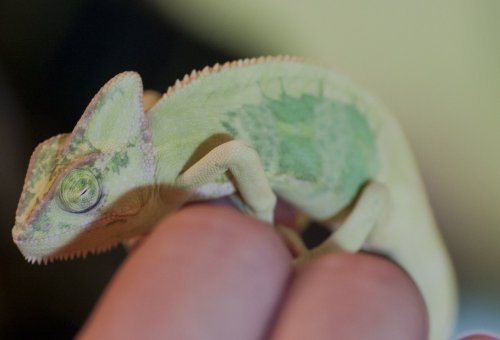
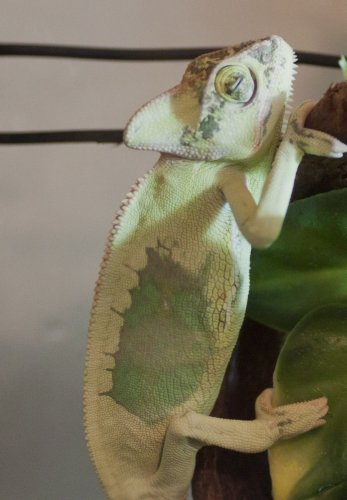
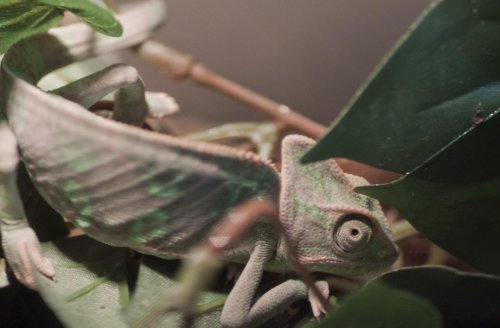
Jose is my first chameleon. My brother bought him for me sometime around the end of September 2011. He is about 6 months old now. I THOUGHT I was taking care of him, however, when I got home from work yesterday I found out I was not that great of a petowner because I found him at the bottom of his cage (tail sticking straight out behind him) almost all pale green except for a penny-sized (at least penny-sized, maybe larger) splotch on either side of his ribcage which looked like it normally did (green with the normal spotted/stripped markings... idk how to technically describe it...). I took some photos (first 2 pics attached). I researched online but couldn't put a finger on exactly what was wrong with him. He could hardly hold himself up on the plants and would slowly end up with his face at the bottom of the cage. I thought he was a goner, and actually thought I had lost him by the time I left for work the next morning because when I looked at him in the morning I couldn't tell that he was breathing. However, I spoke with my brother (who checked on him) later in the day and he said Jose had climbed up on the plant (fake) that I have in his cage and he thought that Jose was doing better than yesterday. When I got home from work today, Jose was indeed alive, but still didn't look so well. I did some researching and concluded that he had severe MBD (Metabolic Bone Disease). I hadn't supplemented his crickets/meal worms/wax worms w/ calcium  I honestly didn't think that he would make it much longer. I found a vet to take him to, who confirmed that yes, he did have MBD. To my surprise, the vet-tech told me that he looked alright and that we could still do something about it. He gave Jose a calcium injection and informed me about proper veiled chameleon care (including a different cage, his current one is glass w/ a wire top, calcium supplements and what not).
It hasn't been more than 3 hours since I have been back from the vet. Jose is seemingly doing better. He has been more active than he was, doesn't seem so lethargic. His color isn't so splotchy, although it's not quite back to the brilliant green colors that a chameleon should be. I know he is still stressed from everything and that I have to give him some time to get better. I have been monitoring the temp and humidity of his cage closely and have misted adequately and put some wax worms (drenched in calcium powder.. per the vets order) in his food dish so he can eat when he is able to.
My whole issue here is that in my research I found so many stories about chameleons w/ MBD whose owners had taken them to the vet (and followed the recommendations), but still ended up not making it . I am trying to stay positive and am just curious if anyone else has gone through this and has had a happy ending? I feel terrible for being such a crappy chameleon owner and am trying my hardest to make up for it!!
Please share your experience/advice !! I am so scared for Jose!
I honestly didn't think that he would make it much longer. I found a vet to take him to, who confirmed that yes, he did have MBD. To my surprise, the vet-tech told me that he looked alright and that we could still do something about it. He gave Jose a calcium injection and informed me about proper veiled chameleon care (including a different cage, his current one is glass w/ a wire top, calcium supplements and what not). It hasn't been more than 3 hours since I have been back from the vet. Jose is seemingly doing better. He has been more active than he was, doesn't seem so lethargic. His color isn't so splotchy, although it's not quite back to the brilliant green colors that a chameleon should be. I know he is still stressed from everything and that I have to give him some time to get better. I have been monitoring the temp and humidity of his cage closely and have misted adequately and put some wax worms (drenched in calcium powder.. per the vets order) in his food dish so he can eat when he is able to.
My whole issue here is that in my research I found so many stories about chameleons w/ MBD whose owners had taken them to the vet (and followed the recommendations), but still ended up not making it
. I am trying to stay positive and am just curious if anyone else has gone through this and has had a happy ending? I feel terrible for being such a crappy chameleon owner and am trying my hardest to make up for it!! Please share your experience/advice
!! I am so scared for Jose!