Hi. I have a 22-month old male panther that I have had since he was 3 months old. He is kept under ideal conditions, with proper ventilation, 5.0 UV light at the correct distance, a basking spot, adequate foliage for security, a watering system that mists for 15 seconds every hour during the day and a combination of horizontal and diagonal perches of different diameters. He gets direct sunlight twice a week for 3 hours at a time if the weather permits. He is given a calcium with D3 and vitamin supplement once a week. I have had difficulty in feeding him since he was 7 months old, because of an apparent lack of interest in food - and have tried crickets, superworms, silkworms, silk moths and pupae, different types of cockroaches, locusts and praying mantids, with varying degrees of success, but with hunger strikes of up to two months. About three months ago I started giving him a liquid calcium, as well as an electrolite solution that seemed to have improved his appetite. About two months ago he started perching with his hind legs hanging from the perch on both sides. His grip was good when I handled him, but he seemed to deteriorate as time went by. By this past weekend his hind legs were paralyzed with an accompanying hemipenal prolapse. I rushed him to the vet who placed back the one hemipene, as well as a subsequent second prolapse, put two small stitches in to keep them from everting again, tested his blood calcium levels that were normal, and prescribed a low-level calcium, flagyl, baytril and a glucose solution for me to nurse him with at home, since the vet is uncertain what the cause of the problem is. My chameleon was very weak for the 1st 4 days, but seems to be responding and is eating silkworms and small crickets that I am placing in his mouth. His tail is "working", but is black due to the trauma of his double operation. He has slept upright last night for the first time since his prolapse, with the hind legs that are still paralyzed. I keep brookesia and parsons with success, but have no idea why my panther is this ill. Any advice would be greatly appreciated.

Navigation
Install the app
How to install the app on iOS
Follow along with the video below to see how to install our site as a web app on your home screen.
Note: This feature may not be available in some browsers.
More options
You are using an out of date browser. It may not display this or other websites correctly.
You should upgrade or use an alternative browser.
You should upgrade or use an alternative browser.
Panther Chameleon HIND LEG PARALYSES
- Thread starter chamcode
- Start date

beeze
Avid Member
Welcome to the chameleon forums. I am sorry to hear about your panther. If you will take the time to answer these questions in detail and post a few pictures of you panther and his set-up the members here will be able to offer you more advice.
How to ask for help
--------------------------------------------------------------------------------
Here is some recommended information to include when asking for help in the health clinic forum. By providing this information, you will receive more accurate and beneficial responses. It might not be necessary to answer all these questions, but the more you provide the better. Please remember that even the most knowledgeable person can only guess at what your problem may be. Only an experienced reptile veterinarian who can directly examine your animal can give a true diagnosis of your chameleon's health.
Cage Info:
Cage Type - Describe your cage (Glass, Screen, Combo?) What are the dimensions?
Lighting - What brand, model, and types of lighting are you using? What is your daily lighting schedule?
Temperature - What temp range have you created (cage floor to basking spot)? Lowest overnight temp? How do you measure these temps?
Humidity - What are your humidity levels? How are you creating and maintaining these levels? What do you use to measure humidity?
Plants - Are you using live plants? If so, what kind?
Placement - Where is your cage located? Is it near any fans, air vents, or high traffic areas? At what height is the top of the cage relative to your room floor?
Location - Where are you geographically located?
Chameleon Info:
Your Chameleon - The species, sex, and age of your chameleon. How long has it been in your care?
Handling - How often do you handle your chameleon?
Feeding - What are you feeding your cham? What amount? What is the schedule? How are you gut-loading your feeders?
Supplements - What brand and type of calcium and vitamin products are you dusting your feeders with and what is the schedule?
Watering - What kind of watering technique do you use? How often and how long to you mist? Do you see your chameleon drinking?
Fecal Description - Briefly note colors and consistency from recent droppings. Has this chameleon ever been tested for parasites?
History - Any previous information about your cham that might be useful to others when trying to help you.
Current Problem - The current problem that you are concerned about.
Pictures are helpful
How to ask for help
--------------------------------------------------------------------------------
Here is some recommended information to include when asking for help in the health clinic forum. By providing this information, you will receive more accurate and beneficial responses. It might not be necessary to answer all these questions, but the more you provide the better. Please remember that even the most knowledgeable person can only guess at what your problem may be. Only an experienced reptile veterinarian who can directly examine your animal can give a true diagnosis of your chameleon's health.
Cage Info:
Cage Type - Describe your cage (Glass, Screen, Combo?) What are the dimensions?
Lighting - What brand, model, and types of lighting are you using? What is your daily lighting schedule?
Temperature - What temp range have you created (cage floor to basking spot)? Lowest overnight temp? How do you measure these temps?
Humidity - What are your humidity levels? How are you creating and maintaining these levels? What do you use to measure humidity?
Plants - Are you using live plants? If so, what kind?
Placement - Where is your cage located? Is it near any fans, air vents, or high traffic areas? At what height is the top of the cage relative to your room floor?
Location - Where are you geographically located?
Chameleon Info:
Your Chameleon - The species, sex, and age of your chameleon. How long has it been in your care?
Handling - How often do you handle your chameleon?
Feeding - What are you feeding your cham? What amount? What is the schedule? How are you gut-loading your feeders?
Supplements - What brand and type of calcium and vitamin products are you dusting your feeders with and what is the schedule?
Watering - What kind of watering technique do you use? How often and how long to you mist? Do you see your chameleon drinking?
Fecal Description - Briefly note colors and consistency from recent droppings. Has this chameleon ever been tested for parasites?
History - Any previous information about your cham that might be useful to others when trying to help you.
Current Problem - The current problem that you are concerned about.
Pictures are helpful

Julirs
New Member
Please out the entire form as listed above.
Unfortunately, you were not supplementing him properly for the first 19 months of his life (or as long as you had him during that inital 19 months of his life). The big questions at hand will be the UVB light, the supplements, and the temps. However with the type of paralysis you are describing it makes me wonder if had fallen. Does he have limb deformities that are associated with MBD?
Unfortunately, you were not supplementing him properly for the first 19 months of his life (or as long as you had him during that inital 19 months of his life). The big questions at hand will be the UVB light, the supplements, and the temps. However with the type of paralysis you are describing it makes me wonder if had fallen. Does he have limb deformities that are associated with MBD?

Kent67
Retired Moderator

I'm not sure I'd start blaming supplementation so soon. It sounds like he's getting more than adequate UVB, and, assuming the insects are fed a quality, high in calcium diet (which I am assuming because of the Brookesia and Parson's comment) I think the problem may lie elsewhere. Does he appear to have any abnormalities on his spine, particularly around the pelvis? I've had the exact same thing as described happen to me and it was a tumor on the spine pinching off the nerves to his legs. Unfortunately, I had to opt for euthanasia in that case. I've also seen more than a number of reports on here about intestinal impactions doing the same thing. When was the last time he made a deposit?
Hi again. Herewith the full info as per guidelines:
Cage Info:
Cage Type - Exo-terra 65 Gallon Flexarium - screen terrarium: 76 x 42 x 76 cm/30" x 16.5" x 30"
Lighting - Exo-terra Repti Glo 5.0 24"/60 cm/20W linear fluorescent bulb, Exo-terra Repti Glo 2.0 24"/60 cm/20W linear fluorescent bulb (for extra light - seemed too dark). Both on an Exo-terra Light Cycle Unit. Winter: on at 07:30 am, off at 18:00 pm. Summer: on at 06:30 am, off at 19:30 pm. UV lamps at 12 cm from perch. Exo-terra Sun Glo Halogen Neodymium Lamp 75W as a basking lamp. Basking lamp at 20 cm from perch. All light outside screen cage.
Temperature - Temp range - cage floor currently (summer) 22ºC to basking spot 27ºC to 30ºC. Lowest overnight temp 18ºC during winter. Basking spot measured with Exo-terra Digital Thermometer. Floor temperature measured with Analog thermometer.
Humidity - What are your humidity levels? Average: 60%. 80% after misting/spraying. How are you creating and maintaining these levels? Please see "Watering" below. Measured with Exo-terra Digital Hygrometer.
Plants - Yes. 1x Hybiscus, 1x Ficus benjamina, 1x Pothos
Placement - Where is your cage located? Is it near any fans, air vents, or high traffic areas? NO - In a corner of a room away from the door and window - no traffic other than myself and my partner. At what height is the top of the cage relative to your room floor? 187 cm.
Location - Where are you geographically located? Western Cape, South Africa. Coastal city. Winter rainfall. Warm and windy summers.
Chameleon Info:
Your Chameleon - Panther chameleon, male, 22 months old. I have had him for 19 months.
Handling - Saturdays and Sundays: transferring to and from outdoor enclosure by hand; to and from bath for an extended misting once a week.
Feeding - I have had difficulty in feeding him since he was 7 months old, because of an apparent lack of interest in food - and have tried crickets, superworms, silkworms, silk moths and pupae, different types of cockroaches, locusts and praying mantids, with varying degrees of success, but with hunger strikes of up to two months. When he ate, he would take one prey item only, and two in exceptional cases. I made sure that the prey items were an appropriate size (not longer than the width of his mouth). I offered him food daily, because he was eating so little at a time. I was concerned that he might not get enough supplementation due to the limited food intake and about three months ago I started giving him a liquid calcium, as well as an electrolite solution that seemed to have improved his appetite. After this he took 2 to 4 pray items daily, to every other day. I feed my crickets and cockroaches a variety of hard vegetables and fruit, such as squash, pumpkin, carrots, sweet potato, apples and oranges, as well as a good brand of tropical fish flakes, and are fed this every other day. Locusts are fed daily on cabbage and wheat germ. Silkworms are fed on artificial silkworm food. Superworms are fed a mixture of grains, including barley, crushed wheat, lentils, rolled oats, wheat bran, wheat germ and some tropical fish flakes. These live in their medium/food, which is supplemented with hard vegetables and fruit as well.
Supplements - Zoomed Repti Calcium with D3 - once a week. T-Rex SandFire Superfoods Chameleon Dust ICB - dusted on feeders twice a week. Bear in mind that I have had difficulty in getting him to eat.... T-rex Bone Aid Liquid Calcium - dosage as prescribed - directly into mouth of chameleon - once a week (most certainly contributed to improving his appetite). T-rex Hydrolife Electrolyte Formula - dosage as prescribed - directly into mouth of chameleon - once a week (most certainly contributed to improving his appetite).
Watering - Zoomed Habba Mist Automatic Misting Machine (actually a spray, not a mist), which is set to spray for 15 seconds every hour during the day - onto the dense foliage of a ficus. This is supplemented by hand-spraying the entire cage thoroughly in the morning, and again in the late afternoon. In addition, over weekends, my chameleon is watered by hand. I do observe him drinking off the leaves of the plants in his cage.
Fecal Description - Combination of dark brown with a solid consistency and an orange part flowing into a white urate. He has been tested for parasites and was all clear.
History - Please refer to "Feeding".
Current Problem - About two months ago he started perching with his hind legs hanging from the perch on both sides. His grip was good when I handled him, but he seemed to deteriorate as time went by. By this past weekend (21 Nov) his hind legs were paralyzed with an accompanying hemipenal prolapse (on the night of 22 Nov). I rushed him to the vet (on 23 Nov) who placed back the one hemipene, as well as a subsequent second prolapse (on 24 Nov), put two small stitches in to keep them from everting again, tested his blood calcium levels that were normal, and prescribed a low-level calcium gluconate (0.1 ml/daily), flagyl (0.2 ml/daily), baytril (0.1 ml/daily) and "Darrows Solution" (liquid electrolyte) (4 ml daily) for me to nurse him with at home, since the vet is uncertain what the cause of the problem is. My chameleon was very weak for the 1st 4 days, but seems to be responding and is eating silkworms and small crickets that I am placing in his mouth. His tail is "working", but is black due to the trauma of his double operation. He has slept upright on the night of 26 Nov for the first time since his prolapse, with the hind legs that are still paralyzed. He has not passed any stools since Saturday, 21 November, which was small, white urate and a bit of orange - no dark, solid part. In this past week he has had 5 small crickets and 4 medium sized silkworms. No stools yet. I have placed him outside to "sun" over the weekend, which he seemed to enjoy, but he seems a little depressed today. I am not aware off any falls he might have had. Your advice is appreciated. I will post pics of all tomorrow.
Cage Info:
Cage Type - Exo-terra 65 Gallon Flexarium - screen terrarium: 76 x 42 x 76 cm/30" x 16.5" x 30"
Lighting - Exo-terra Repti Glo 5.0 24"/60 cm/20W linear fluorescent bulb, Exo-terra Repti Glo 2.0 24"/60 cm/20W linear fluorescent bulb (for extra light - seemed too dark). Both on an Exo-terra Light Cycle Unit. Winter: on at 07:30 am, off at 18:00 pm. Summer: on at 06:30 am, off at 19:30 pm. UV lamps at 12 cm from perch. Exo-terra Sun Glo Halogen Neodymium Lamp 75W as a basking lamp. Basking lamp at 20 cm from perch. All light outside screen cage.
Temperature - Temp range - cage floor currently (summer) 22ºC to basking spot 27ºC to 30ºC. Lowest overnight temp 18ºC during winter. Basking spot measured with Exo-terra Digital Thermometer. Floor temperature measured with Analog thermometer.
Humidity - What are your humidity levels? Average: 60%. 80% after misting/spraying. How are you creating and maintaining these levels? Please see "Watering" below. Measured with Exo-terra Digital Hygrometer.
Plants - Yes. 1x Hybiscus, 1x Ficus benjamina, 1x Pothos
Placement - Where is your cage located? Is it near any fans, air vents, or high traffic areas? NO - In a corner of a room away from the door and window - no traffic other than myself and my partner. At what height is the top of the cage relative to your room floor? 187 cm.
Location - Where are you geographically located? Western Cape, South Africa. Coastal city. Winter rainfall. Warm and windy summers.
Chameleon Info:
Your Chameleon - Panther chameleon, male, 22 months old. I have had him for 19 months.
Handling - Saturdays and Sundays: transferring to and from outdoor enclosure by hand; to and from bath for an extended misting once a week.
Feeding - I have had difficulty in feeding him since he was 7 months old, because of an apparent lack of interest in food - and have tried crickets, superworms, silkworms, silk moths and pupae, different types of cockroaches, locusts and praying mantids, with varying degrees of success, but with hunger strikes of up to two months. When he ate, he would take one prey item only, and two in exceptional cases. I made sure that the prey items were an appropriate size (not longer than the width of his mouth). I offered him food daily, because he was eating so little at a time. I was concerned that he might not get enough supplementation due to the limited food intake and about three months ago I started giving him a liquid calcium, as well as an electrolite solution that seemed to have improved his appetite. After this he took 2 to 4 pray items daily, to every other day. I feed my crickets and cockroaches a variety of hard vegetables and fruit, such as squash, pumpkin, carrots, sweet potato, apples and oranges, as well as a good brand of tropical fish flakes, and are fed this every other day. Locusts are fed daily on cabbage and wheat germ. Silkworms are fed on artificial silkworm food. Superworms are fed a mixture of grains, including barley, crushed wheat, lentils, rolled oats, wheat bran, wheat germ and some tropical fish flakes. These live in their medium/food, which is supplemented with hard vegetables and fruit as well.
Supplements - Zoomed Repti Calcium with D3 - once a week. T-Rex SandFire Superfoods Chameleon Dust ICB - dusted on feeders twice a week. Bear in mind that I have had difficulty in getting him to eat.... T-rex Bone Aid Liquid Calcium - dosage as prescribed - directly into mouth of chameleon - once a week (most certainly contributed to improving his appetite). T-rex Hydrolife Electrolyte Formula - dosage as prescribed - directly into mouth of chameleon - once a week (most certainly contributed to improving his appetite).
Watering - Zoomed Habba Mist Automatic Misting Machine (actually a spray, not a mist), which is set to spray for 15 seconds every hour during the day - onto the dense foliage of a ficus. This is supplemented by hand-spraying the entire cage thoroughly in the morning, and again in the late afternoon. In addition, over weekends, my chameleon is watered by hand. I do observe him drinking off the leaves of the plants in his cage.
Fecal Description - Combination of dark brown with a solid consistency and an orange part flowing into a white urate. He has been tested for parasites and was all clear.
History - Please refer to "Feeding".
Current Problem - About two months ago he started perching with his hind legs hanging from the perch on both sides. His grip was good when I handled him, but he seemed to deteriorate as time went by. By this past weekend (21 Nov) his hind legs were paralyzed with an accompanying hemipenal prolapse (on the night of 22 Nov). I rushed him to the vet (on 23 Nov) who placed back the one hemipene, as well as a subsequent second prolapse (on 24 Nov), put two small stitches in to keep them from everting again, tested his blood calcium levels that were normal, and prescribed a low-level calcium gluconate (0.1 ml/daily), flagyl (0.2 ml/daily), baytril (0.1 ml/daily) and "Darrows Solution" (liquid electrolyte) (4 ml daily) for me to nurse him with at home, since the vet is uncertain what the cause of the problem is. My chameleon was very weak for the 1st 4 days, but seems to be responding and is eating silkworms and small crickets that I am placing in his mouth. His tail is "working", but is black due to the trauma of his double operation. He has slept upright on the night of 26 Nov for the first time since his prolapse, with the hind legs that are still paralyzed. He has not passed any stools since Saturday, 21 November, which was small, white urate and a bit of orange - no dark, solid part. In this past week he has had 5 small crickets and 4 medium sized silkworms. No stools yet. I have placed him outside to "sun" over the weekend, which he seemed to enjoy, but he seems a little depressed today. I am not aware off any falls he might have had. Your advice is appreciated. I will post pics of all tomorrow.

Yes, he was producing feces throughout, but at a slower "pace" due to the limited food intake. No substrate. I used to use paper towel, but it got too wet, so I opted for simply having a plastic tray (Exo-terra Flextray) at the bottom of the flexarium, which holds the water that falls off the plants and helps it to evaporate, leaving the floor dry, not soggy as with the paper towel. Plastic tray is regularly spot-cleaned and sprayed with a reptile cage disinfectant, and is washed with a reptile safe anti-bacterial solution once a month.
My apologies for only posting pics today.
Herewith images of my panther chameleon, his setup and current state.
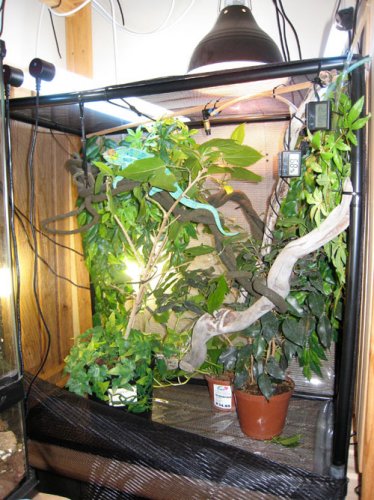
Set-up
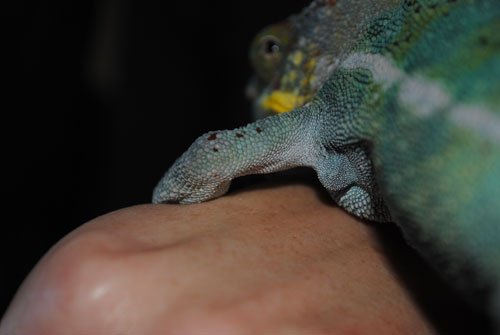
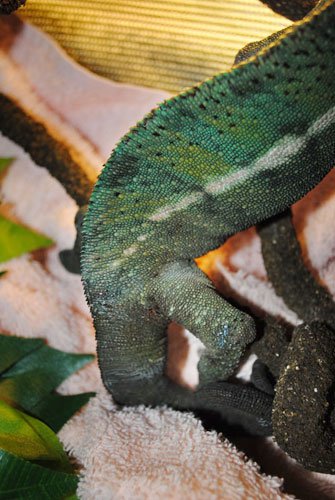
Soft, little lump under arm - felt as if it could be filled with fluid. Also larger area between two front legs. Suspect that this could have been due to him dragging himself forward by his front legs and the constant rubbing of this area on the surface of the vines/perches.
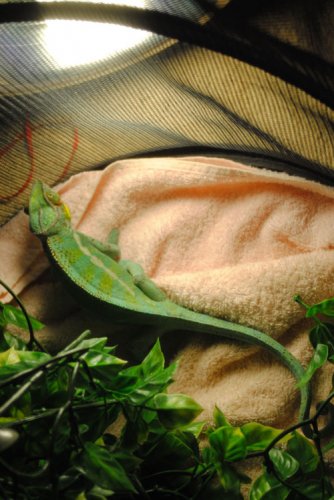
His hospital cage (cylindrical Exo-terra Explorarium - medium) with UV lamp. I have placed the cage horizontally since his prolapse, and the round shape gives him a bit of a slant to rest on.
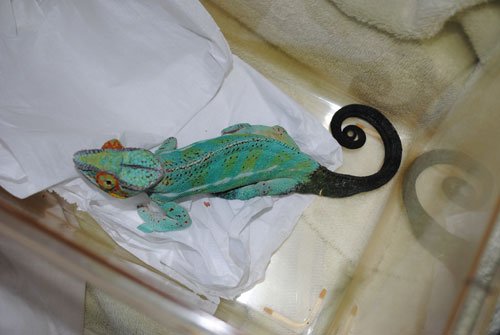
Upon receipt of him back from the vet, after his prolapse ops. His tail was black and is s-l-o-w-l-y returning to a more normal colour.
Recent photo of pelvic area. He is resting on a vine that I placed in his hospital cage for him to grab onto.
Still no use of his hind legs to date. He is taking small quantities of food that I place in his mouth. No stools passed since the day before his prolapse. Taking him to another vet on Friday for an X-ray.
Herewith images of my panther chameleon, his setup and current state.
Set-up
Soft, little lump under arm - felt as if it could be filled with fluid. Also larger area between two front legs. Suspect that this could have been due to him dragging himself forward by his front legs and the constant rubbing of this area on the surface of the vines/perches.
His hospital cage (cylindrical Exo-terra Explorarium - medium) with UV lamp. I have placed the cage horizontally since his prolapse, and the round shape gives him a bit of a slant to rest on.
Upon receipt of him back from the vet, after his prolapse ops. His tail was black and is s-l-o-w-l-y returning to a more normal colour.
Recent photo of pelvic area. He is resting on a vine that I placed in his hospital cage for him to grab onto.
Still no use of his hind legs to date. He is taking small quantities of food that I place in his mouth. No stools passed since the day before his prolapse. Taking him to another vet on Friday for an X-ray.
Attachments

whitespyder
New Member
im sorry to hear about your cham. i hope he recovers!
ive kept a veiled that had a similar problem. i dont know if panthers require more D3 than veileds, but it seems like calcium with d3 once a week is too much. an overdose on D3 can be toxic and i think thats how my chameleon died of kidney disease. he lost movement of his backlegs which i thought was due to stress from me treating his bumble foot (blisters on the bottom of his feet due to no variety of different perches--like wearing the same shoes nonstop for humans) but after a visit to a vet it turned out he couldnt move his back legs since theyre near the kidneys and the nerves were shutting down. i dont know the scientific reasoning behind it unfortunately but upon recent viewing of a video i shot of my cham eating, i noticed that the crickets i fed him were caked in dust, which if i remember correctly was a vitamin powder with d3. (i wasnt well educated with dustings back then unfortunately ) but your situation might be unrelated, just wanted to throw that out as a possible cause. at least youve noticed it early. i wish you and your cham the best of luck!
if you feel he might be impacted, try having your cham sit on a bottle of warm water, when my cham was sick this made him poop.
ive kept a veiled that had a similar problem. i dont know if panthers require more D3 than veileds, but it seems like calcium with d3 once a week is too much. an overdose on D3 can be toxic and i think thats how my chameleon died of kidney disease. he lost movement of his backlegs which i thought was due to stress from me treating his bumble foot (blisters on the bottom of his feet due to no variety of different perches--like wearing the same shoes nonstop for humans) but after a visit to a vet it turned out he couldnt move his back legs since theyre near the kidneys and the nerves were shutting down. i dont know the scientific reasoning behind it unfortunately but upon recent viewing of a video i shot of my cham eating, i noticed that the crickets i fed him were caked in dust, which if i remember correctly was a vitamin powder with d3. (i wasnt well educated with dustings back then unfortunately
) but your situation might be unrelated, just wanted to throw that out as a possible cause. at least youve noticed it early. i wish you and your cham the best of luck!if you feel he might be impacted, try having your cham sit on a bottle of warm water, when my cham was sick this made him poop.
That tail is terrible! In the picture (second from the right) the tail looks necrotic (like its dying/dead). I can't believe that the vet only gave you antibiotics for this!
You said..."black due to the trauma of his double operation"...the only thing I can think of for this blackness is that the tail is broken or that there is some other damage that has been done to it. Did he test for gangarene? Was it the whole tail that looked black from when you first noticed it or did it start out at the tip and move up the tail??
If the vet has seen the tail looking like this and has done nothing about it, I think you need to find another vet right away!
You said..."black due to the trauma of his double operation"...the only thing I can think of for this blackness is that the tail is broken or that there is some other damage that has been done to it. Did he test for gangarene? Was it the whole tail that looked black from when you first noticed it or did it start out at the tip and move up the tail??
If the vet has seen the tail looking like this and has done nothing about it, I think you need to find another vet right away!
He went to the vet being a uniform, bright (as in the "back from the vet" pic, but without the black tail) colour, but after the double operation to put back his hemipenes (which prolapsed two days apart), he came back with the black tail. I took the photo immediately after my chameleon arrived home from the vet. I have seen indigenous (albeit dwarf) chameleons bite each other during fighting and the bite marks turned black shortly after the fight had ended. I therefore guessed that the tail might have turned black due to the trauma to the tissue at the base of the tail during his two consecutive operations. His tail is moving, coiling up perfectly, responding to my touch and very slowly becoming a more acceptable colour again. He does sit on the base of the tail often, with the coiled tail under his bum, so I try to position his body in a normal, upright position, with the tail extending to the back, as often as I see him like this. I obviously do this with the utmost care. I "prop" him with a soft towel before he goes to sleep and he has slept with the tail pointing backward for two nights in a row and seems to be feeling better. The hind legs are still not working, and he has not passed any poop, but overall he has improved tremendously. I will try some advice on the forum about getting him to poop, but have an appointment to take him to a more specialized vet tomorrow for x-rays. At least, with all the useful feedback on the forum, I would be able to ask the vet more specific questions. I will post some feedback on this on Monday.

Carlton
Chameleon Enthusiast
These recent stories about chams unable to use their back legs who also have vent or prolapse problems make me wonder if they aren't using their back legs because they are in pain, not because they are actually paralyzed. I can only imagine how uncomfortable these injuries would be.
Hi everyone
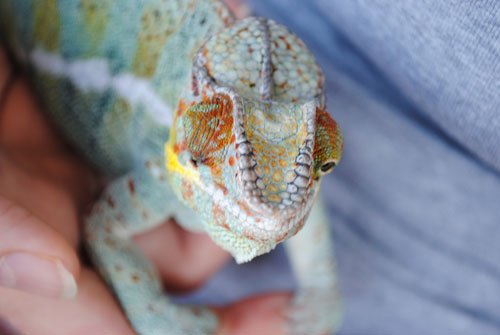
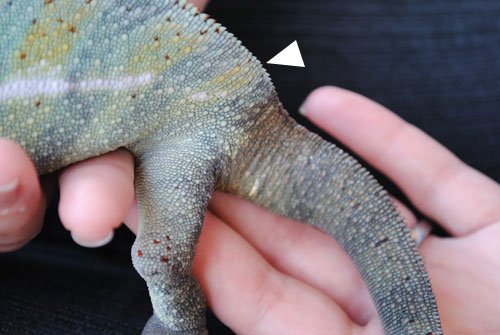
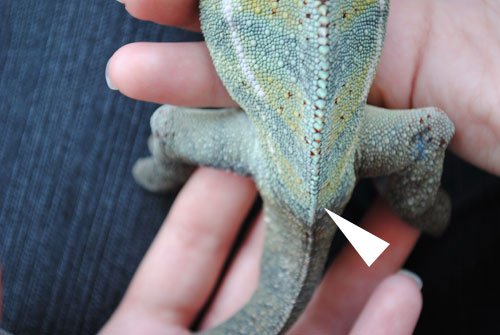
I took my chameleon to a specialized vet on Friday and here is what he said after taking x-rays: His bones are perfectly formed and therefore calcium is not the cause of the problem. He is not impacted either. There is an area in his spine right above the pelvic area, where the nerves have suffered some form of damage, which is causing the paralyses in his hind legs. The cause of the damage is still unknown. His blood vessels in this area are dilated, which means that the blood flows in one direction, but that there is insufficient pressure to circulate it the other way. Due to this, his hind limbs started becoming very puffy due to edema. The vet told me that this could turn into gangrene due to a lack of circulation. He prescribed an anti-inflammatory to try and help increase the performance of the nerves, and a diuretic to combat the edema. He said that the edema had nothing to do with the amount of fluid the chameleon ingested. I asked him and he assured me that the chameleon is not in pain, but might experience a bit of discomfort due to feeling "full" because of the edema. I have included 3 pics taken of him on Saturday, and indicated with a white arrow EXACTLY where he cannot feel anything on the spine - in this tiny spot only. EVERYWHERE above and below this point he feels the slightest touch. His tail is also working perfectly. This was 3 days ago and my chameleon is looking better. His right hind leg is back to its normal size and colour. The left hand one is better, but not fully back to "normal". I have been very slightly massaging his little hind feet and legs and putting him outside to sun. He has improved considerably from Friday. His name is Pixel. My little fighter!!!! Pray with me that he will recover. Miracles still happen!
I took my chameleon to a specialized vet on Friday and here is what he said after taking x-rays: His bones are perfectly formed and therefore calcium is not the cause of the problem. He is not impacted either. There is an area in his spine right above the pelvic area, where the nerves have suffered some form of damage, which is causing the paralyses in his hind legs. The cause of the damage is still unknown. His blood vessels in this area are dilated, which means that the blood flows in one direction, but that there is insufficient pressure to circulate it the other way. Due to this, his hind limbs started becoming very puffy due to edema. The vet told me that this could turn into gangrene due to a lack of circulation. He prescribed an anti-inflammatory to try and help increase the performance of the nerves, and a diuretic to combat the edema. He said that the edema had nothing to do with the amount of fluid the chameleon ingested. I asked him and he assured me that the chameleon is not in pain, but might experience a bit of discomfort due to feeling "full" because of the edema. I have included 3 pics taken of him on Saturday, and indicated with a white arrow EXACTLY where he cannot feel anything on the spine - in this tiny spot only. EVERYWHERE above and below this point he feels the slightest touch. His tail is also working perfectly. This was 3 days ago and my chameleon is looking better. His right hind leg is back to its normal size and colour. The left hand one is better, but not fully back to "normal". I have been very slightly massaging his little hind feet and legs and putting him outside to sun. He has improved considerably from Friday. His name is Pixel. My little fighter!!!! Pray with me that he will recover. Miracles still happen!
Attachments

Nicodemayo
Avid Member

Makes me wonder if a blood clot has anything to do with it. The lack of oxygenated blood to the nerve cells could have killed them off. Good luck with him, glad he is showing signs of improvement.
These recent stories about chams unable to use their back legs who also have vent or prolapse problems make me wonder if they aren't using their back legs because they are in pain, not because they are actually paralyzed. I can only imagine how uncomfortable these injuries would be.
I agree. I posted about my cham having trouble with moving his back legs. My cham is pretty much recovered now. He had sperm plugs and his legs started recovering as soon as we removed them. The stupid vet didn't notice the massive sperm plugs, people on this forum did when I posted pics of his vent.

Texas Panther Man
New Member
i lost a male ambanja years ago with the same symptoms. He was kept under almost identical enclosure as yours. I also gut loaded and supplemted my feeders. My vet helped me keep him going for over 6 months but he never regained movement of hind legs. And my vet was also into chams and a breeder so he wasn't a dog/cat vet. I ended up euthanasia him i couldn't watch him struggle any longer. Btw mine wouldn't poop either. My vet showed me how to manually palpate him to help him defecate. Mine never lost his appetite.
Btw mine wouldn't poop either. My vet showed me how to manually palpate him to help him defecate. Mine never lost his appetite.Similar threads


- Replies
- 10
- Views
- 986
