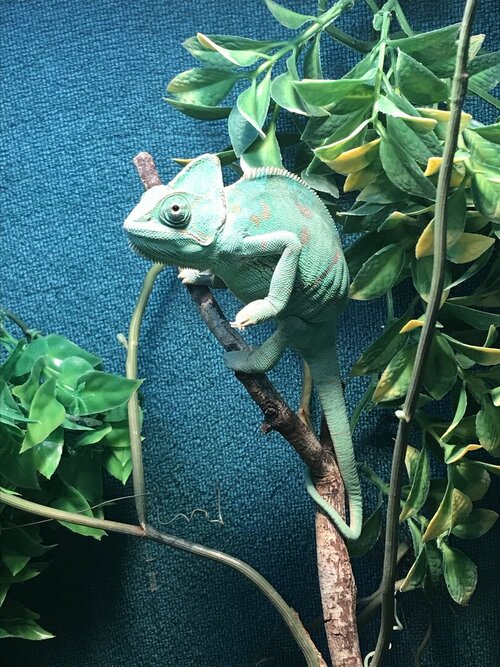
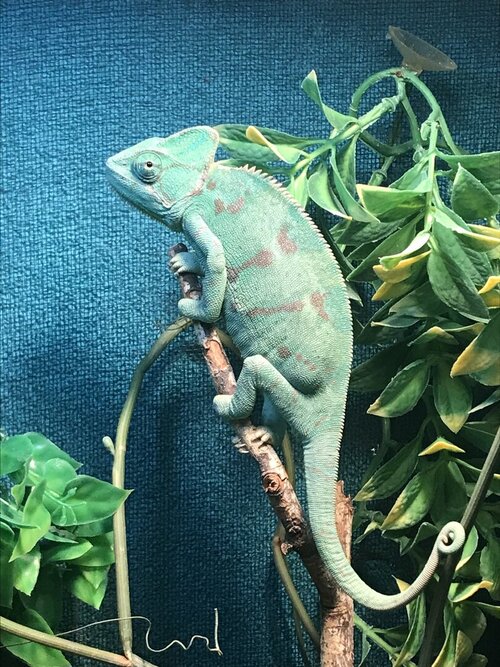
Laying really takes a great deal out of our sweet ladies and shortens their lives, so we try to reduce the number of eggs produced and the frequency of production through lower basking temps and limited diet. I have 2 veiled girls and feed them 3-4 feeders, 3 days a week and keep their basking temps no higher than 80. Both laid clutches in Feb/Mar of 2020. One got a glimpse of my male which I suspect triggered egg production, so she laid another clutch in Mar 2021. My other girl has not laid since Feb 2020. Overfeeding tends to lead to very large numbers of eggs produced, which in itself can lead to egg binding.
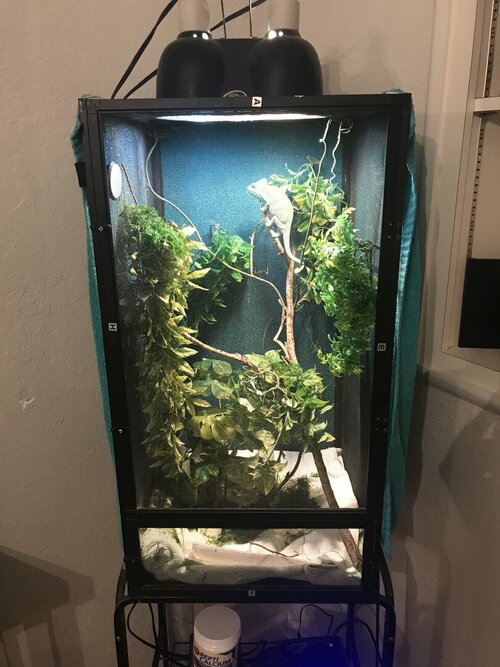
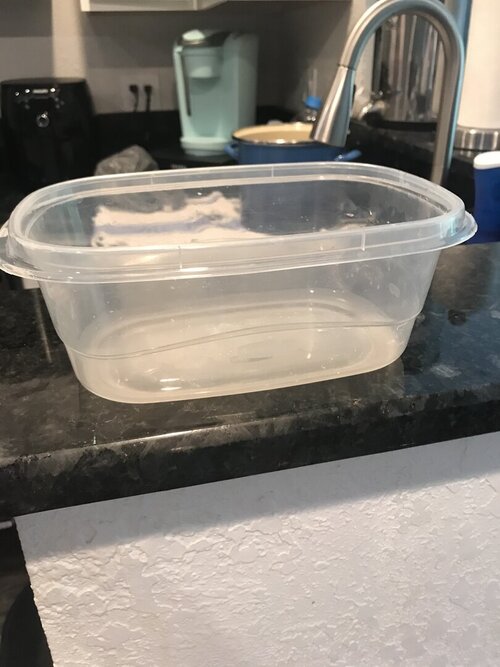
My ladies prefer larger bins of at least 12“ wide/long. I fill to about 6” deep with washed play sand that is kept moist enough to hold a tunnel without collapsing. One of my girls likes to dig horizontally, so this is super important. Make sure there’s at least 1-2+ stable ways to get in/out of the bin. If you desire, you can mix in a bit of organic soil and put a plant in one corner. When she needs to lay, she’ll find and go to the bin. She will need total privacy. If she sees anyone, she may abandon laying and become egg bound. I use a light sheet and cover the bottom half of the enclosure. If I suspect my girl is going to lay any day now, I’ll partially cover it in advance. The whole process takes on average 1-2 days. She may dig several holes until she likes on. She may sleep in her tunnel. You’ll know she’s done when she’s sitting on her basking branch looking much thinner and dirty. You’ll want to feed and hydrate her very well for 2-3 days and then resume her diet. I try to have hornworms and silkworms for my girls after laying for the hydration they offer. I also give a very long misting which will help remove some of the dirt on her. Give her a day or 2 before removing the lay bin and counting the eggs. I remove the bin at night when she’s asleep if I can do so without disturbing her.
Signs that laying is near…decreased appetite, darker spots and patterns and restlessness.
Signs that she is distressed…lethargy, staying at the bottom of the enclosure, no appetite, not drinking and anything that you just don’t feel right about. (Go with your ‘gut’).
I hope I’ve been of some help to you and your pretty little lady. Don’t delay in making that vet visit. She may need some liquid calcium…only your vet will know.
In terms of most important husbandry to correct ASAP…uvb and supplements.